

This project explores the theme of Intergenerational Learning and the contribution that the symbiosis between product service system design and management engineering can provide to creating a service beneficial for both the elderly and the community in which they live.
I became interested in this topic because it involves not only the well-being of a vulnerable part of the population—those most affected by rapid social changes—but also the issue of child education, particularly non-formal education, which takes place outside the compulsory education system. The goal of this work is to offer an innovative solution to the problem of loneliness among the elderly and to nurture a sense of identity and cohesion within local communities.
The project takes into account several factors, beginning with the city of Milan. Following the Covid-19 health emergency, Milan has seen an increase in services aimed at supporting people with reduced mobility, particularly the elderly, with home delivery services being a major focus. Technology has played a vital role in this shift, as many elderly individuals have learned to use digital devices to stay connected with the outside world. This growing trend of technology adoption among seniors is important, as most digital services are designed for users already familiar with technology. Leveraging knowledge from design and business, we must create solutions tailored to the elderly, encouraging their need for socialization and inclusion, which today is increasingly tied to technology.
However, the key point is not technology itself, but how we use it. The goal is to design solutions that combine digital interaction with face-to-face engagement. This balance is essential for fostering meaningful, lasting relationships between people. We are witnessing a phenomenon where the elderly are losing social connections, while younger generations are immersing themselves in a digital world.
Through Strata, I aim to offer a solution that reconnects two generations—the elderly and children—enabling them to benefit from each other’s knowledge and well-being. This proposal will focus on creating intergenerational encounters through food, integrating digital interactions with in-person experiences to offer a new way of experiencing old age.
The outcome of this design process is a service that helps the elderly rediscover their role in society, satisfy their psychological and physical needs, and improve their overall quality of life.
Introduction
BACKGROUND
One year after the declaration of the global health emergency of Covid-19, we can see how people’s behaviors changed. The most common issue is the increasing loneliness among the elderly. Inactivity worsens all those pathologies of our organism’s functions such as metabolic dysfunction, cardiovascular disease, and chronic diseases typical of old age. Other studies, such as the one conducted by Williams et al., show that physical activity is also linked to increased cortical thickness and, therefore, is able to make structural organic changes. Considering the population at greatest risk, that is the over-65s, we see that a low level of physical activity has led to the development of depressive symptoms, anxiety, loneliness, and stress. These conditions, associated with sedentariness, have been the subject of a meta-analysis that states the correlation between sedentariness and the risk of developing dementia and Alzheimer’s disease.
The onset of depression, loneliness, anxiety, and stress is not only responsible for changes in the processes of the organism but also for the loss of motivation by the elderly to take care of themselves. The first thing to be overlooked is nutrition. The role of nutrition in the psychophysical well-being of the elderly is as important as the level of sedentariness. They begin to prefer the consumption of food that is easy to prepare and chew, with an excessive consumption of products such as bread or pasta. The organism does not receive all the substances it needs, the diet is not varied enough, and the elderly, whose conditions of fragility due to age have already been stated, enters a vicious circle made of sedentariness, empty time, difficulty in maintaining social relations, too much resting time, and poor nutrition. All these conditions do not concern the totality of the population over 65, but looking at the statistical data and an increasing number of studies, it can be said to cover most of them. This situation justifies intervention in support of the elderly, aimed at enhancing active aging and the elderly itself as a resource and not as a burden: in other words, from weight to resource.
What is the social impact of Covid-19? Both in Italy and in the world, following the Covid-19 emergency and the confinement at home, several delivery services of home food products have been activated dedicated to the population over 65. This shows an interest in supporting a population that has difficulty getting out of the house and supporting the long lines at the supermarket or traveling by public transport. At the same time, a study by Censis showed a deep fracture in the social fabric between the elderly and young people. In fact, the health emergency has portrayed the over-65s as the weak band, not only in terms of health but also in social terms. The elderly are seen as a burden on society because a large part of the investments allocated to the care and prevention system could be dedicated to the younger people who represent the future: this is the perception that slowly is about to emerge from this fracture.
So far, three problems have arisen: sedentariness, poor nutrition, and the relationship between the elderly and the young. They are three elements that can be considered separately and make perfect sense, but if seen in a general framework, it is possible to notice how they are interdependent, like dominoes: a sedentary situation which, on the one hand, leads to depression, which in turn leads to loss of motivation, the latter leads to neglect of diet with psychophysical repercussions, and on the other hand offers the opportunity to promote activities between the elderly and children. Thus, the elderly rediscover their value in society as the transferors of culture and knowledge. The latter learn tradition and develop a sense of belonging to a cohesive and tolerant society thanks to the relationship with a generation far from theirs.
At the moment, Milan has surveyed 313,175 people over 65 out of a population of over 1.3 million inhabitants. The children from 0 to 8 years are about 100 thousand, and the inhabitants from 9 to 25 years are about 210 thousand, for a total of just over 754 thousand families in 2020. In Milan alone, there are 519 kindergartens and primary schools, 326 secondary schools of grade I and II, and more than 202 thousand students distributed in the seven universities of the city (IULM, San Raffaele, Politecnico di Milano, Cattolica, Bocconi, Statale, Bicocca). (sisi.comune.milano.it, 2020).
I am convinced that the time has come to design a service that makes it possible to value the importance and beneficial effects of the relationship between the elderly and children, improving the health of the elderly and social cohesion.
RESEARCH QUESTIONS
The main objective of this project is to analyze how physical well-being and intergenerational learning work, in order to develop new solutions that help the elderly rediscover themselves as an active part in the functioning of social and educational systems. To create a continuous thread between PSSD and Management Engineering, the main “Research questions” to which I would like to reply are:
1 – How can business models of food delivery companies adapt to the purchasing habits and needs of people over 65?
The answer to this question will be provided by defining the various purchasing systems using digital technologies and examining some case studies.
2 – How can digital technologies innovate the sales channels currently used by older people for greater market competitiveness?
The answer to this question will be provided by analyzing case studies that show the potential of digital technologies in the purchasing experience and customer loyalty.
3 – How can digital innovation be effectively introduced into the culture and processes of local communities?
The answer to this question will be provided by the project itself.
4 – What is the role of Product Service System Design and Management Engineering in the development of a new digital business system?
The answer to this question will be provided by analyzing several Digital Business Innovation case studies.
5 – What are the business benefits and economics related to the idea?
The answer to this question will be provided by defining the various elements of the digital innovation of a business and the study of the market with the consequent production of a business model and original customer experiences.
METHODOLOGY
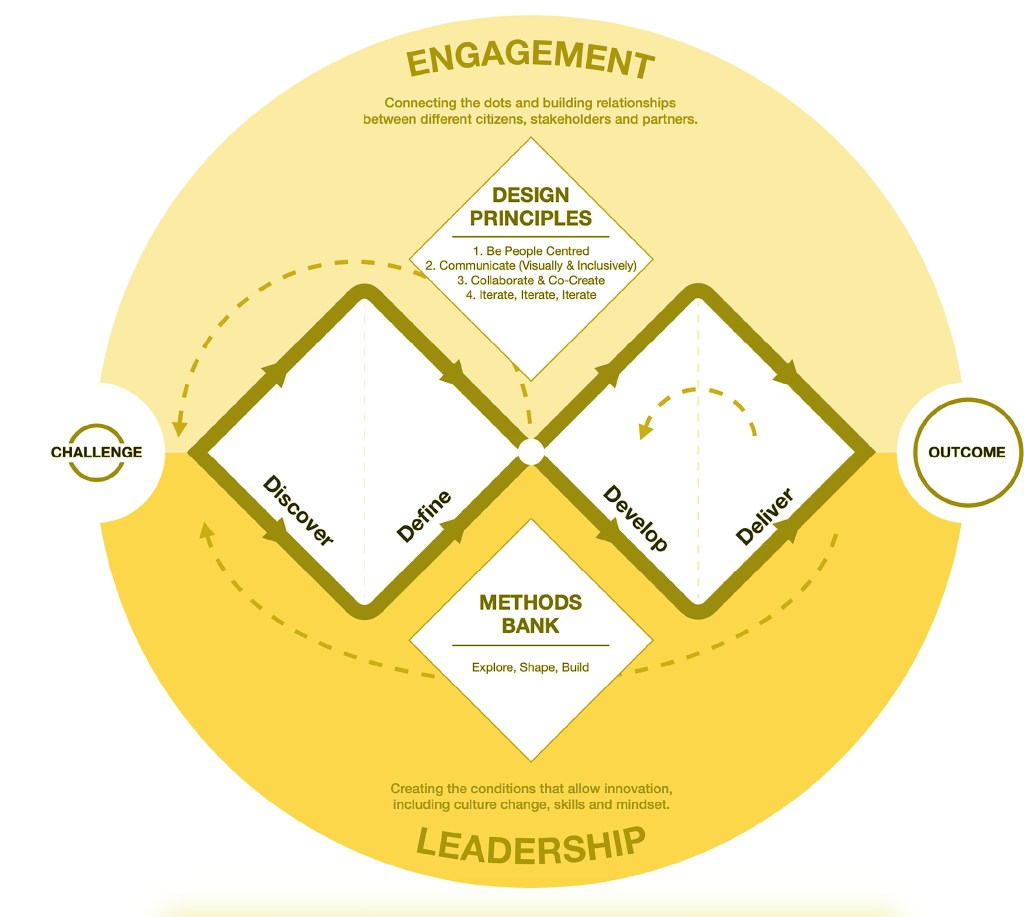
The development process should follow a methodology that incorporates tools and techniques typical of both Product Service System Design and Management Engineering. In particular, the Double Diamond Process, a specific methodology within the Design Thinking model commonly used in both disciplines, will be followed. This process includes four stages of convergence and divergence:
a) Discover, where the research limits are defined;
b) Define, where the problem is identified and the brief is defined;
c) Develop, where ideas are generated based on the scenario identified in the “define” phase; and
d) Deliver, where the final idea is selected for implementation and testing.
1. Well-Being & IGL
WHAT IS AGING?
Elderly are people over adult age, and while there is no specific point from when someone can be considered an elder, it is subjective; however, most literature defines elderly as someone 65 years old or older.
In 2019, the population of those 65 and older was 22.8% of the total population in Italy, and it is forecasted that by 2051, the number of people 65 and older will reach 19.6 million, representing 33.2% of the total population (Censis). Globally, the number of people aged 80 and over is expected to increase from 126 million in 2015 to 202 million in 2030 and 425 million in 2050 (United Nations, 2017). These figures reflect the so-called silver economy, highlighting how better living conditions are making old age easier to manage.
A Censis report on the Silver Economy describes two main phases of old age: the first stage is active old age, and the second stage is old age itself. Everything in between depends on the physical condition of each person. Active old age begins around the age of 65, with work and family as priorities, though some may no longer work yet remain healthy and active. Old age marks the time when the elderly begin to face health issues, experience a progressively less active social life, and start to require assistance.
Between 2016 and 2019, six out of ten elderly people suffered from at least one long-term chronic disease, with the most common being heart disease (28%), chronic respiratory disease and diabetes (20%), and cancer (13%). Loneliness remains a significant effect of physical ill health.
In 2018, 1.2 million elderly people felt isolated and without social networks, making them increasingly vulnerable and highlighting the need to address this social issue.
Aging is attributed to the decay of biological and psychological functions due to the passage of time. While there are no definitive parameters to define aging, several criteria can be adopted, such as economic, biological, and demographic factors. Other classifications of aging use time as a parameter, with Laslett categorizing the elderly into four levels: the old-young, the old-old, the third age (made up of individuals with good personal autonomy), and the fourth age (individuals who begin to need support).
According to Istat surveys, of those in need of support, a fifth do not have the help they require, indicating an area of unmet welfare needs. When examining social relationships, there is a significant gap between perception and reality. While 80% of individuals living alone claim they are listened to and considered by others, only 9% say that others do not care about what happens to them.
In fact, the classification methods described above seem inadequate today, as modern elderly individuals live lifestyles and enjoy health vastly different from their peers in the past, leading to a shift in the threshold for entering old age. Additionally, according to the theory of counter-ageing, modern societies are becoming younger, even though they are aging, because people live longer and better, increasing both physical and intellectual capacities. Aging, a process that begins at birth, has a more significant impact today due to increased longevity, reduced birth rates, and improved quality of life expectancy. This better quality of life enables the elderly to remain active resources for their families and society, but retirement often leaves them feeling powerless.
There are other problems related to aging, including health issues that become even more challenging to manage when medication significantly impacts the family budget, as well as social problems, since the elderly are often seen as the inactive part of society and a burden on the health and welfare system. Work-related issues arise too, as many elderly individuals once structured their days around work but now find themselves with a large amount of free time that they may struggle to fill. These issues have significant repercussions, not only on the person’s functional aspects but also on their psychosocial well-being. A vicious circle develops, beginning with physical decline and health problems associated with aging. The loss of certain abilities leads to a gradual loss of social connections, causing the elderly to become more isolated and vulnerable to depression. The elderly have new and different needs, requiring appropriate solutions to maintain their social roles, provide opportunities for socialization, pursue their interests, and preserve their autonomy. The well-being and health of the elderly depend on their social relationships; without them, they may become dissatisfied, leading to further isolation and the risk of depression.
THE ECONOMIC SITUATION OF THE ELDERLY
The past decade has been marked by a serious economic crisis which since the end of 2008, has continued for several years thereafter. The economic crisis has been accompanied by a change in the demographic structure, which has affected the younger sections of the population to a greater extent. In fact, the share of the incomes of the elderly has gone from 21.6% to 28.0%, pension incomes have instead grown by 6.9 percent, also because of the retirement of classes of workers with better pay and contribution histories than the previous classes. A situation also favored by the calculation systems related to the old pay system more advantageous for most of the years worked. Thus, the presence of the elderly in the family has constituted an economic security factor even for the non-elderly members of the nucleus (amounting to about 5 and a half million individuals in 2018, almost 30 percent of the members of families with elderly people). The risk of poverty has decreased by 3.5% in families with at least one elderly person and by more than five points in families with two or more elderly people, while it has grown with similar values in families without members aged 65 or over.
THE DIETARY WELLBEING OF THE ELDERLY
The proper feeding of the elderly is always based on the basic criteria of the Mediterranean diet, which is considered the “ideal” diet for a healthy adult. The elderly spend, on average, 300 euros per month per person on food, so their food budget is quite high compared to other younger consumers who live alone. Numerous nutritional surveys carried out on elderly people have found that they often do not feed properly according to their state of health and follow a diet that is not very varied: vegetables and fruits are mostly cooked, there is much wine, little milk, excessively salty foods, no eggs, only one kind of meat, and too many toppings. It is important to ensure the intake of proteins that are of high biological value, meaning that they are easily absorbed by the body, so minced meat and meats from animals such as chicken, rabbit, turkey, and fresh or frozen fish are particularly suitable because of the tenderness of the connective tissue and the presence of omega-3 fatty acids. Fish consumption is recommended at least three times a week. The elderly must be encouraged to drink fluids such as water during meals, soups in broth, citrus juices, tea, chamomile, herbal teas, and a small glass of wine at main meals. Proper hydration is important both to remedy the natural dehydration of tissues and because water exchange facilitates the elimination of waste.
CASE STUDY I: Vuoi star bene? Mangia bene

Very often an unbalanced diet for the elderly and bad eating habits are aggravated by:
a) defective dentition, with poor chewing and consequent choice of foods easy to digest, and mostly made of carbon hydrates,
b) the frequent loneliness in which the elderly live and no one who monitors his habits.
Therefore, the FIMMG, to promote and recover eating habits that promote health and prevent the increasingly widespread metabolic and cardiovascular diseases, has developed, together with the CIA (Italian Confederation of Farmers), the project “Vuoi star bene? Mangia bene,” in which a sub-educational project dedicated to the elderly has been activated.
A questionnaire was drawn up on the eating habits of the elderly, which was administered to a sample of elderly people in southern, central, and northern Italy, the results of which showed a widespread eating disorder. Subsequently, a series of educational interventions were developed for the elderly, including:
- A leaflet has been produced which is easy to read and at the same time scientifically correct, some thousands of copies of which have been printed and distributed;
- Has been elaborated of the didactic material of Alimentary Education proposed in various encounters with the elders from a mixed team FIMMG – CIA.
- The development of educational material for the elderly which the family doctor may use in the context of his daily outpatient activity has been promoted.
CASE STUDY II: Non la solita minestra

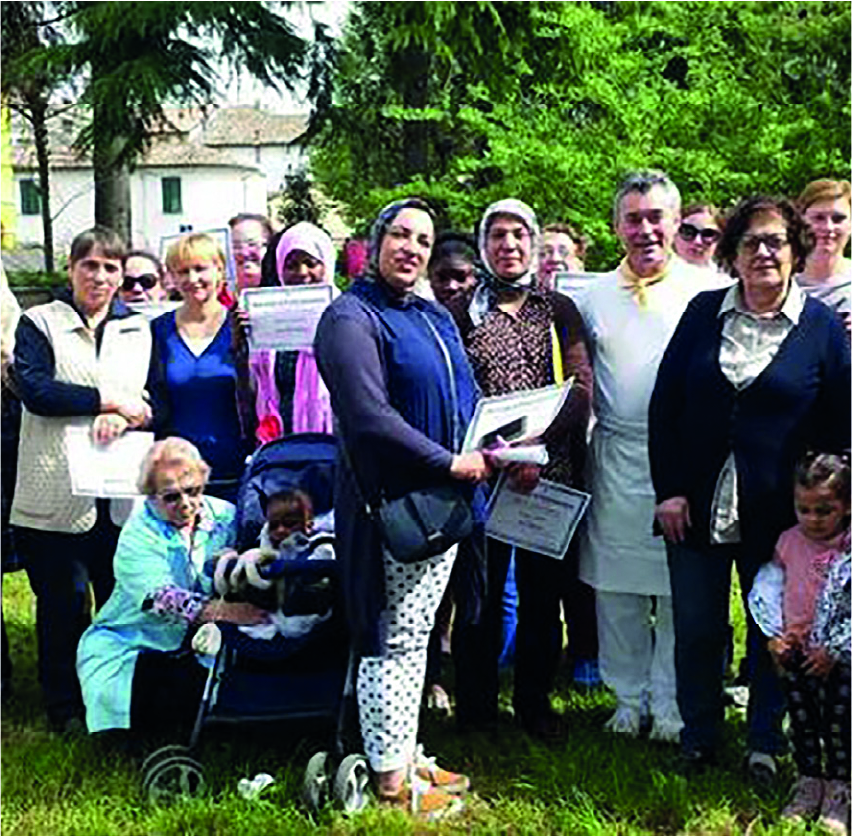
An initiative of the Russi Municipality at the social center Porta Nova aimed to ensure that those who follow the nutrition of the elderly are aware of their tastes. The Municipality of Russi, together with the Casa Protetta Baccarini and the Social Center Porta Nova, dedicated a cooking course to caregivers working with local families, with a recognition of acquired skills at the end. The course, called ‘Not the Usual Soup’ and born from an idea of the Councillor for Social Policy and Immigration Laura Errani, aimed to teach those who care for the elderly’s food to respect their tastes and needs, while adhering to the local gastronomic tradition and ensuring the right weights and food combinations for a varied and balanced menu. Seventeen participants, all women, many of whom were mothers from different countries and cultures such as Moldova, Poland, Morocco, and Central Africa, attended the course. Over three lessons of two hours each, the aspiring “azdore” learned to care for the elderly’s palate, recognizing the importance of mealtime for the elderly and their need for taste and gratification. The course also covered the nutritional properties of foods, common health problems in the elderly, and suitable cooking methods to retain and enhance the beneficial properties of certain foods. It proved to be an excellent opportunity for integration and a valuable ‘gym’ for improving the Italian language, which is particularly useful when shopping for the elderly they assist.
Area of intervention
If we want to develop services aimed at the well-being of the elderly, we must develop the various activities according to some specific areas of intervention: socialization, self-determination, and feeling useful.
SOCIALIZATION
Socialization includes both the most superficial and the most significant relationships related to the emotional sphere. The indices that distinguish this area are, for example, the number of old friendships, the number of new relationships established (and the maintenance of the latter), occasions in which the elderly socialize spontaneously, interest in the outside world, interest in updating, presence or absence and quality of intergenerational relationships, recruitment or retention of roles, participation in activities, and quality of participation.
CASE STUDY III: DESIGNING AGAINST LONELINESS AMONG ELDERLY
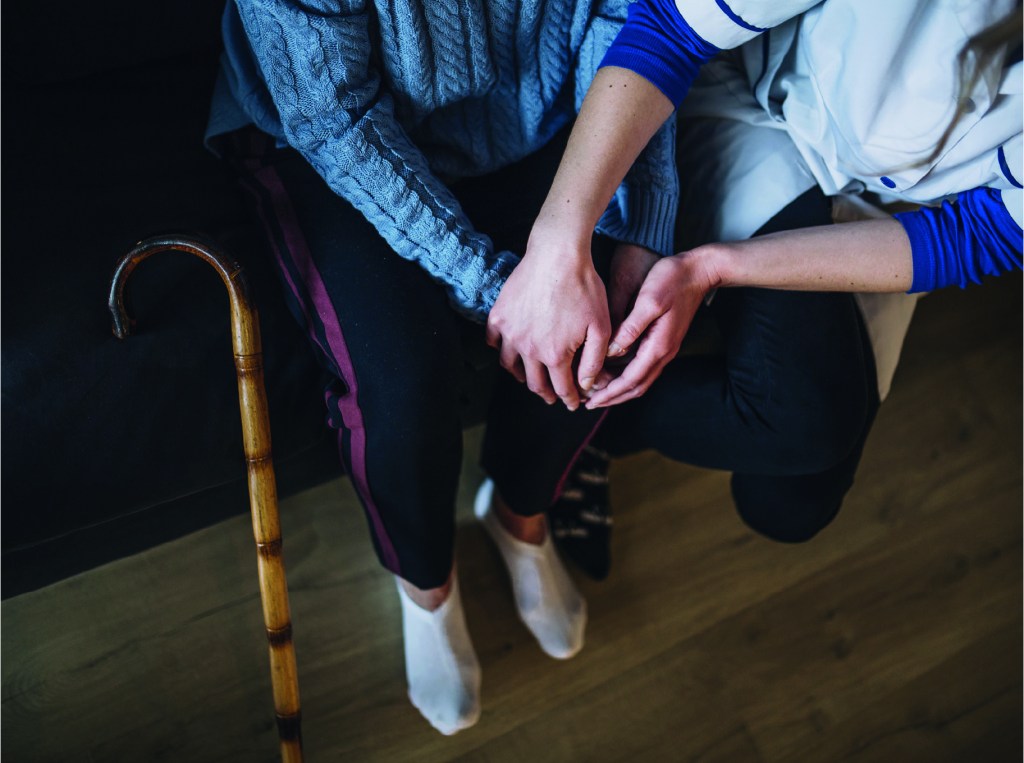
This is a graduate project done in collaboration with Habion, a cooperative of homes for the elderly. In the development of this study, it has been seen how the environment surrounding the elderly is responsible for its abilities and opportunities for socialization. It is also emphasized that the structural and architectural elements are not sufficient to solve the problem of loneliness, but we must build a system of actions and behaviors that prevent loneliness in the elderly. In the central part of this study, the authors of the project have focused their attention on the observation of the behaviors and habits of residents in Hoeverstaete, Netherlands. Two fundamental points have been noted that are conducive to the socialization of the elderly: the exploitation of the points of passage in the common spaces, and the observation of the activities of other individuals through the windows of their own apartment, for example. Socialization cannot take place without an element of medium that facilitates contact between people, whether it be the organization of architectural elements, such as facades made by large windows that facilitate the view, or recreational activities facilitated by the staff. The result is that encouraging socialization improves the mood of the inhabitants of a small residence for the elderly, therefore their state of health: the essential prerequisite is to create opportunities to be together with other people, providing the opportunity for interaction. In this case, it is stated that interaction occurs through the use and stimulation of the senses:
the smell: the smell is one of the most sensitive senses, we can recognize and feel the smell of those around us, both the body and the perfume used, already two or three meters away;
sound: hearing is one of the most effective ways to communicate, just think that you can communicate easily at about seven meters away and raising your voice without too much effort even up to thirty-five meters or even more;
the view: it is one of the best developed senses, you can recognize the human figure up to a km away, 100 meters we recognize the gender, from 30 meters the face, and from 25 meters we can recognize the mood.
SELF-DETERMINATION
It would be the ability to decide for oneself, despite the limitations due to age. The factors taken into consideration are the possibility of being independent in the care of one’s own body, of what one possesses and of the surrounding environment; the ability to independently manage one’s own clothing and nutrition; having an active role in the planning of one’s own assistance system; understanding and respecting social rules.
CASE STUDY IV: TERZ@ETÀ
Important is the leap made using technologies by the elderly, over 37 percentage points compared to 2007. This result is not only due to the rise in the level of education and digital literacy of this population, but also the infrastructure to be able to use these technologies, the spread of smartphones, and the costs of access to services.
The Terz@età project is described in an interview with Valentina Mari, the communications manager of La Comune, a no-profit organization in Milan.
What is the goal of Terz@età? “The project aims to prevent the loneliness and physical decay of 120 fragile elderly people residing in 4 Nuclei Local Identity of Milan City Hall 7. To do so, we provide training on the use of technologies to enable the elderly to attend an online gymnastics course and to learn about tools for new types of socialization at a time when it is not possible to meet in person.”
How are the elderly involved or selected to be included in the program? “The elders included in the project were selected mainly based on the City Hall of residence and physical fitness to participate in the project. They were involved with a first training moment in which they were given a tablet and the kit to be able to do gymnastics online.”
What problems, needs or new needs have emerged since the launch of the project? “The need to socialize and overcome the loneliness of this hard period have emerged as major needs.”
What, the elders, did they appreciate the program more? “Having points of reference to address in order to feel less alone is an aspect that is surely having particular importance for the elderly, who find reassurances even on issues not strictly related to the project.”
How or by what is the elder motivated to be constant in his exercises? “From the fixed appointment with the group. Indeed, it happened that someone did not feel too well but wanted to connect equally to watch the lesson and not lose it, just because that fixed appointment has a value that goes beyond mere physical exercise.”
CASE STUDY V: LA FIAMBRERA
Fiambrera was a project held in Spain, that provided meals to two different groups of users with common needs: elderly and young employees. A service that has been able to reconcile business sustainability with social welfare objectives aimed at the needs of the local elderly population, also managing to integrate all the interests of the various stakeholders involved. It is a so-called Solution Oriented Partnership that Manzini et al, (2004) describe as an “advanced solution,” based on the collaboration of several partners who all contribute to the operation and efficiency of the service by maximizing the quality of results and minimizing environmental and economic costs.
The first group of users was characterized by elderly people living alone at home and having difficulty in finding and preparing food for financial or mobility reasons. The Fiambrera would propose an alternative to the social public services; in fact, this type of user bases its support on social security funds, but the increase in the number of older people will make public funding increasingly difficult.
The second group of users of Fiambrera are employees of small and medium-sized enterprises that are in industrial or isolated areas and do not have easy access to healthy food for their lunch. The main elements of La Fiambrera are 5:
- coolboxes, to make sure everyone gets their own meal;
- packaging, to ensure good food preservation;
- a smart ordering system, taking advantage of the convenience of digital services;
- a welcome pack, which users receive at the first order;
- a thermal bags, to keep the correct temperature of the meal during shipping.
The great benefit for elderly users confined at home was having a motivation to go out and pick up their meal in their assigned coolbox, in addition to giving them the opportunity to do some physical exercise; this can also be a monitoring system. In fact, if an elderly person does not go to pick up his meal because he has felt ill, the system recognizes it and consequently, the appropriate emergency services can be activated. Employees, on their side, have an improvement in their diet.

FEELING USEFUL
Feeling useful is the most powerful motivation that drives an elder to take care of himself and be satisfied with himself. In this case, the parameters used to assess this area of interest are the time and resources that an elderly person dedicates to others; the time and resources that the elderly person dedicates to himself; the positive and rewarding meaning which the elderly attribute to the moments in which they dedicate their time and resources to themselves or to others. In the design and delivery of intergenerational activities it is not necessary to take these three parameters all together, but you choose on which to evaluate the objectives of the service to be delivered according to the type and social context of the users to which you are addressed.

CASE STUDY VI: TOY
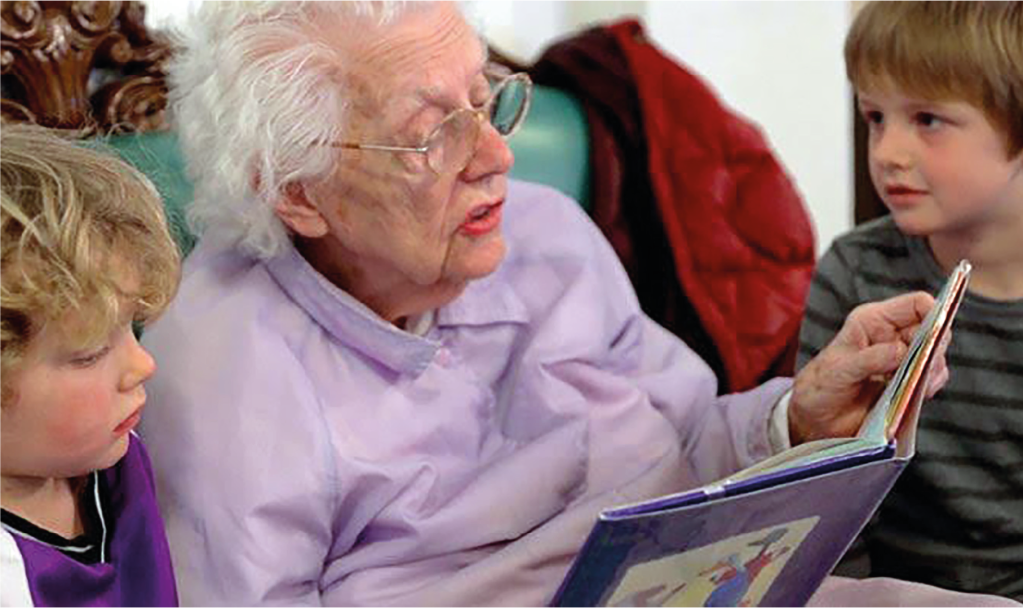
TOY is based on the approach of Positive Deviance, a perspective of problem solving, based on the hypothesis that communities often have unexpressed or underused resources that can be exploited to find shared solutions to common problems. The purpose of TOY is to enable the elderly and children to learn from each other. The population of the elderly is growing in the world, but the contact between the elderly and the young is diminishing more and more, or because parents move to other cities or because children and young children spend their time in schools or centers with their peers, reducing contact with the generation of the elderly, especially if they live in retirement homes. The Toy project has been developed in several European countries, including Italy, with a specific focus on children from 0 to 8 years. The various activities have involved universities, NGOs, and the municipality, and have been held in libraries and cultural centers, community centers or schools. TOY has shown very positive results in terms of mutual respect, a sense of well-being, a decrease in the sense of loneliness due to the sharing of experiences with young people and a better social cohesion.
The vision of the project is clearly expressed by the TOY program “The Together Old and Young (TOY) approach to IGL brings young children (0-8) and older adults together to share experiences, have fun, learn from each other and develop meaningful relationships. Intergenerational Learning activities in TOY are friendly and informal social encounters, where children and adults can equally partake as the learner and the teacher.”
TOY has chosen a target group of children from 0 to 8 years to demonstrate that, contrary to common thinking, children of that age can teach the elderly to have a new perspective on reality and the future. The elderly can instead teach that knowledge and that historical and cultural heritage that belongs to them; all elements that TOY considers to be the basis of generational learning: especially extra-familiar intergenerational encounters. Part of the attention is focused on the latter, since it has been seen that the link between grandparents and grandchildren becomes increasingly important, but grandparents are a valuable resource not only for their grandchildren but also for other children. TOY also aims to improve the skills of those who work with children and the elderly, thereby also improving the quality of intergenerational activities.
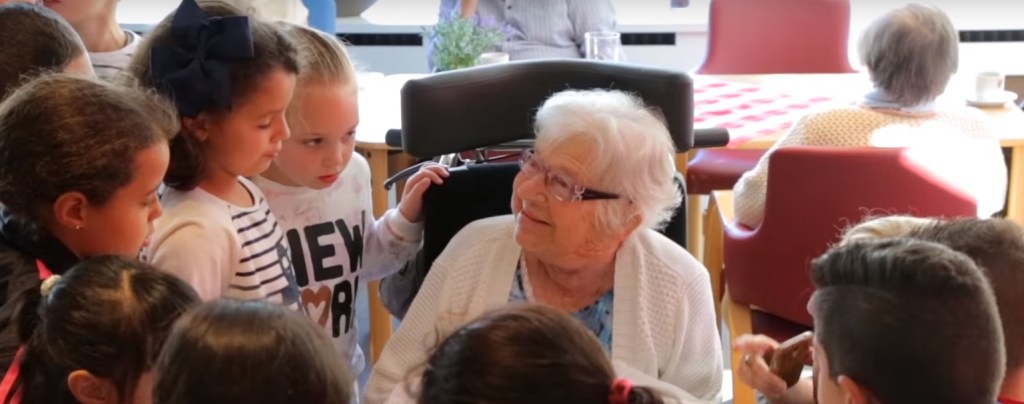
Therefore, TOY develops innovative training tools that it shares with schools, neighborhood associations, local authorities and authorities, and retirement homes. It also engages in the involvement of the middle generations that act as a bridge between the two most distant generations within a community. In the next phases of the TOY project, training courses will be developed as well as other pilot projects in the seven European countries involved: Ireland, Italy, the Netherlands, Poland, Portugal, Slovenia and Spain.
Here are some of the followings:
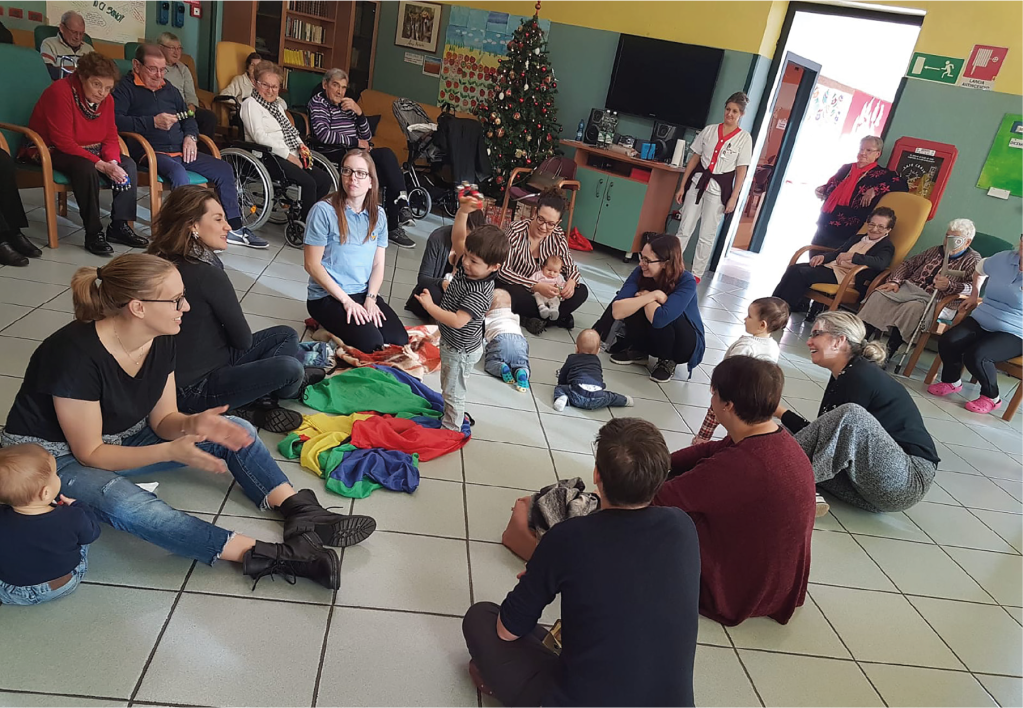
In Italy, the project was carried out with the participation of 5 children between 2 and 3 years of the nursery “Casa Vincenza” in Lecco and 5 older people over 80 years of the Laser Day Centre in the summer months of 2014. The activities took place once a week at the nursery and had the main objective sensory stimulation. Children and elderly have practiced gymnastics, outdoor games, gardening, painting among the main activities. At the end a public event was organized that wanted to involve the entire community to share intergenerational experiences.
In Leiden (Netherlands), the primary school and the senior center in the Netherlands joined the project and the two generations initially interacted through short films in which each showed their passions and hobbies. Starting from this activity, children and the elderly have created some puzzles to play together during the public event organized, entitled “Young and Old fit together like two pieces of puzzle”. The final event was an opportunity to involve the whole community in the initiative.
In Janislawice, Poland, intergenerational practice has been based on the theme of the country’s folkloric traditions. The objectives of the project were to encourage older people to be more active in the community, to put into practice the concept of intergenerational learning and to pass on local traditions to the new generations. The initiative was held twice a month. The children prepared the traditional Easter cakes together with their grandparents, decorated the Easter eggs and created flower bouquets for weddings. On 21 June 2014, during a festival of Polish tradition, a large outdoor event was organized with the involvement of the entire community.
In the social center of Aveiro, Portugal, the project “Recipes with smile” was promoted. 45 children between 3 and 6 years old and 9 seniors between 63 and 95 years old participated in the activity. Children and the elderly cooked together and made various recipes. Finally, a book was printed with all the memories and tales of intergenerational activities shared between the stove.
At Balafia’s play center in Lleida, Spain, the project “Journey through time: games of once and now” was realized. In all, 56 participants were involved between 3 and 82 years. Children and the elderly visited the Museum of Traditional Games together and participated in creative activities using old-fashioned games, such as cloth dolls and marbles. The elderly and children have taught each other traditional games and modern games by making a booklet that contains all the instructions to build them. They also exchanged songs and stories of the past as part of the intergenerational learning activities.

CASE STUDY VII: GENERATIONS UNITED
“Generations United is a celebration. The creation of Generations United marks the recognition that America’s generations, its old and young, its children, students, its workers and retired have never been closer, and at the same time, have never needed one another as much as they do today.”
Founders at press conference announcing a new Coalition, Generations United, on August 5, 1986.
“Generations United is a celebration. The creation of Generations United marks the recognition that America’s generations, its old and young, its children, students, its workers and retired have never been closer, and at the same time, have never needed one another as much as they do today.” Founders at press conference announcing a new Coalition, Generations United, on August 5, 1986. Generations United is a network that promotes intergenerational programs between old and new generations to bring about a radical change in society. To achieve this, GU collaborates with partners and stakeholders in the field of Grandfamilies, Community Building at Intergenerational Programs & Spaces. The projects supported by the GU are aimed at strengthening inter-generational links to improve the lives of the elderly, young people, and children in local communities. The main mode adopted is to bring together children, youth, and the elderly, ensuring that each project is potentially scalable, making the project for the local community repeatable in the rest of the nation. In each project, young and old alike play, learn, and get to know each other through creativity and fun. Generations United is a response to the demographic change that is affecting the United States. Today, 41 million people in America are over 65 and 74 million people are children or young people. In 2030, there will be 72 million elderly and 80 million young people, and together they will form 40% of the entire American population, increasingly multicultural. Generation United considers young people and the elderly to be a still undervalued resource, calculating that if only 2% of the population over 50 gave up 2% of the time currently devoted to television, dedicating it to volunteering, it would generate a share capital of about 2.5 billion dollars. Therefore, making use of this social capital would be a huge saving for the economic system, not just for social welfare. Through intergenerational programs, children, young people, and the elderly move more; they eat better; they learn new things, improving their results in studies; they gain self-confidence and life goals. The conviction is that by uniting generations, knowledge, experience, wisdom, and creativity, you get more and better results for the entire society.

All the projects of Generations United are based on strong and stable intergenerational communities that are lately dealing with sensitizing communities on the theme of Covid-19, but in general the topics on which the various projects are based are:
- The Grandfamilies: households in which grandparents or other relatives are parents
- Intergenerational Programs: programs developed throughout the year that include the theme of “Intergenerational Bonds Among Family Members”
- Intergenerational Workplaces: there are currently four different generations in the workplace and treating each of them according to their own needs and intergenerational practices would mean obtaining the best results according to the skills of each generation for the success of organizations.
- Multigenerational Families: one in six Americans lives in multigenerational households, also because after the financial crisis many families have decided to live together to cut costs.
- Changing Demographics: demographic change in age and race
- Hunger and Nutrition: Generations United is among the top hunger organizations, in America 1 in 5 children and 1 in 12 elderly are at risk of hunger and about 74% of them have requested assistance from the government system.
What is the Intergenerational Learning?
Intergenerational Learning is the exchange of knowledge and skills between two generations for the benefit of both as well as for society. In our time the elderly are losing importance and the younger ones feel increasingly distant from their cultural roots and traditional values, and it is the responsibility of the middle generations to re-establish the bond that is being lost. In fact, it is precisely the middle generations that play the role of bridge between the two other generations not adjacent. The importance of this process is demonstrated by the link between grandparents and grandchildren which is usually even stronger than that between grandparents and the child’s parents. Similarly, the child serves as a bridge between the two generations that preceded it. The presence of a child in the family makes the contacts between grandparents and parents of the child more frequent and also from this derives the great importance that an elderly person gives to the relationship with a child, especially if it is a grandson.
Social connections become more and more important for an elderly person because of age and therefore a greater need for support. At this point, intergenerational ties become fundamental for the well-being of both the family and the whole community. Because intergenerational bond means preservation of cultural and traditional values. Without this kind of cultural guide, the social systems of the youngest could not survive.
If you educate the younger generations to relate to the older ones, the younger ones can learn to take care of the health needs of their older family members and thus decrease the frequency of medical care and admissions. The obstacle to intergenerational learning is that young people think it is the middle generation’s responsibility to forge links with older people and that is a limit that should be exceeded. On the other hand, older generations should seek to transfer their cultural background to younger generations by finding activities or ways of interaction that make the approach to traditional values attractive and interesting. It is precisely on this concept that the importance of the elderly in a socially productive role is based.
Being helpful for the well-being and progress of the community in which you live, allows you to expand the knowledge of each of us and transmit it to others. In this way we can realize how every other person is part of our very self because we share the same culture and the same values. Encouraging these connections makes the environment we live in better for us and for those who will come after us.
IGL AND ACTIVE AGING
Active ageing is a concept that is part of the World Health Organization’s (WHO) ageing and life program: “Active ageing is the process of optimizing opportunities for health, participation and safety in order to improve the quality of life as people get older” (World Health organization, 2002). Active ageing and intergenerational learning are two closely related concepts; in fact, the elderly who are retired still retain their physical and mental capacities, such as to be able to contribute to activities of social utility. We must distinguish the elderly in the Third and Fourth Ages. The Fourth Age is considered weaker, as several debilitating diseases are more likely to arise. This vision has led to the concentration of most intergenerational initiatives on the Third Age group. This too is a stereotype to be broken, because there is no reason to believe that the presence of diseases due to ageing and the natural course of life make the elderly unfit for an active contribution to social development and well-being. In Italy the elderly spend 60% of their free time in activities of empty or passive time, like the 4h16’ in front of a screen. These data suggest the need to promote a more active use of leisure time of the elderly population, as voluntary activities with younger people that are an excellent opportunity to stay active and with fewer psychophysical health problems (Istat, 2018c). “An increasing number of studies indicate that spending more hours in light-intensity activities than sedentary activities can provide health benefits (Carson et al., 2013), such as helping to cook, set or clear the table or do the shopping” (Istat, 2018c). The elderly represent, and not only for the city of Milan, an important resource of volunteering, and volunteering is one of the main components in the development of intergenerational learning activities. The practice of active ageing applies to individuals and population groups and allows them to exploit their potential for physical, mental and social well-being and to make their own contribution to society. The convergence of intergenerational learning and active ageing concepts leads to the development of more flexible social systems, policies, services and infrastructure that can meet the needs of all age groups.
There also are some theories in support of this new philosophy of considering the elderly:
- activity theory, according to which “the elderly continue to occupy the roles and carry out the activities” (Mcmunn, 2006) that he had carried out throughout his life.
- continuity theory, according to which the elderly need to follow up the habits acquired throughout their life.
- successful ageing, according to which it is important to continue to keep the elderly physically active, to improve their health.
HOW ACTIVE AGING IS MEASURED
The research project of Active ageing index (AAI) develops from the conviction that active ageing and the consequent enhancement of the elderly population can contribute to economic growth. The Active ageing index (Aai) is a measure consisting of a general index and specific indices for each domain, as well as the individual indicators that constitute each domain. This quantification makes it possible to identify the areas where action is needed. For the index to remain stable, the list of selected indicators will remain unchanged over time. First, all active ageing indicators are expressed as positive indicators, which means that the higher the value, the better the result of active ageing; secondly, each of the indicators is expressed in percentage terms from 0 to 100. The maximum score of 100 is therefore the best possible result that can be achieved: it is a hypothetical objective, not realistically attainable for any country, but a stimulus to continuous improvement.


Regarding the overall score, Italy is in the second half of the ranking of European countries; while Sweden compared to the rest of the countries of Northern Europe is at the top of the ranking. Particular attention must also be paid to the particular situations of each geographical area, not only throughout Europe but also in Italy itself. For this reason, Italy has declined the AAI at regional level, considering it as an instrument that could allow to govern geographical and social imbalances, to monitor in the territory the conditions that may widen or limit the degree of participation through which older people contribute to society. Based on the results, it is considered that the AAI at sub-national level can become a constant and shared benchmark for assessing the results of public actions for short-term and long-term objectives. A tool, therefore, that contains a double function, monitoring and programming, for the pursuit of individual and social well-being.
Goals of Intergenerational Learning
BUILDING AND MAINTAINING RELATIONS
The main purpose of intergenerational learning is to create ties and develop relationships between the generations both at the family level and at the extra-family level. According to the Istat report, the proportion of elderly people who do not have social ties is increasing and this figure is particularly relevant at a time like ours, in which digital technologies greatly facilitate social connections. As a result, the proportion of elderly people who spend time alone in the home increases, with negative repercussions on loneliness and psychophysical health, or the opportunity to be an active part of society. In 2018, out of the total number of elderly, about one in three live alone. The elderly at least 65 years living alone amount to 4 million 373 thousand: they grew by 631 thousand units from 2007 (+16.9 percent), and of these, nearly 3 million have 75 years and more. Overall, the elderly alone account for 43.7 percent of households with at least one person of 65 and more and half of all single-person families. The elderly men living alone are 1 million 166 thousand, women almost triple (3.207 million). The intergenerational meeting can help in breaking down some stereotypes about the elderly and in countering the conditions of solitude. In this regard, the child is a fundamental actor because it is in an age where the relationship with the other occurs in the absence of prejudices for the age or the presence of pathologies that reduce physical mobility. There is no doubt that, to stimulate greater involvement of the elderly population so that it can remain active for a long time, it is necessary to sow good seeds throughout life, appropriate reforms and investment in knowledge and the adoption of healthy lifestyles from an early age, and in promoting social and cultural participation at all stages of life in order to promote active ageing, moving ever further the onset of diseases that undermine good health and autonomy.
The development and care of relationships in a community contribute to the construction of social capital. In the case of intergenerational learning, social groups play a key role in the inclusion of other actors and the support of community welfare activities. In urban areas you can see several initiatives or associations that use common spaces or funds for the provision of their services. There are cases in which the sharing of resources involves not only positive social contact between different social groups, but also economic savings. In the case of intergenerational learning, establishing a program of interaction between the elderly and children over time would also lead to the sharing of spaces used for recreational activities with considerable cost savings.
VALUING THE ELDERLY AS GUARDIANS OF TRADITION
The elderly can be a resource of great value for the education of the youngest, especially the most vulnerable. The elderly have acquired in their lives experiences and knowledge that make them the repositories of knowledge related to history, culture and this makes them able to provide young people with a sense of belonging, of identity with the social community in which they live and a perspective on the future. It would also encourage a type of face-to-face interaction that is even more important for the education of young people and children living in a digital and rapidly changing society. It will be even more important to re-establish this type of contact in the post-covid period that will come, because at that point you will have entire generations already accustomed to distance teaching and the possibility of converting any kind of interaction on digital support. For this reason, the role of the mentor and educator elder will play a key role at both the family and the extra-family level.
RECOGNIZING GRANDPARENTS AS A FUNDAMENTAL PART OF CHILDREN’S LIVES
Grandparents have a central part in the development and socialization of the grandson. Grandparents have a complementary role to that of parents, that is, advisors, storytellers, guardians of the family history. In a society where parents are at the height of their working career and are often absent, the parental role of grandparents can also be played by an elderly person who is not part of the family nucleus, but who can also accompany the child in its growth. Intergenerational learning can facilitate and support grandparents in activities with grandchildren. In this way, the social sensitivity of the child is promoted through three processes: sharing, cooperation, and help; in addition to promoting active ageing, which we talked about earlier, since older people from outside the family may also be involved, but they are volunteers.
IMPROVING THE LEARNING PROCESSES OF CHILDREN AND THE ELDERLY
Teaching young people can be considered by an older person as a new work experience. The difference in age means that the interaction between the elderly and young people or children is more open, leaving a wider space for fun to explore new perspectives with respect to formal school education. In fact, on the one hand, the elderly have a cultural background given by their knowledge and experiences that have consolidated over time; on the other hand, the child has a vision of the freshest and most innovative reality of the world that surrounds him. These differences given by generational distance, are an opportunity to make the educational/learning experience biunivocal and fun for both the elderly and the child. This type of learning also encourages creative activities because they are often linked to the world of art, handmaking, reading or cooking.

CASE STUDY VIII: IF YOU WERE IN MY SHOES
The project was based on a one-year participation in the production of slippers and culminated in a performance at The Arts and Culture Centre, Mcauley Place, Naas. The goal of “If you were in my shoes” was to express through art the idea of being in the shoes of another person. The participants produced personalized slippers using materials related to their own memory and experiences. The IYWIMS project was part of a program organized by Culture Connect in Ireland. The Culture Connect program aimed to connect people who were involved through the dissemination and knowledge of Irish culture and tradition. It was coordinated by the National Cultural Institution of Ireland under the supervision of the Department of Arts, Heritage and Gealtacht.

CASE STUDY IX: NONNO GEPPETTO
Nonno Geppetto is a manual workshop with children organized in several day centers in the province of Bologna. Elderly and children were involved in these manual laboratory activities, sometimes with the participation of parents. Each activity was associated with a particular event related to tradition, for example in December the theme was Christmas, or again in February the Carnival and so on. At the end of each cycle, which coincided with the Christmas period, a meeting was organized in which all the participants gathered, and the children prepared small performances for the elderly, such as Christmas carols. In this intergenerational project, music therapists, health workers, and parents were involved.

CASE STUDY X: NONNI IN CAMICE BIANCO
Nonni in Camice Bianco is an intergenerational activity organized in Bologna day centers and is based on children’s theatre fairy tales. A total of five representations have been organized and there are also five objectives of the activity:
- Accustom the child to the hospital environment
- Engaging children in creative and fun activities
- Ensuring that the elderly take care of someone and not just be treated
- Reducing the fear of age problems
- Fostering the connection between non-adjacent generations.
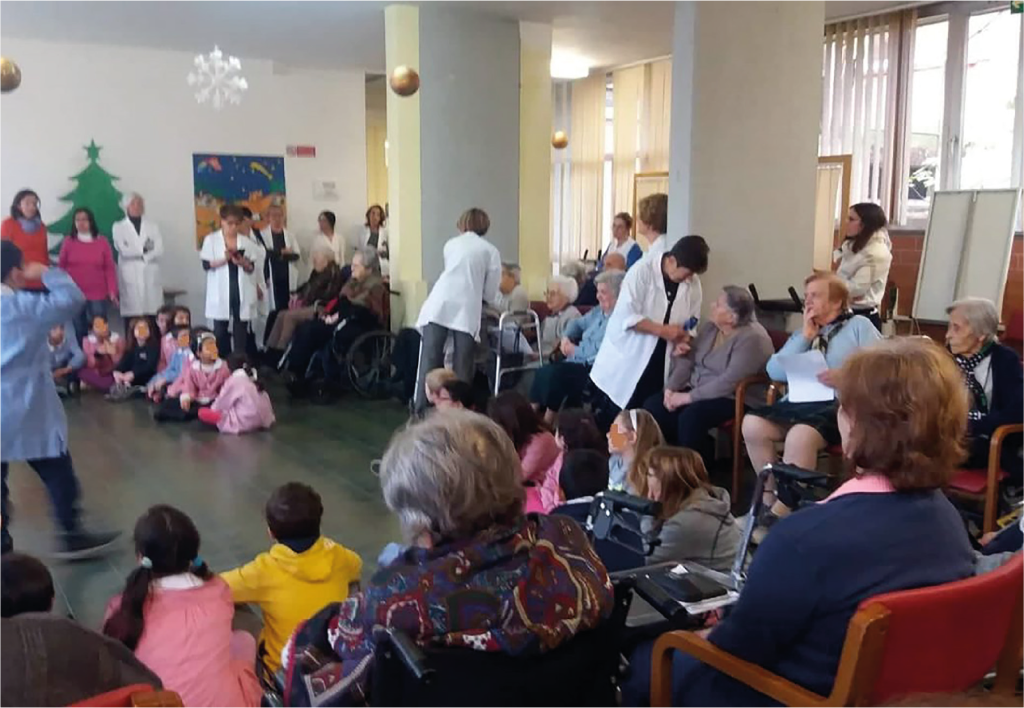
In each center, the elderly chose a fairy tale that they knew well and then was prepared for the theater to allow the elderly themselves to perform for children. The elderly with the help of the operators took care of the texts, costumes, and sets. During each meeting, a final party was also organized, and, during the last meeting, the elderly and children exchanged Christmas gifts.
CASE STUDY XI: RAINBOW
This intergenerational project, always organized in day centers, is an activity of musical animation with children. Meetings were held once or twice a month and the objectives were:
- Encouraging intergenerational dialogue through a musical repertoire of children of the elderly
- Encouraging older people to share their stories
- Translating the creative aspect of encounters into physical work through children’s drawings and artefacts
- Stimulating the skills of the elderly through the help of children.
The project was divided into three workshops: games of the past, movement games with musical accompaniment, games with voice. Usually, for one or two times a month, children went to day centers, but it happened that the elderly also went to visit children in kindergarten. Subsequently, the project produced such results that the experience was repeated in the following years with the active participation of the children’s school in the organization of the activities. Therefore, kindergarten and day center shared their spaces to accommodate intergenerational activities.
CASE STUDY XII: VORREI RITORNARE BAMBINO
Musical games of children and the elderly is the theme of Vorrei Ritornare Bambino that has as its objectives:
- Encourage intergenerational exchange on an ongoing basis with a meeting every two weeks
- Exercising the skills of the elderly
- Allowing older people to socialize
- Widening the reference points for older people in the local community
Throughout the school year, two kindergarten classes visited the day center twice a week. In the day center, the music therapist organized activities with musical games suitable for both children and the elderly. During the entire time of the intergenerational project. During Vorrei Ritornare Bambino the elderly and children shared stories, games, drawings, and artifacts. The experience was repeated in the following years with the direct participation of the kindergarten thanks to the teachers who thought about the theme of the different activities; for example, one year was proposed the theme of the circus, much loved by children.
2. The design and the elderly
THE ROLE OF DESIGN
The product service system design is “An innovation strategy, shifting the business focus from designing physical products only, to designing a system of products and services which are capable jointly of fulfilling specific client demands” (Manzini and Vezzoli, 2003), or in other words “A Product Service System suggests the need to link hard and soft issues such as technology and sociology, products and services and to view existing environmental problems from a systemic perspective” (Mont, 2006). In fact, to find holistic solutions to the issues of modern society the concept of PSS calls for the development of multidisciplinary approaches that require inputs from a broad range of disciplines, such as, economics, management, environmental studies, sociology, psychology, product design and engineering (Mont, 2006). It is important to pursue the synergy between all the elements of a product and service system, so Morelli suggests three steps that a designer should follow:
- Identify all actors and define their network.
- Define the possible scenarios, case studies, and customer journeys, to give a logical and organizational structure to the system.
- To represent all the elements of the service through instruments such as maps, physical prototype, or visualization of the logical and temporal ties.
In any case, the design of a sustainable product-service system would require a set of knowledge and skills that a single designer cannot have, so in a design process are involved different actors from different disciplinary sectors. Similarly, the provision of the service also requires the collaboration of multiple actors and stakeholders. In this case we are talking about, “solution-oriented partnership”, of which I have already provided a definition above. It is a collaboration that combines material and immaterial components to promote the convergence of the interests of all stakeholders involved. This is even more important in a market of increasingly customized solutions and with a final result of high quality.
What if the main actors are two different generations? “It is believed that by simply putting a child in contact with an elderly person, they will immediately understand each other and that an intergenerational relationship will arise, without the need for external assistance. Actually, it takes effort and attention to prepare a child and an elderly person to be comfortable with each other. Intergenerational contacts can be magical, but magic requires commitment.” (Steining, 2003). It is possible to encourage communication between two distant generations, especially from childhood since the child is naturally open to listening and devoid of preconceptions. The implementation of educational practices that accustom the child to the other as a resource and learning opportunities, contributes to the development of the elements of an active citizenship: solidarity, resilience, empowerment. These elements are the solution to the greatest problems of our society such as individualism, marginalization, and racism. Negative social dynamics that initially manifest themselves at school with bullying against those who are labeled as different. Intergenerational learning is a tool with which to overcome these social barriers that nourish the logic of separation. At the heart of intergenerational learning is the relationship. The relationship is based on care and empathy, which is the pleasure of being with each other and accepting the other for who he is and also for his diversity. In this way we train ourselves to know our neighbor and to perceive his unique inner world that characterizes him. It is precisely in this that the meaning of “inter” resides, that is, knowing how to connect with the complexity and specificity of the identity of others. In the intergenerational meeting all this happens through the exchange of stories, experiences, and memories. Bringing two generations so far together to pursue the well-being of the elderly and children and reflecting this well-being on the whole community could be more urgent today than ever. In fact, only in 2000 Eurispes and Telefono Azzurro, in their report, denounced: “forgotten in front of a TV, entrusted to a full refrigerator, children grow up in a golden solitude that progressively withers the natural attitude to relate to adults. They will be incomprehensible adolescents and young people, unfathomable to those who have postponed dialogue for so long as to preclude it, often forever.”
Scholars point out that intergenerational programs encourage children to be open to others, as well as creativity. Therefore, it would be important to promote them also in the nursery. In this way, all these teachings resulting from contact with such a distant generation can be internalized by the child and developed over time in the form of soft skills so useful in today’s world of work, developing a spirit of adaptation to face the future challenges and difficulties of life. All these qualities are added to a greater capacity for relationship, a better attitude towards school and generosity towards others. In the United States, a study was conducted that showed that after about four months of participation in intergenerational programs, the elderly showed a decrease in the level of depression, less time spent in front of the TV, increasing problem solving and improving motor skills. In addition, many of the elderly have shown their predisposition to be good educators, thanks to their past experience in the education of children or grandchildren.
ECONOMIC IMPLICATIONS OF THE IGL
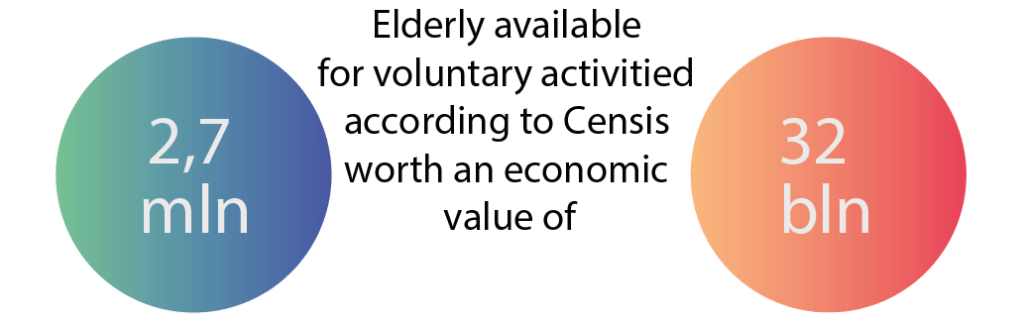
Intergenerational learning could help to re-establish cohesion and involvement between individuals with social as well as economic benefits. Investing in human resources from childhood would reduce relationship problems, early school leaving and consequently more employment and prosperity for the country: the level of active citizenship and GDP growth are directly proportional. In addition, a 2006 Censis study found that participation in intergenerational activities reduces medical drugs use by 38%. If this reduction were to take place at national level, two million elderly people would not have to face chronic diseases, with a 5% reduction in gross public expenditure on Class A drugs, that is, those reimbursed entirely by the National Health Service, on an expenditure of hundreds of millions of euros. The change in their life prospects in the 55-64 years, would lead to a further reduction in public spending for a total saving of about one billion euros, equivalent to 8% of public spending on medical drugs. In addition, large-scale programming of intergenerational programs would increase the number of elderly people engaged in voluntary activities by around 2.7 million, which would create an economic value of 32 billion, equivalent to 2.2% of GDP. A value that would rise to about 8.7% of GDP in the case of the commitment of older people in paid work, made of social and health services. In the light of these figures and also of the more general participation in social life, the progressive reduction in the percentage of elderly people who have social relations is worrying. The proportion of elderly people who stay alone in the house, far from friends, is growing, leading a life in solitude with too little time devoted to socialization. The use of technologies could encourage social participation in wider and different forms, information, communication or facilitate many tasks, contributing to the general well-being of the elderly.
London’s Design Museum: Six Project for Elderly
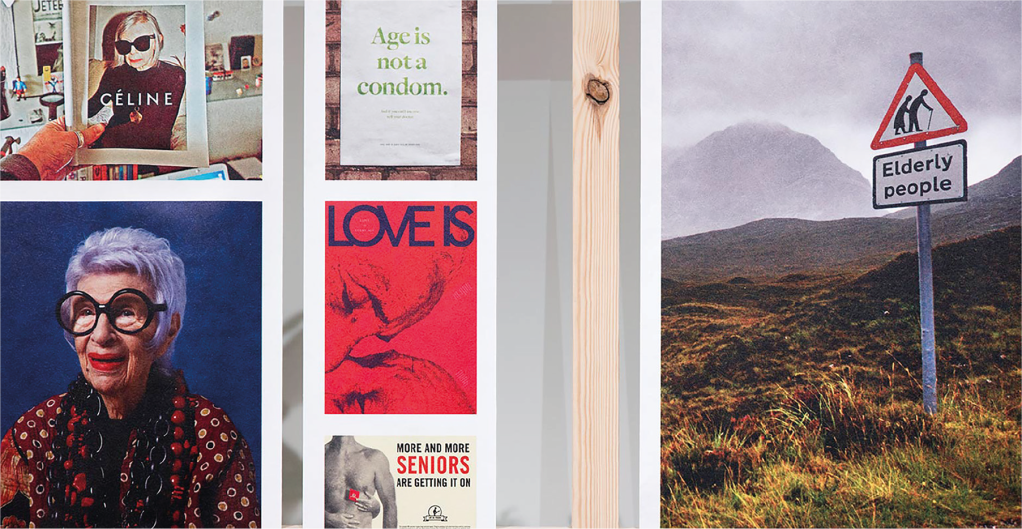
An organization, The London’s Design Museum, has addressed the theme and challenge of aging by commissioning six projects with the aim of making the life of the elderly better. The elderly population is growing, the elderly communities are getting bigger and that is why the London’s Design Museum has involved several designers to design solutions for an issue that is becoming increasingly relevant, that of the well-being of the elderly.
“Life expectancy has increased almost everywhere, and for almost every social and ethnic group. This is both a triumph for society, and a fundamental challenge to the way that cultures organize themselves,” said museum director Deyan Sudjic. “Where we live, how we live, how we support ourselves, and the quality of our lives as we age, represent the key questions that every society must address.”
Below I will give a brief description of each of the six projects designed for the elderly, because each project deals with the theme from a different perspective and it is worth discovering how the well-being of the elderly is a great opportunity for innovation in product service system design.
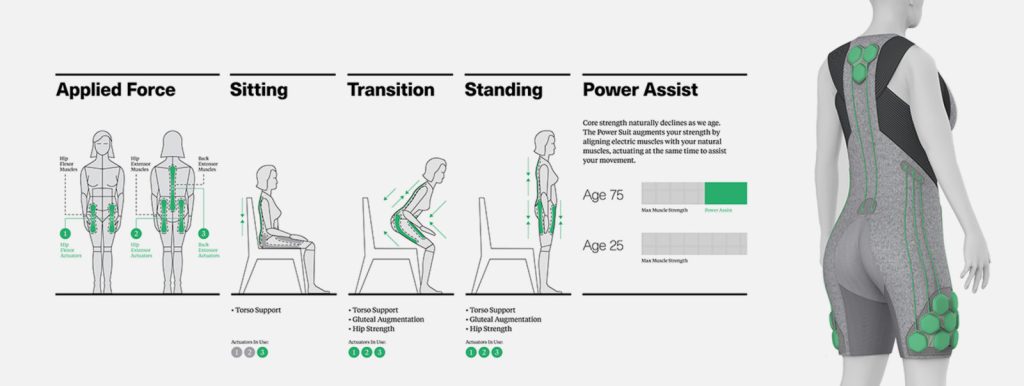
I. AURA POWER SUIT
By Yves Béhar, Fuseproject and Superflex, is a fabric accessory that through an internal mechanism, sensors and artificial intelligence helps the elderly to maintain a correct posture. They are like an extension of the muscular system that is particularly useful in climbing stairs or getting out of bed. Artificial intelligence, combined with sensors, intercepts body movements, and reacts in tune with natural movements such as sitting or standing up. The team of designers has particularly taken care of the aesthetic appearance of the product, with the intention of using shapes and colors that do not reflect the stereotypical clinical appearance of older products, but on the contrary a sense of comfort and style.


II. EXCHANGE
By Special Project, this project also aims at breaking stereotypes related to old age. Therefore, the purpose of Exchange is to encourage moments of contact and conversation between the elderly and other people around with a garden furniture system for indoor rooms. There is a table where you can start a conversation with a large sheet of paper where everyone can write their questions.

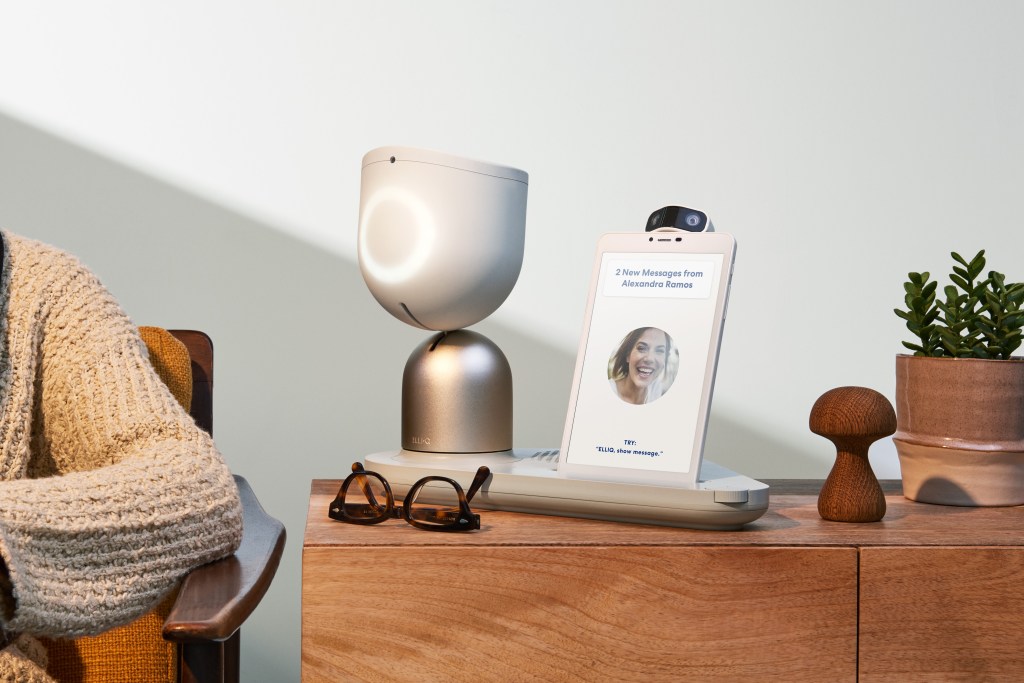
III. ElliQ
By Yves Béhar, Fuseproject and Intuition Robotics, ElliQ is an intelligent robot that helps the elderly to use technology and stay up to date even at this stage of their lives. The aesthetic is particularly cared for to hide all the complexity of the system and be easy to use for an elderly person. ElliQ connects the elderly to social media, video chat, audiovisual libraries. The aim is to provide a solution to the problem of loneliness and socialization that many older people are forced to face. The use of artificial intelligence allows the system to learn what the user wants and thus set goals that the elderly must achieve actively every day. The way ElliQ communicates with the elderly is made of lights, sounds, images, and movements that encourage continued use over time. The Lookout function gives the possibility to monitor the elderly remotely by caregivers.
IV. SCOOTER FOR LIFE
By Priestmangoode, the scooter with shopping compartment is designed for people with reduced mobility. It is a product that, in addition to supporting the elderly in everyday life, aims to encourage them to stay physically active. The design is designed to provide safety and independence to those who use it, and especially accompany the elderly in the different stages of evolution of the conditions of their motor skills. Many people of all ages use a scooter, but you do not see so many seniors doing it. Scooter for Life wants to break down this stereotype with a safe and suitable product for older people who do not perceive much safety in products of this kind currently existing. The wheels recognize fewer stable parts of the ground, further increasing the level of safety. From the name, you can guess that this product is designed to accompany the elderly everywhere from the home to the supermarket.

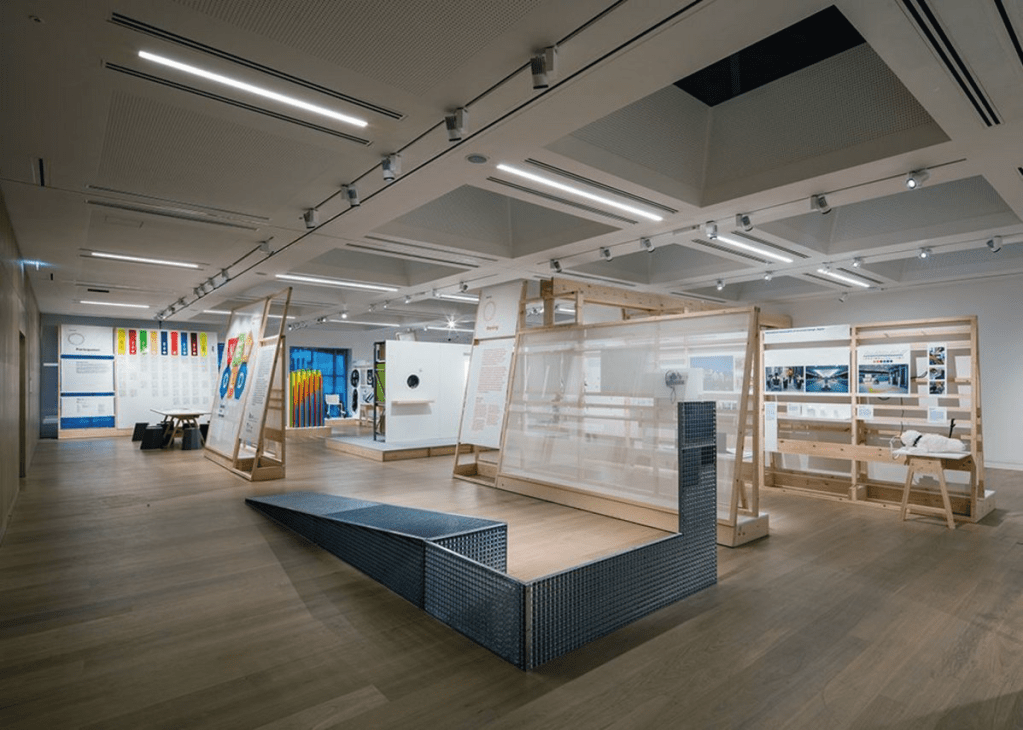
V. HEAD IN THE SKY
By Konstantin Grcic, it is an outdoor space to work and thinking. It is a galvanized-mesh structure that integrates with the surrounding space thanks to its relationship of voids and solids, but at the same time describes spatial limits that allow concentration and introspection for those who use it. The access ramp, consisting of a descent with a small degree of slope symbolizes the easy use of space as well as facilitating access to those with reduced mobility, such as an elderly person.

VI. NEW OLD FINE AGED SPIRIT
By Mother London, is a branding design project that promotes the benefits and the bright side of aging. In fact, a product that belongs to the past like these bottles of alcohol is made desirable again thanks to a fresh and captivating graphics as a sign of being always able to reinvent themselves. All these concepts symbolize the elderly who despite age can live in a desirable and satisfying way.


CASE STUDY: SOCIAL OVEN
Magda Sabatowska designed this kitchen kit to help the elderly to socialize with the neighborhood, exchanging homemade dishes. It is a system based on an exchange, both the elderly and its neighbors join the platform, and the neighbors can receive the meal from the elderly in exchange for money or other activities such as shopping or small household repairs: this encourages the socialization of the elderly with the surrounding community. The kit is shipped with all the instructions for use inside, with all the nutritional information and a sign to hang on the door of the house, which serves as a notification for the neighbors. The elderly who subscribes to the service receive everything needed to pack the meal and a mobile device to receive payment for the meal in contactless mode. The neighbors, on their side, receive cards that correspond to a certain amount of money or services to be rendered to the elderly in exchange for the home-cooked meal.
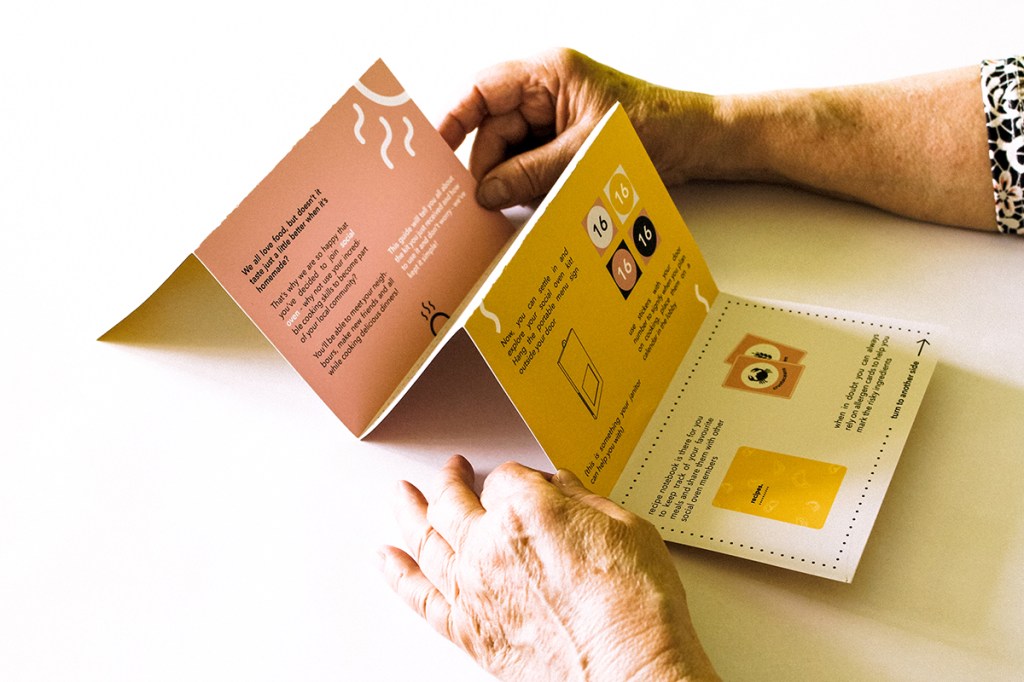
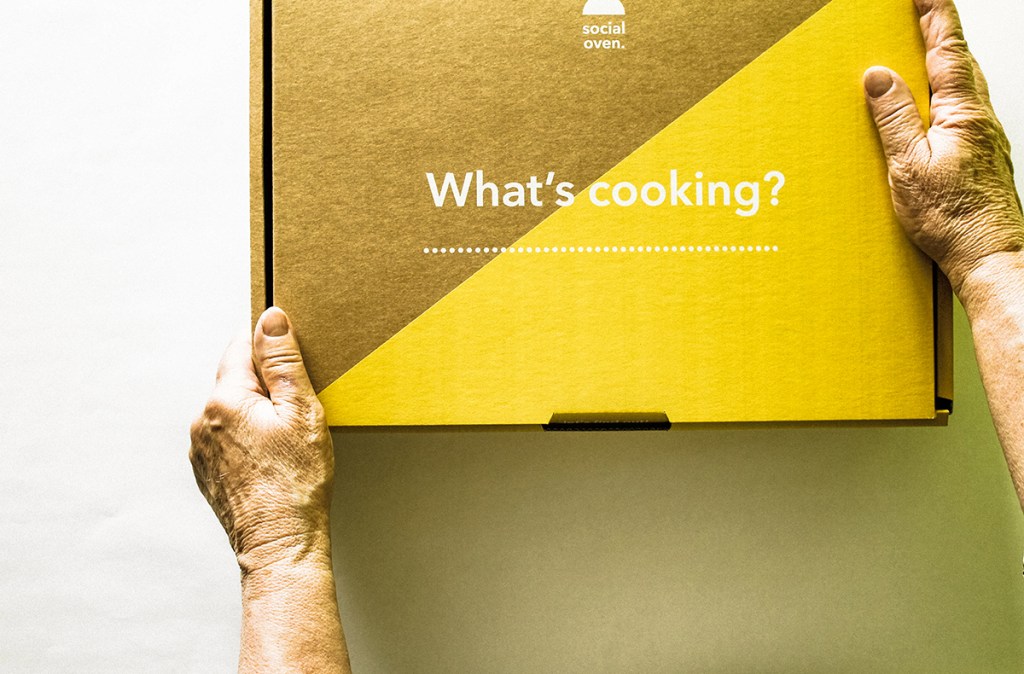

Sabatowska was particularly interested in designing a service that would reflect the places of her childhood in Poland, where the elderly ladies are in charge of preparing meals for the whole family; moreover, Sabatowska herself states “I was particularly interested in what happens when families no longer live with their Elderly relatives or have the time to visit,” continued Sabatowska. “A lot of the women I spoke to suffer from depression and lack purpose in the final years of their lives, as they don’t have anyone to care for anymore.” underlining the social value of the Social Oven project.
3. The social system and the elderly
The role of social relations
THE ELDERLY GENERATORS OF SOCIAL WELFARE
Active participation in social life and organized voluntary activities in particular is, as shown above, a constituent component of the concept of active ageing. To devote one’s time to the common good, especially at a time of life when the time freed from work is progressively increasing, whether it be paid or linked to the responsibilities of caring for one’s adult children, contributes significantly to the well-being of the elderly (Mannarini et al., 2017), consolidating the perception of oneself as a subject still useful to society. Volunteering expands, in fact, the social networks of the elderly with positive effects on different components of the quality of life (Istat, 2018). About a third of 55 years old and older people provide aid for the care of children. The type of aid that is given has a strong gender connotation, the proportion of women who are active in providing care, care, and management of everyday life (childcare, companionship, food, clothing, domestic activities, adult care, health care, help in the study) is always higher than the share of men, the latter are more related to more contingent and practical activities (carrying out bureaucratic procedures, economic aid, non-domestic work). According to Istat, in cultural and recreational activities, gender differences are lower, although more women than men participate.
SOCIAL RELATIONS OF THE ELDERLY
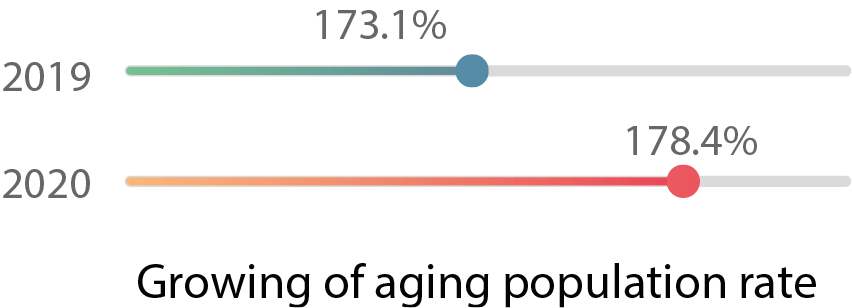
The old age index, given by the ratio of the population aged 65 and over to that with less than 15 years, is the indicator that best summarizes the degree of aging of population; on 1 January 2020 it is 178.4 percent, still growing compared to the previous year (173.1 percent). The Northwest, with 187.9 percent, is the oldest breakdown, against the South that, with 160.1 elderly every hundred young people, is the youngest breakdown. In Italy 21.8 per cent of institutions is devoted to caring for the elderly, which are for 11.7 percent self-sufficient and in solitude, and 10.1 percent are elderly people who are not self-sufficient. If the lonely elderly who perceive this solitude as an absolute problem are generally few, the data indicate instead a strong withering of social relations, that for one in seven elderly people translates into a real social void. In this scenario, family networks, caregivers, public home care services are the pillars of the social protection structure. In Milan, the presence of single people over 60 years of age on a population of about 1.3 million inhabitants is 18.5 percent, which also in this case exceed the national average which is 17.8 percent. In addition, the Lombard welfare system takes particular care of the over65. In fact, the region offers in total about 86 thousand beds that represent 20.8 percent of those available in Italy, out of which about 78 percent, is intended for persons aged 65 or over.

AUTONOMOUS ELDERLY PEOPLE
When the elderly still has a good health condition, it is useful to keep them engaged in activities that allow them to remain active and to be able to express their abilities. For this purpose, there are various types of routes:
- Recreational and socializing activities (card and billiards, music and dance, singing, participation in parties and events organized in the area where the elderly lives).
- Cultural activities (research and cataloguing of local traditions: recovery of recipes related to childhood, school memories and other customs; participation in themed cineforum, in which to show films dealing with the years of the youth of the elderly; guided visits to museums and monuments in the area).
- Expressive activities (carpentry, sewing, decoupage, poetry and creative writing workshops).
- Educational activities (memory enhancement course, computer literacy course, English course).
NON-AUTONOMOUS ELDERLY PEOPLE
When the elderly is affected by a degenerative disease, cognitive stimulation activity may be used. It is also shown that cognitive stimulation is able to counteract the loss of residual abilities with results similar to those obtained with drug therapy. Cognitive stimulation exercises include:
- Orientation exercises: including the ROT (Reality Orientation Therapy), which is a psycho-geriatric rehabilitation technique. The ROT is structured in meetings of 45 minutes, 4 times a week with the objective of the activity is to provide subjects strategic space and time points, so as to reduce space-time disorientation.
- Memory strengthening exercises: these exercises, which are used in subjects whose deterioration is mild, with exercises that improve orientation in space and time, language, attention and concentration, levels of self-esteem.
- Sensory stimulation: active maintenance of the five senses, both thanks to the use of simple techniques, and with special projects sensory stimulation methods such as the sensory gardens, Snoezelen room and Nurturing touch.
- Virtual train: it is an innovative non-pharmacological therapy, through which it is possible to manage and reduce those behaviors caused by the pathology and defined “problematic”, such as irritability, anxiety, or sleep and eating disorders.
- Pet therapy: useful activity to stimulate the sense of responsibility related to “taking care of”, which is a useful mechanism to improve socialization, psychophysical balance, self-esteem, and cognitive functions.
- Psychomotricity with dementia: activity that facilitates the motivational and psycho-physical growth of the subject who becomes active and no longer passive.
- Various workshops: cooking, dance, music, and creativity workshops.
ELDERLY AND RETIREMENT
People who, close to retirement, maintain part-time employment or engage in volunteering are more satisfied with their ageing than people who retire completely. Emotional ties, both with loved ones and friends, are a crucial part of life at all ages: their presence can help you feel valued, and this promotes both your own emotional well-being and support for others. The commitment of older people to voluntary work and associations, although it shows clear collective benefits, such as greater trust in the social fabric and support for well-being by integrating social care services, also has an individual benefit dimension, increasing the opportunities of individual elderly people to break their isolation. Such stable social relationships can provide a sense of continuity and indispensable help to manage the changes that occur during life, such as access to retirement, changes that involve the family or the loss of a loved one. It is then useful to safeguard old interests and develop new ones, trying to be creative about how to give and receive help.
ELDERLY AND PLACES OF RELATIONSHIP
The services dedicated to the elderly in which these can make meetings and keep active are:
- Elderly Social Centers, present in many municipalities and largely self-managed: they are the meeting point for people no longer young. In them are organized activities of social and cultural commitment, but also fun. Examples include school and student transport supervision services, small maintenance of green areas, vigilance in parks, museums, exhibitions and fairs, and the transport of disabled people. Various cultural, art protection, recreational and sports activities are also planned.
- Universities of the elderly: they are a rich opportunity for those who have free time and want to continue to study and learn. These universities are run by various associations, institutions and foundations and offer a wide variety of courses held by qualified teachers and professionals. It is possible to attend lessons in art history or archaeology, but also in computer science. There are also courses in gymnastics or manual activities, such as photography or painting. These universities are open to all, regardless of the degree and age.
- Day centers (C.D.) deal with elderly people who are not self-sufficient and offer care, recreation, catering, and counselling and so on. They also propose to provide support to families, taking care of their loved ones for a few hours a day.
CASE STUDY: CIVITAS VITAE
Civitas Vitae is a center where the philosophy of active longevity is applied. At the spaces of Civitas Vitae are held annually paths called “Terza età protagonista,” which are developed in thirty days, twice a week. At the beginning of the day, the participants gather around a table to discuss a topic proposed by a facilitator, taking the cue from some events of the moment: a short article, a film, other materials. At the end of the morning, the participants socialize first having lunch with friends and then taking a walk together. The afternoon instead is dedicated to activities in the computer room, here the course participants, led by a tutor, learn to use the computer. At the end of the “Terza età protagonista” course, participants become part of the group of Nonni del Cuore, members of this group can continue with activities organized at the center Civitas Vitae; among these activities there are the intergenerational ones at the Museo Veneto del Giocattolo, where the group of the Nonni del Cuore host the students of the area, to whom they show the toys in the Museum, thus creating a moment of mutual enrichment thanks to the toy. The elderly can also perform activities with children at the Children’s Center “Clara and Guido Ferro,” and at the Pista for road education, where the Nonni del Cuore, in collaboration with the volunteers of the sports association “Amici della bicicletta” and the Municipal Police of Padua, teach children who attend elementary school the road code and sometimes even to go cycling. The data collected showed that among participants the proportion of regular drug users is significantly lower than that of the rest of the population, with a 38% reduction in drug use.
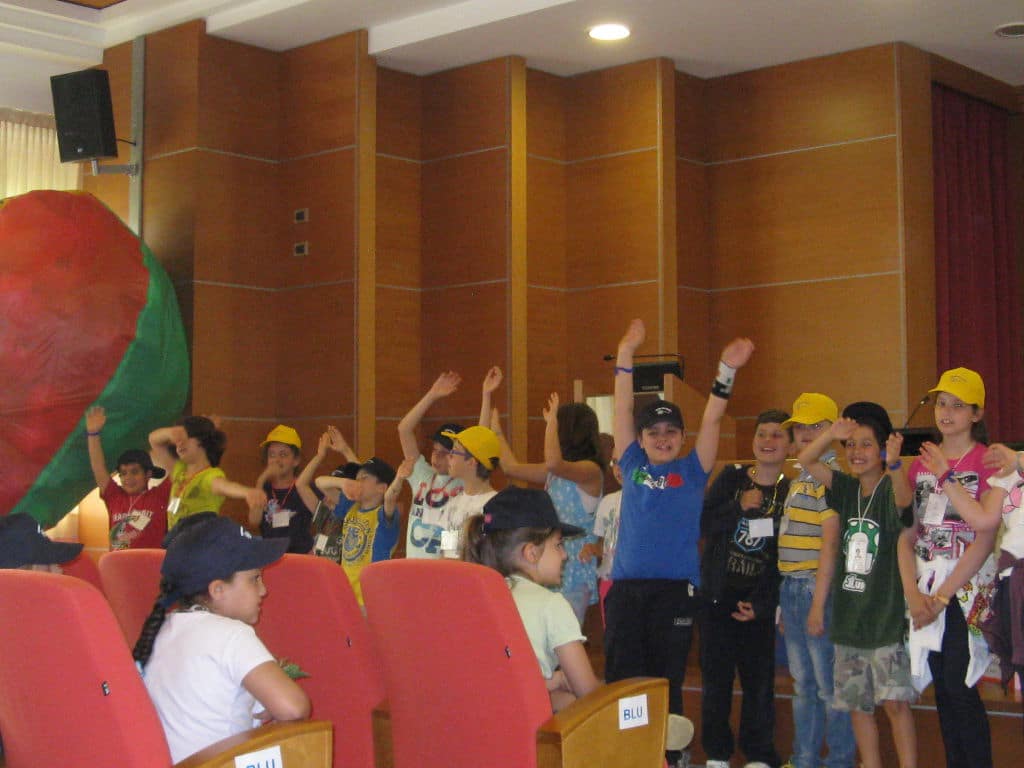
CASE STUDY: ANZIANI E BAMBINI INSIEME
In 2009, the Unicoop cooperative realized Anziani e bambini insieme is a project that seeks to restore the connection between generations. The project began within the Facsal Center and operates in the nursery spaces, in order to improve the training and socializing skills of children and the development of cognitive and social potential; day center, to improve the quality of life of guests through socializing experience; and retirement home, providing opportunities for recreational and cultural activities.
The elderly will have the opportunity to be valued, through:
- The return of the role of adult taking part in the education of the child
- The formation of new social ties to avoid the situation of loneliness
- The transmission of their past
- Building on skills and competences at the service of the community.
Children, on their side, can discover new rhythms of life and imagine what their life could be like as adults, for this reason Anziani e bambini insieme wants:
- Provide meaningful contact experiences with adults outside the household
- Providing direct knowledge of the world of the elderly
- Educating the child to interact with others
- Educating the child to respect for diversity.
The program of Anziani e bambini insieme provides:
- Laboratory activities
- Birthday parties for the elderly and children
- Lunches together
- Reception of new guests
- Celebrations linked to different occasions such as Christmas, Easter, Carnival etc.
The Anziani e bambini insieme project is periodically repeated with fixed meetings, in this way children can mentally prepare for what will happen at each meeting and above all there is time to establish meaningful links between the elderly and children. Spontaneous initiatives by children or the elderly to stimulate creativity and fun are encouraged along with the moments already foreseen in the calendar. A logbook is also kept in which activities are observed to improve programming over time, improve interaction with parents, and provide training tools for other practitioners and educators.
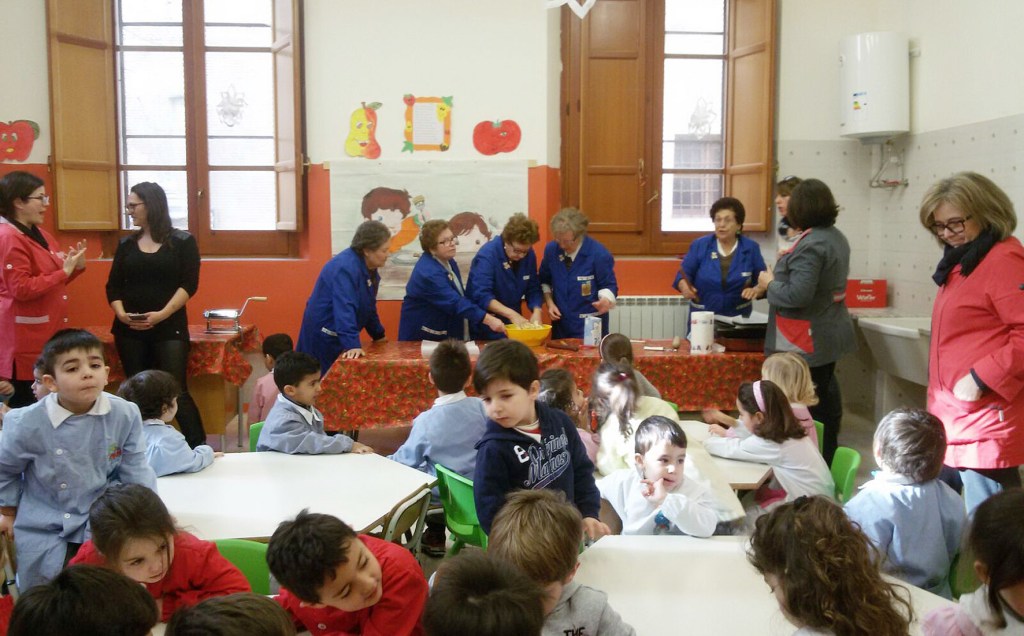
CASE STUDY: MENU D’ARGENTO
The social services of Saronno launched an initiative called “Anziani meno soli più sani – Menù d’argento” to provide elderly with lunch and dinner just for 7 euros. The menu is dedicated to over 65 and includes first course, second course, cheese or dessert and 0,5 Lt of water. It would be an opportunity to make elderly able to go to the restaurants or pizzerias to eat in the of other people and break the monotony of unhealthy habits of being at home alone always eating the same meals. For each person with more than 65 years is sufficient to go in a restaurant that is part of the program with their Identity card and enjoy their meals. But after Covid-19 emergency in Milan other kind of services more focused on home food delivery have been activated by local businesses such as Giacomo Group. This restaurant is part of the tradition of Milan with its restaurants from 1958. During the Covid emergency Da Giacomo wanted to make elderly’ life easier offering them home delivery services for free. This initiative was valid for the neighborhood of Porta Vittoria, Porta Venezia and Porta Romana in Milan, where the restaurants are located, for elderly people not able to stay in line in the supermarkets, to go out cause of health problems or with economic difficulties. During the lockdown the elderly served were 150 and all for free. They had just to order through the website and wait for their food home delivery. The products available were ready made meals, preserves or canned food branded ‘Da Giacomo’, so a valid and healthy alternative to the grocery shopping.

CASE STUDY: RESIDENCE OF THE ABBEY
The first intergenerational experience in Europe was held in France at Saint Maur, near Paris, where it was opened in the nursing home “Residence de l’Abbaye” a nursery. The objectives of this intergenerational space were:
- Improving relations between generations
- Improving the quality of life of the elderly and children
- Educating in diversity
- Inspiring the surrounding community.
There are several activities that the elderly and children perform together: pastry, gardening, reading, music and trips. Links have developed with both families and citizenship and other schools, and together they organize events throughout the year as well as on Christmas and other recurring holidays. The elderly benefit from contact with children, creative and lively, and rediscover their role as responsible adults. Children learn to interact with diversity. The project was so successful that it is still active after fifteen years and many other realities have followed the example by activating similar projects, even beyond the French borders. We have an example in Italy, in Aosta with the project “N come Nido, N come Nonni”; or again in Verona, where the Municipality Intergenerational Centre “Casetta Maritati” was inaugurated, which opened its doors to children and young people from 0 to 14 years.

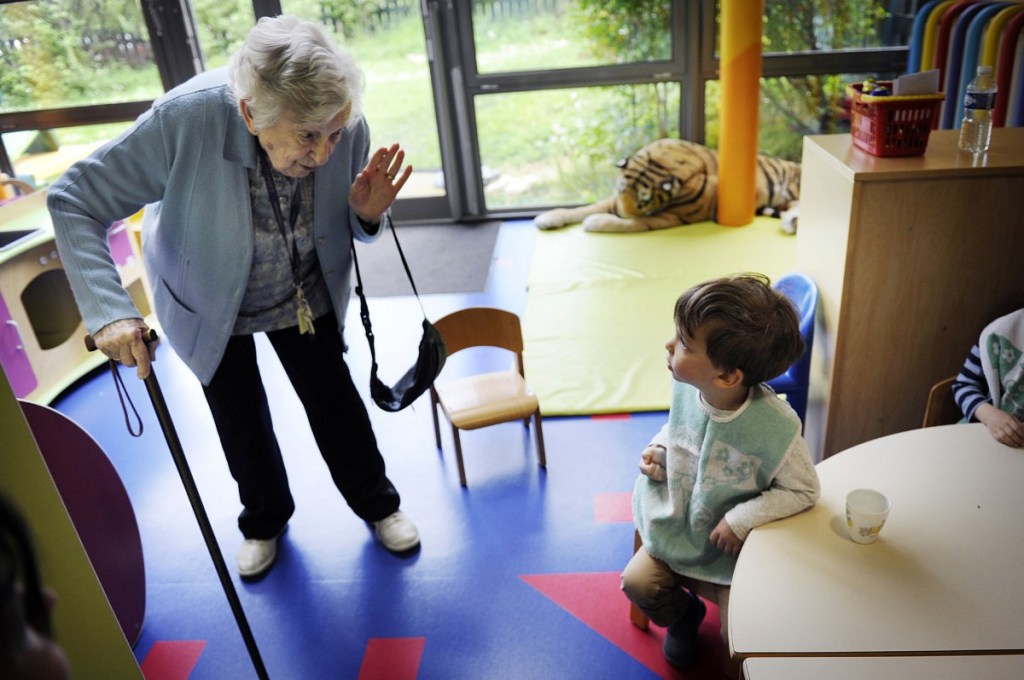
CASE STUDY: HUMANITAS NETHERLANDS
In 2012, the Dutch Government decided to reduce the costs of care for people over 80 without the need for urgent care; thus, the elderly care sector has seen a progressive reduction in financial resources and an increase in empty rooms in the retirement houses. Humanitas faced this change with the belief that care homes for the elderly could be organized in a different way, with more and “better” staff. A holistic perspective was adopted, in the belief that the current mechanistic approach in health care, where care is provided to people for survival, could be modified towards an approach in which assistance is provided to people with a special focus on the well-being of people: their needs, desires, and, specifically, their abilities and happiness. Thus, the student housing problem was examined, imagining a convenient situation for both groups. The aim was to transform the nursing home into a warm and comfortable home: having young people living inside the Humanitas nursing home could have been the solution. At the same time, students would have to spend less money because they could rent a free room in the Humanitas center in exchange for being a “good neighbor.” After several meetings, the board accepted a pilot project in which a student would live in Humanitas for a month. The facility involved a student interested in the project and explained that being a “good neighbor” would be the only rule to follow.

Currently, this intergenerational project of Humanitas has expanded to a total of 6 students and 160 senior residents. A new environment has been created that is a place where the elderly and young people love to come to live. The elderly also has new topics of conversation other than drugs and appointments with doctors, now they can learn about the love stories of the young students, reminding their youth. Students also help residents learn how to use their computers, tablets, and smartphones, encouraging online connection between residents and students via Facebook and Instagram, and digital connections of seniors with their family and friends.


4. The management engineering and the elderly
The role of management engineering
The tools introduced by management engineering allow you to understand how companies make their business. We need to introduce the concept of a business model, a tool that provides an overview of all the main elements that make up a company, its components and how they work together.
THE BUSINESS MODEL CANVAS
The use of the term “business model” spread in the late nineties, with the introduction of the Internet in the business world and then with the establishment of the first companies of the web, the so-called dot.com. Since then, many authors have contributed to the definition of the concept of business model. Joan Magretta in 2002 defined the business model as a “story that explains how the company works”; it would be to say that a business model must know how to say who the consumer is, how you create value for the consumer and at the same time show how a company generates profits from its business. There are therefore two parts of the value chain to consider: the first refers to activities related to production and design, the acquisition of raw materials, industrial production; the second concerns those associated with the sale, or the relationship with the consumer, the formation of the link with the consumer and the distribution of the product or service. Over time many authors have contributed their interpretation of the business model, leading to a gradual evolution of the concept. Osterwalder, Pigneur and Tucci (2005) gave the following definition: “a business model is a conceptual tool that contains a number of elements and their relationships and allows to express the business logic of a company. It represents the description of the value that a company offers to one or more customer segments, the description of the architecture of a company and its network of partners to create, market and distribute the value, and thus generate profits”. This definition has been formulated because of an analysis carried out on the models proposed by other several authors: through the comparison of the works, the different elements have been studied, and the common ones have been identified. The results collected were subsequently used to formulate a reference model that could summarize the different interpretations. The model is divided into four sections, divided into nine entries or blocks, described as follows:
Product:
- >Value proposition: provides an overview of the company’s package of products and services.
Customer interface:
- >Target consumers: describes the consumer segment to which the company wants to offer value
- >Channels: describes the various means used by the company to stay in contact with its customers
- >Relationship with the customer: clarifies the type of relationship that the company establishes with its customers, depending on the segments considered
Management of infrastructure:
- >Key resources: indicates the organization of resources
- >Key activity: outlines the skills needed to implement the business model
- >Partnership: describes the network of cooperation agreements concluded with other companies and necessary to offer and market value
Financial aspects:
- >Cost structure: summarizes the expenses arising from the use of the means used to support the business
- >Revenue: describes the revenue generated by different revenue streams
Starting from these voices, and therefore from his theses and his works, Alexander Osterwalder proposed the Business Model Canvas, or a graphic model with the aim of helping the company and people to develop their own business model. This diagram reproduces the nine blocks already described, grouped in four different sections related to the proposal of value of the company, to the consumers to which it is addressed, to the infrastructures used and to the financial aspects. The purpose of this scheme is to assist the company in outlining the overall picture of its activities, showing how to integrate and make all the elements of the business work: under each heading is left some white space to allow people to work together, discussing the elements of the business model using post-it or felt-tip pens, so as to encourage confrontation, discussion and creativity. This model has been chosen to develop the aspects related to management engineering and the formulation of business elements of the thesis project that will be discussed in the next chapters. Before conducting a general study on food delivery, the following is a practical example of business models of two companies operating in the food sector; the first is that of Esselunga, a case of large-scale retail distribution; the second is that of Just Eat, marketplace that connects multiple restaurants to deliver hot meals at home.

THE ESSELUNGA BUSINESS CASE
Esselunga mission is to satisfy customers and win their loyalty, offering services that can meet the different needs of customers increasingly attentive to quality, well-being and environmental protection, at an advantageous price. To keep this promise, Esselunga offers a range of products under its own brand. The range of these products is very wide and varied, both in the food sector and in the non-food sector, and the strength lies in the choice to produce not only conventional products, but also specific lines for each need, focusing mainly on organic and ecological production. This strategy based on the product and the customer has allowed Esselunga to achieve over the years a very strong competitive advantage in the grocery sector: own brand products do not imply marketing costs, typical of the branded industry, allowing the company to reach higher margins and the consumer to buy a product, of similar quality to the brand one, but at a price 25% lower than the leading brand. To meet the needs of customers who have little time to devote to spending, Esselunga has introduced the possibility of making “spending without lines” using self-scanning, that is automatic cashier that replace the usual cash flow process, limiting it to payment only. The most innovative service is the online shopping that provides the delivery of the grocery shopping at home.
The target group of the service is mainly women between 25 and 40 years of age, who account for 70% of total customers: the woman who is linked to a particular purchasing and spending process, such that many working women or new mothers, who have difficulty moving or little time available, largely adopt this mode of purchase. The service is also aimed at the elderly and the disabled, categories that benefit more than others from the possibility of getting the expense carried at home, for which there are benefits in the costs of delivery or the provision of the service free of charge. Purchases can therefore be made at points of sale in the different cities, mostly in the northern regions, or through the e-commerce, which is accessible directly by visiting the site esselungaacasa.it or using the link from the main site of the supermarket. Once the expense is completed, the order is registered to be subsequently evaded; moreover, the day and the order of delivery are chosen by the customer at the time of purchase and the expense is brought directly to the door of the house by the company staff. In case of reports or need for information not available on the site, is active customer service, contactable by phone. Esselunga has tried to make processes as fast as possible, reserving for each category of problem (technical, delivery related, reports) a dedicated form, so you can solve the problem in the shortest time possible. Efficient customer service is a good way to satisfy the customer and thus gain his trust. Today Esselunga has decided to use the introduction of other services, to expand the target audience: proposing offers and promotions to attract consumers sensitive to prices, home shopping to those who want to save time or who are unable to move. All customers are given the opportunity to join the loyalty program “Fidaty”, which allows customers to accumulate points to be used then to request prizes from a catalog periodically updated; the use of the loyalty card also allows you to benefit from promotions and discounts on products. The last service finally made available by the supermarket chain is the creation of an application for mobile devices that allows for example to locate the nearest store with the ability to view all the main information such as opening hours, offers and promotions of the moment.
The key resources for the Esselunga business mainly include material assets, including:
- buildings, owned or rented, used for the opening of the stores;
- centers for the storage and distribution of goods;
- plant and machinery in own production plants, where fresh gastronomy products and bakery products are processed;
- buildings used as meat and fish processing centers;
- trucks used for point-of-sale supply, and vans used for delivery to the customer’s home;
- the logistics network.
The latter is a major element in Esselunga’s core business: purchases and deliveries of raw materials are centralized, as is the production of fresh produce. This type of logistics allows to connect the various distribution centers with all the points of sale, for a daily distribution of the goods also in the points of sale without warehouse. As for the online shopping service, the software through which the virtual supermarket comes to life is a fundamental element: developed by the Telecom Italia Group, which is also responsible for making continuous improvements and maintenance. The suppliers, of the raw materials used to produce fresh products and gastronomy as well as of the own brand products, are carefully selected and constantly monitored to meet particular product requirements. Esselunga carries out a direct control on all the phases of the supply chain and for product lines such as the own brand organic ones. In fact, companies that produce on behalf of Esselunga are required to meet certain quality requirements set by the company itself.

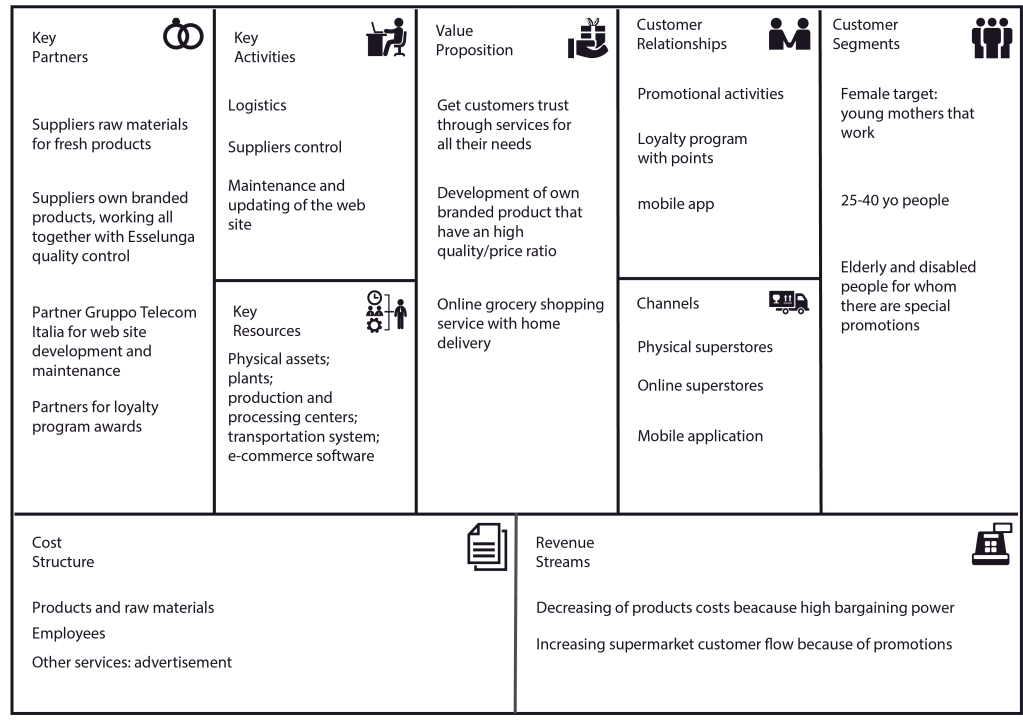
THE JUST EAT BUSINESS CASE
Goal of Just Eat is to retain loyalty with all those who do not have time to prepare the meal or simply wish to order the meals to be delivered at home. Just Eat acts as an intermediary between restaurants and consumers, offering both sides innovative and fast services. The constant search for new premises to be integrated into the circuit is made according to the type of cuisine offered, to ensure the variety of choice for the final consumer. The ways in which an order is placed are very simple and fast, ensuring a considerable saving of time. The consumer target for Just Eat is represented simultaneously by local managers and online users. In both cases, the satisfaction of requirements is not required: as regards the premises, it is sufficient that they offer the service at home and that they are able to respect the delivery times communicated; as for users, the service is offered to everyone, from singles to young families, including the elderly and workers ordering lunch in the office. The only condition is that orders are placed online. As for the choice of cities where to activate the service, this is done based on population density to ensure many potential customers. Therefore, the service was launched first in Milan and Rome and then in other cities such as Turin, Bologna, Florence, many of which are university cities with a high presence of students, which are the target model for Just Eat. Customers then place an order through the portal, although it is not the only mode made available: have been developed applications for mobile devices, Iphone Ipod and Ipad, which allow you to order out of the house through the search of local affiliates thanks to mapping carried out with location detection. Thanks to this solution, Just Eat manages to get more visits in the portal. Within the site, after making purchases, you can issue feedback evaluation: all these comments are then displayed by other users while browsing. Opinions are useful to other users to get an idea about the quality of the food, to restaurants as an incentive to work at best to acquire the trust of potential customers, and Just Eat itself to assess the reliability of its affiliates and manage the positioning of the restaurant in the marketplace.
The key activities of Just Eat are, on the one hand, the maintenance and which have allowed the company to gain worldwide leadership: this technology is used to keep the connection and send orders to the kitchens of the affiliated restaurants. In each room is installed a device, called Just Connect Box, where inside there is a gprs modem, a small printing device and a sim card that allows the restaurateur to receive the data sent by customers; through the interface, the restaurateur can accept, refuse or modify the order received at that time. After the action of the restaurateur, the customer receives in a few seconds a confirmation on the acceptance or refusal of his order. The use of wireless technology has made it possible to be independent from the landline that sometimes could be busy, slowing down the reception of orders. On the other hand, the company focuses on promoting its portal and supplying its affiliates with the suitable technology, for a fast and precise service. The software is managed by an external company. The resources related to technologies reside in patents, constant updating of the portal, both in the content and in the performances of the software. The development of this technology is also managed by an external company, specialized in the development of wireless products.


THE ECONOMY OF FOOD HOME DELIVERY
In Italy, the pioneer in the e-grocery sector was the website Volendo.com created in 2000 in Monza, with the aim of offering a home shopping service for the area of Milan and province. The term food delivery means the home delivery service of food that can be a service complementary to the current offer of a company or constitute the core element of its business. The rapid spread of this type of service follows the evolution of the consumer behavior, which has among its main needs the saving of time. In Italy, food delivery has delayed its rise by a few years compared to other countries such as England which was on the contrary one of the first countries in Europe. In fact, in Italy direct sales have always had the preference of consumers, but the spread of technology in everyday life and the evolution of habits, has allowed for some years the development of new trends in food consumption. More and more out-of-home meals consumption increases: every day about 12 million Italians buy lunch in a canteen, in a bar, in a restaurant or in the vending machines, eating it at home or at workplace. In fact, the internet has changed radically, over the years, the habits of consumers but also the business models and business strategies of companies, with a very strong impact in all sectors and economic activities. The magnitude of this innovation can be compared to that of railways, electricity and telephone, which introduced radical changes and new business opportunities. The home delivery business is an evolution of the door-to-door and direct selling market; these formulas were immediately successful because the consumer likes to receive individual attention and appreciates the opportunity to ask questions and learn more about the product. Between 1930 and 1970 the first household appliances were introduced in Europe and, since the mid-sixties, in all Italian families, the direct sale of frozen food products began. A still existing business that has been able to survive and evolve over time without fear of social and cultural changes, privileging the direct sale of frozen foods to a b2b type market, and taking advantage of the infrastructure already available to move to the sale of hot meals in the b2c. What will be the next evolution? Perhaps the delivery of recipes to be prepared at home without effort, with fun and social impact?
Whatever the next step, knowing how to adapt and evolve your business is fundamental especially for local enterprises that if they can follow trends and innovate can achieve unexpected results. In this regard we will discuss in the following paragraph the case of “Olio Carli”, a company that has been able to seize the opportunities of direct selling and home delivery thanks to new technologies.
CASE STUDY: OLIO CARLI
Fratelli Carli is an olive oil producer that has adopted a direct marketing strategy from the beginning, delivering its products exclusively at home. “It is not found in stores”, in fact it is the slogan of the company that over time has become a leader in the direct sales market.
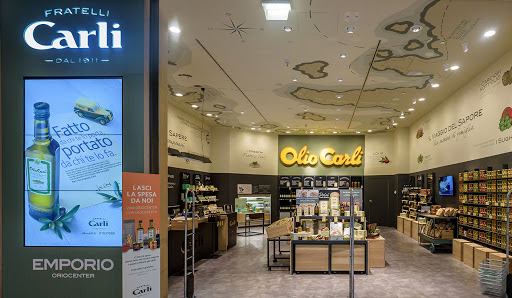
The company was formed at the behest of Giovanni Carli who decided to sell the surplus oil stocks directly to families living in the same area of his company, in the town of Imperia, building a direct customer relationship and trust. The advertising of the product was entrusted to the family printing house, printing price lists and order cards to maintain contact with consumers. In the ‘60s the distribution of the products with own means was implemented, recording a success such that the family decided to widen the availability of the transportation system to succeed in delivering the products in almost all Italy. Since then, the business model has not changed much, but the modalities of acquisition of the orders and the logistics inside to the company have changed to be adapted to the new technologies. The range of products has gradually expanded with other types of products such as specialties in oil, pests, pate, ready sauces and a line of natural cosmetics with the active ingredient of olive oil. With the intention of increasingly strengthening the relationship with customers and with a view to innovating, the company has also opened some emporiums in recent years: the first in Imperia, in the heart of the main plant, then in Padua and Turin. These emporiums are a kind of museum, in which visitors and customers can discover and visit the Carli world and history, with periodically organized events for oil tasting, professional culinary lessons, and testing sessions of cosmetic products.

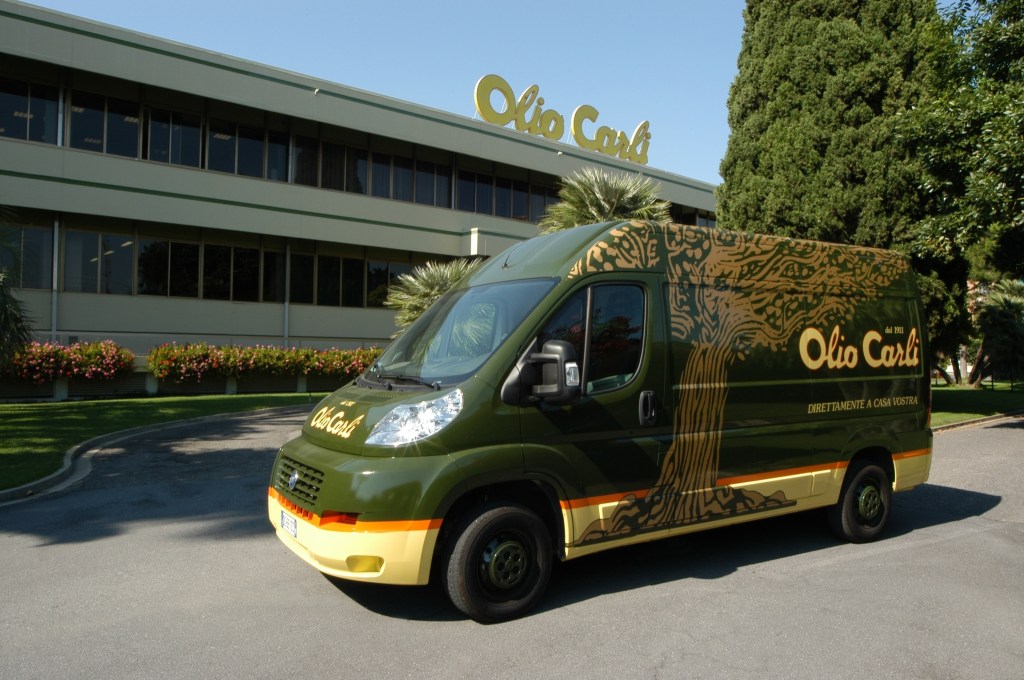
Conclusions
The world’s population continues to age and data show that this trend is set to continue and increase over the coming decades, in addition to the increase in disease, caused by the advancement of age and the consequent increase in public expenditure to be able to counteract them. It is therefore necessary to make the elderly person no longer a taxable person and a burden on society, but an active element of society. It is therefore very important to promote interventions aimed at an active ageing of the population, providing older people with the means to counteract the effects of ageing, promoting the assumption of healthier behaviors. The enhancement of the elderly, of their active role, the recovery of their historical memory values, their cultural background and historicized knowledge, is particularly important in a society like ours, where the patriarchal family was replaced by a mononuclear family. Where at one time our old people were considered a source of wisdom and models to imitate and respect by children and grandchildren, now we tend to marginalize them, relegating them to the margins of a society that is evolving too quickly, leaving them behind in this frantic technological race. European policies also promote a cultural change in which active ageing is enhanced to adapt the labor market, consumption and welfare to the effects of the birth boom in times of economic well-being, characterized by individuals who today in many reach the heights of age and are opposed to a current era with a low birth rate. It is no coincidence that since the beginning of the new millennium there has been a progressive attention to the phenomenon of demographic ageing at international level: an approach which has led the European Union to declare 2012 the European Year of Active Ageing and Solidarity between Generations. The promotion of active ageing in our country reflects a fragmentation between the different levels of policy, with measures that have often concerned individual aspects and interventions with a very limited socio-economic scope, which denote the lack of a genuine overall strategy. Promoting the “active” participation of older people means creating, supporting and developing the conditions to make it really possible and implement activities, instruments, practices, behavior aimed at promoting a society that consciously prepares itself to face the future, a future with an increasing percentage of the elderly. There are many ways in which active ageing can be encouraged, inter-generational learning being the best opportunity because it benefits not only the elderly but also the new generations. Indeed, the interaction occurs in multiple forms especially when mealtime, health and social moments are combined. In the FIMMG’s project people while going to their family doctor a medical examination can have suggestion about their diet and lifestyle. After a while, the interaction between patient and doctor occurs frequently because the diet given by the doctor is personal and should be periodically updated. The same happened in Russi’s town, caregivers assisted Elderly not just to feed them, but they also learned how to take care of each Elderly’s specific needs and interact with them as an active part of their life. It is appreciated a lot when Elderly have the opportunity to see other peers and interact with them like in the case of “Menu d’Argento”. Definitely, it is interesting to see how interaction has a very good outcome when it comes along with food. FIMMG states that Elderly give great importance to their mealtime, data also say that there is a problem of loneliness among the Elderly in Italy and in Milan as well: through this first research has been shown as “food” is a good reason for socializing and feeling part of a community. In many projects the success of the meeting between the elderly and children (Residence de l’Abbaye) is evident, but so far, no economically sustainable solution has been planned, as in most cases these are self-managed projects and stemming from the will of a few, as in the case studies of day centers in Emilia-Romagna. It’s also true that all the projects analyzed have produced positive results in terms of the well-being of individuals who have taken part in it and of the community as a whole. TOY and Generations United are two examples that demonstrate how intergenerational connection is possible and beneficial for all the social community around the world. Almost all intergenerational activities take place at the local level, because the physical closeness of people is important and the possibility of ensuring continuity in the commitment to build lasting social relations over time. We have seen how design can contribute to the design of services that address the theme of ageing and social cohesion, integrating the needs of people with the economic sustainability of the service. Design is not the only tool, management engineering is another important resource in the formulation of a sustainable and scalable business model, to exploit the potential of the market and lead to satisfactory and lasting results. The impact of technology in our social system has been analyzed. The Internet has invaded every aspect of our lives, even the elderly who are not digital natives are recording a change in their habits with a growing use of the smartphone and the use of the Internet connection; Terz@età, a project carried out in Milan by the non-profit association La Comune, has shown that technology can be an integral part of the life of an elderly person: it is important the contact with new generations and the generations in the middle from which they can learn how to use the different technological devices. We must recognize that nowadays the elderly represent a great social and economic resource, especially in a country such as Italy where the social welfare system has a familistic approach, so that family members themselves assume the responsibility of providing services to its members who do not receive help from the public system. The elderly are a source of security within the family, but they can also be a source of security outside the family: designers and management engineers can make a decisive contribution in addressing the problems of a society that is changing faster and faster, with the elderly representing its history and tradition and the new generations the future, and in satisfying its needs.
5. The Project
Discover
The first phase of the design process is called Discover, which is the understanding of the problem for which a service or product is being designed. This phase includes interaction and direct contact with the potential end-user. Discover is the first step of the design process I followed, the Double Diamond, and the following are the methods used: observation, survey, sketches, secondary research, interviews.
OBSERVATIONS
The results of the desk research phase have shown that loneliness and monotonous nutrition are among the greatest problems of the elderly. Therefore, the first activity was based on the exploration and observation of the habits of the elderly. It seemed appropriate to ensure that the observed subjects did not perceive that they were observed; for this purpose, the supermarket was chosen as the place of investigation. The supermarket has proved to be an excellent starting point because the elderly consider the time of shopping not only to supply their pantries, but in many cases a real place of recreation and socialization. The observation of the elderly at the time of shopping was divided into two days, to cover all moments of the day: the morning, early afternoon, late afternoon and dusk. It was also necessary to obtain a set of data that was as heterogeneous as possible, so several supermarkets were examined according to the price range: Esselunga, for the medium range; Carrefour, for the medium-high range; Penny, for the economic range.
The actual shopping is often preceded by a small walk, which on the way from home to the supermarket is also an opportunity to see other people or meet friends. In all cases, elderly go shopping alone or in pairs.

Once inside the supermarket you can notice that the elderly pay a lot of attention to promotions and in some cases divide the shopping into several supermarkets to have the products at the most affordable price: this figure has been deduced from the observation of the trunk of an elderly man who at the time of storing the shopping in the car, in the trunk had already other supermarket bags with products purchased elsewhere.

As mentioned above, the place of shopping is also a place of socialization for the elderly. The interaction takes place both with people who do not know each other and with acquaintances or friends met there by chance. In the first case the conversation is shorter and is based on information about the food you are about to buy; in the second case the conversation is longer, and the topics covered are family or other personal matters.

In one case the problem of loneliness emerged in a clear way: a gentleman who ran through the corridors of the shop, whenever the opportunity presented itself, tried to reposition products in the correct way on the shelves in the fresh department. Since it has not acquired anything, it can be assumed that its purpose was not to shop but to spend time in something useful.


There is a long observation of the product before deciding to buy it to be sure about the quality, especially if the products have a short expiring date such as meat.
There is no shortage of easy-to-eat carbohydrate products in the carts, confirming statistical data on the bad eating habits of the elderly. Another departure from the rule is the preference for the dessert category and wine.
It seems important to perceive the sense of autonomy among the elderly and to minimize the request for help, such as to lift the water crates to buy. In this regard, everyone has made a stop at the water sector since the importance of keeping the body hydrated is a constant recommendation that is made to the elderly. During the emergency from Covid-19, one of the reasons why the home grocery delivery services for the elderly were enhanced was the problem of the queue. In fact, during the observations it emerged that the real difficulty is not so much the standing in line as the arrangement of the products in the envelopes or in the trolley. All the elderly, except those in pairs, had the need to collect the expenses paid and position themselves in a corner where they could arrange the products calmly before leaving the supermarket and retrace the road towards home. The latter is another difficult time that requires small breaks to catch your breath during the journey, although almost a third of the cases were by car.

In conclusion, going shopping and, by extension, food is not only an opportunity to provide for your own nutrition, but also an opportunity to socialize.
PROJECT IDEA I
Following the observations, some sketches were produced on a possible configuration of a service that helps the elderly in their daily needs. We thought of three moments of the design idea, or the three typical phases of a service: the pre, the during, the post.
In the pre-service phase, the elderly learn to use a technological tool. In this way they can connect with each other in online communities, they can exchange suggestions and help each other for any kind of question: this is the stage of the engagement.
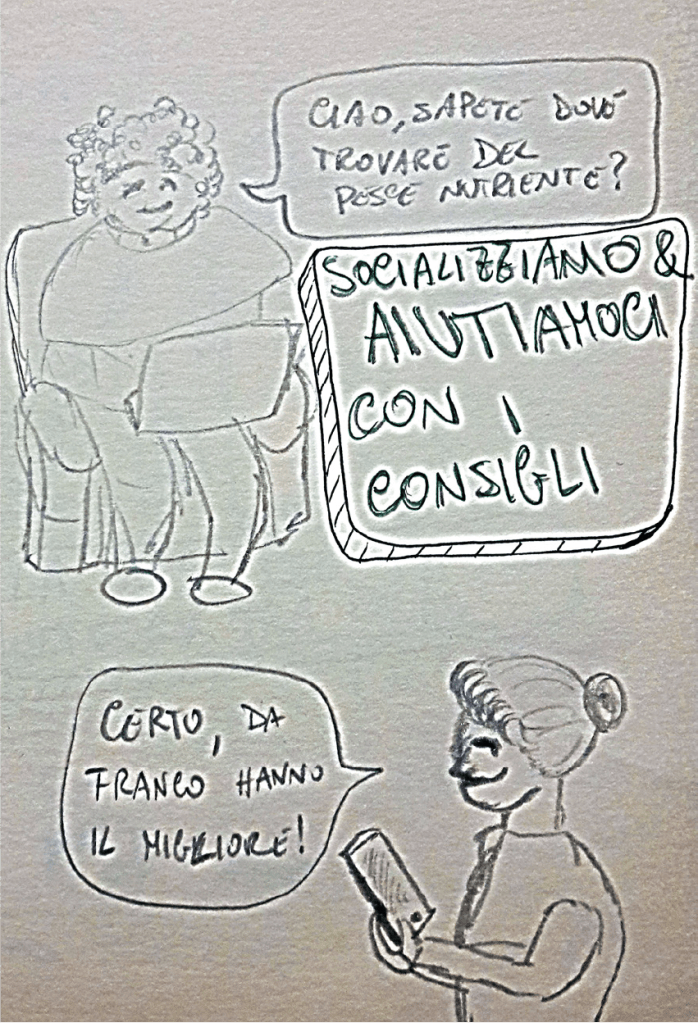
In the During-service, the elderly who have become friends or have found old friends through the online community make an appointment to go shopping together. In this way the moment of spending becomes a moment of socialization and social connection with other peers. During the observations it was seen that one in three elderly is equipped car, this could be useful to other elderly people who have motor difficulties and can take advantage of a ride by car provided by other elderly people to go to the supermarket and transport, then the bags or cases of water.
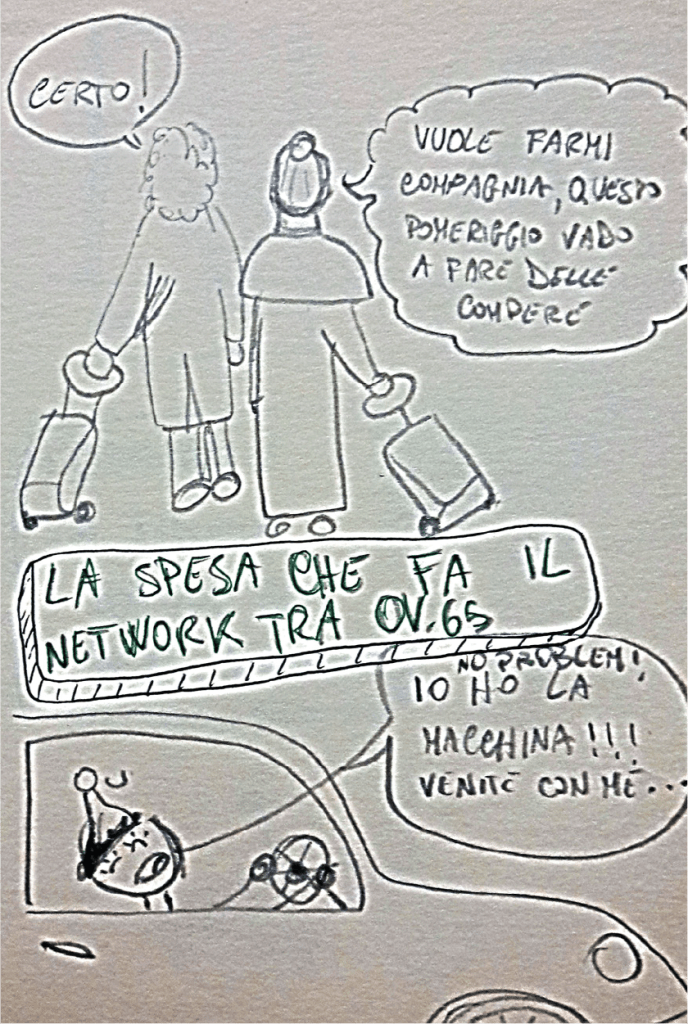
In post-service, the elderly have gained confidence in the digital platform. In the same platform he is offered the possibility of using a home delivery service of the shopping. It will not be any delivery service, but a service that was built on the system of advice and trust developed in the pre-service and during-service phase. Post-service is defined as the long-term relationship between the elderly and the platform, and as the phase in which an economic transaction takes place that would allow an incoming cash flow and therefore make the provision of the entire service economically sustainable.
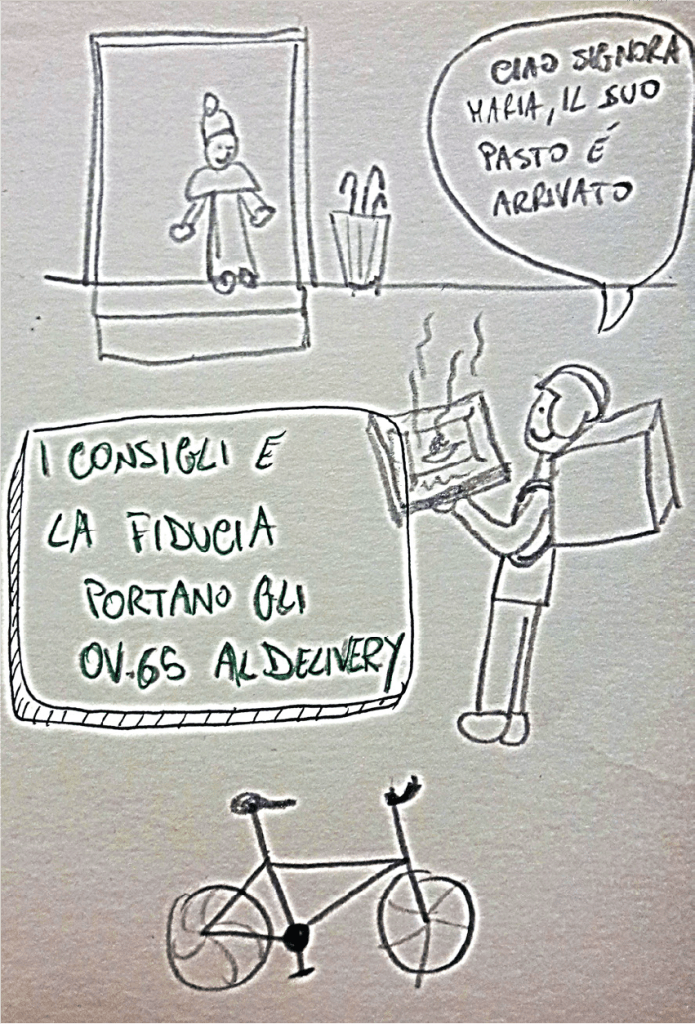
In this first idea, the concept of intergenerational learning through food, one of the initial premises, is completely absent. In the observation phases there were no cases of interaction between the elderly and children, and this probably influenced the production of the sketches shown above. It was therefore considered appropriate to draw up a survey to investigate the needs of older people more specifically within the general framework of intergenerational learning. In this way, it was possible to reiterate the discovering process to better understand the problem and the possible solutions.
SURVEY
The survey was prepared considering the information gathered during the desk research on the habits and needs of socialization and nutrition of the elderly. The formulation of the questions followed a model both quantitative and qualitative, this to obtain the greatest number of insights from the opinion of the same sample of respondents: questions were submitted on lifestyle and habits, and the type and quantity of consumption about the theme of food and social interaction. At first, the number of questions asked was about forty: this is too many questions for a questionnaire. In fact, after several revisions, the applications were reduced to twenty, divided into five categories:
- State of well-being: to define the profile of the interviewee.
- Socialization: which is one of the major problems of old age.
- Digital literacy: as the provision of a service involves the use of technology.
- Feeding: to check how the elderly manage their daily dietary needs.
- Food delivery: which is one of the services that devotes many facilities to the elderly segment.
SURVEY STRUCTURE
State of Well-being
1- How old are you?
2- Gender?
3- How many people do you live with?
4- Do you have grandchildren, children or young relatives?
Socialize
1- What are the most important activities for you?
2- Would you like to participate in organized activities with children from your neighborhood?
3- Would you like to have more opportunities to see your children or grandchildren?
4- What is your point of reference to which you can turn to solve everyday issues of any kind?
Technology
1- Do you like technology?
2- Which devices do you use?
3- How did you learn to use your technological device as a mobile phone or PC?
4- What don’t you like about technology?
Feeding
1- What are the most important needs in your diet?
2- Who is in charge of controlling your diet?
3- How many meals a day do you consume?
4- Would you like to prepare a recipe together with a child or your grandson?
5- Would you like your supermarket or shop to prepare packages in which all the ingredients are already weighed for the preparation of a nutritious recipe and suitable for your taste?
Food Delivery
1-Have you ever used a home delivery service?
2- How many times a week do you shop?
3- How much do you spend on spending in euros each month?
4- Which outlets do you usually use?
5- Imagine that there is a service that allows you to socialize with other peers, to meet others of your age who always give you the right advice and are always available for a chat. In addition, this service would help you maintain a healthy diet and a quality lifestyle. This is a paid service and requires a monthly subscription of €14.99. What do you think?
SURVEY RESULTS
Women live longer than men. Older women feel more gratified by intergenerational exchange activities. Men, on the contrary, have less desire to carry out such activities. Therefore, the modalities of involvement should be diversified for the two categories.
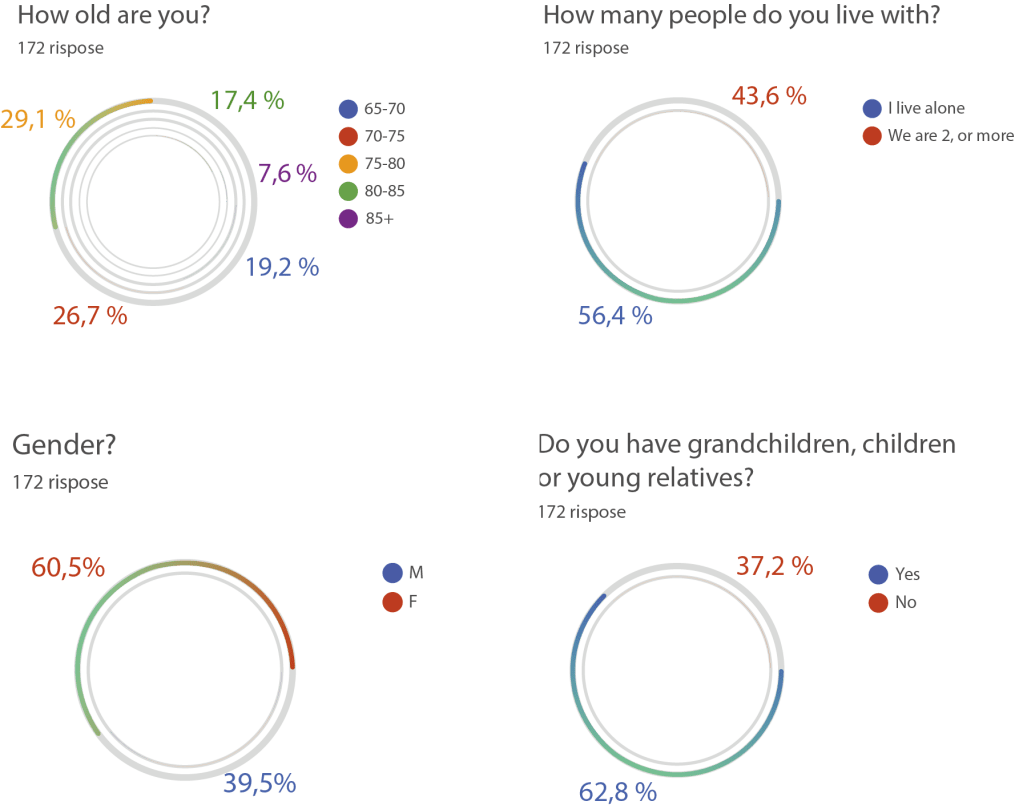
The relationship grandfather/grandson seems the strongest, it would be interesting to try to take its cue in the development of the path out of the family. Everyone knows how to use technology, some more than others. The important thing is to make the paths simple, clear and intuitive with a particular attention to the size of the characters. In addition, the smartphone is the most used device.
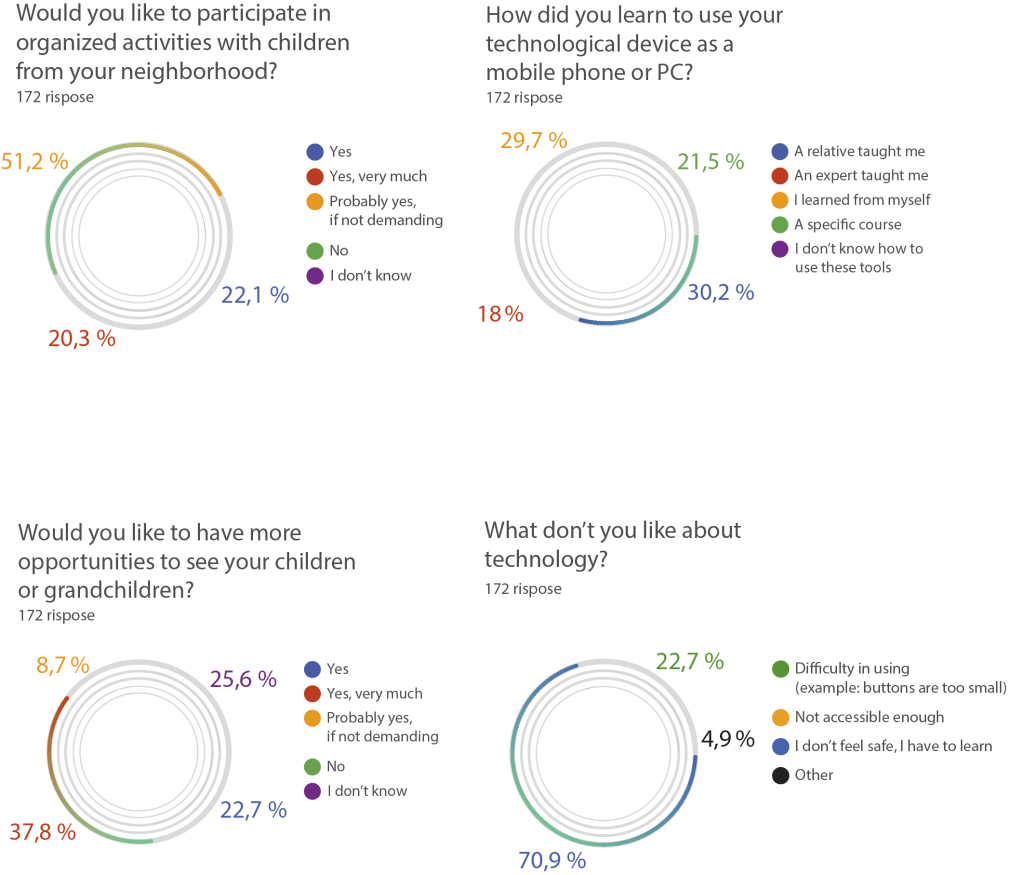
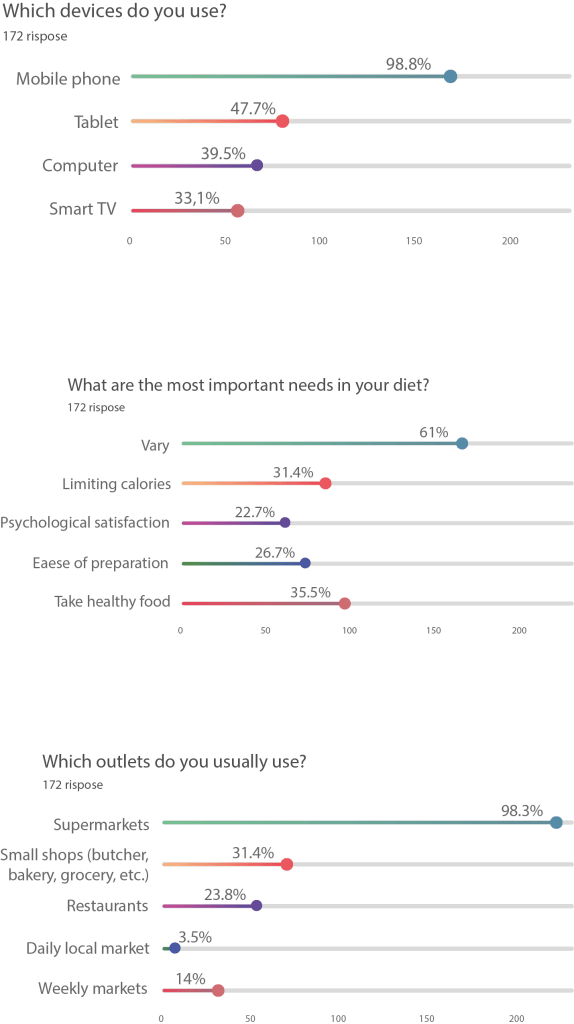

Following a varied diet and made of healthy food are priorities. In any case autonomy in the management of their habits is important. Most of the elderly eat three meals a day: breakfast, lunch and dinner. The common trend is a poor use of the home delivery service. Therefore, the first engagement should be carried out in the physical place like the supermarket, the most frequented place for doing the shopping. The monthly amount is between 150 and 300 euros.
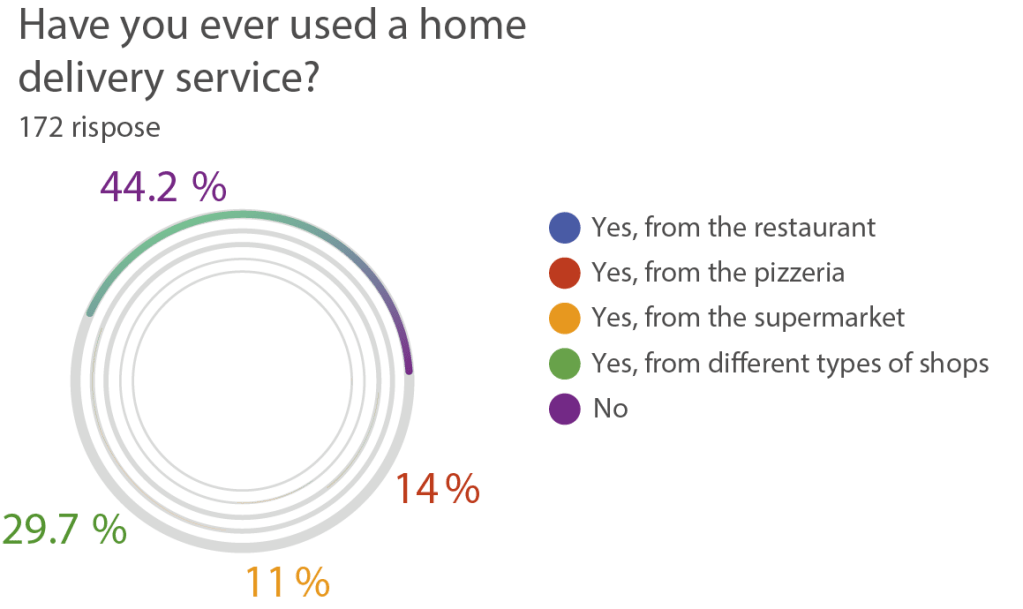
SECONDARY RESEARCH
Based on the results obtained so far, a further desk research has been conducted. It was necessary to investigate in a more specific way the elements on which it was decided to focus attention, namely intergenerational learning, socialization and nutrition of the elderly. Before proceeding with secondary research, a brief brainstorming was conducted that would put on the table, in a systematic and visible way, all the aspects that emerged and that were worth carrying forward to add value to the final project. By linking the three elements mentioned above, three relevant aspects emerged: end users, possible competitors and social trends.
END USERS
The behavior of the elderly is very conditioned by the feeling of loneliness. It must be said that loneliness is not the same as being alone. You may experience the condition in which you are in a relationship or family but feel equally alone.
Entering the age of old produces changes that can be a cause of loneliness, in particular:
– Retirement: losing the work routine leaves a gap in the days which cannot always be managed.
– A loss: whether the partner is deceased or has moved to a nursing home, leaving the other alone at home.
– Loss of friendships: as friends move away from home due to health problems or death.
– Health problems: reduced mobility is one of the most frequent.
– Home away from home: in today’s working world, children are moving further and further away from the place where they grew up.
– Lack of transport: this is particularly the case in rural areas.
Fortunately, there are warning signs that herald the development of a state of solitude:
– Verbal communication: an elderly person who feels alone tends to communicate it to others indirectly, for example says that he does not see a friend as often as before but never clearly says that he feels alone.
– Changes in behavior: an elderly person who feels alone often takes on a shabby look and every time he presents the occasion of a social contact tries to prolong it as much as possible by talking very long.
– Non-existent diseases: complaining of imaginary health problems is a way of attracting attention and feeling less alone.
– Suspicious friendships: It is common for lonely elderly people to make friends with people who are interested in their needs as small DIY jobs, but then turn out to be scammers.
According to Risi in a 2007 study, new technologies can help elderly people living alone or having problems of solitude, especially those living in rural areas. In addition, according to Baschiera, the use of technology among the elderly promotes intergenerational encounter, since the need to learn how to use technological tools would lead to fostering the link with new generations who already have technological knowledge and can teach it to older people. According to a study by Corporal, the spread of technology among the elderly “improves the cognitive and mnemonic abilities of the elderly. Specifically, it has been observed that those who use technological tools on a daily basis reduce the impact of a cognitive decline of a mild type that affects 37.6% of the elderly over 70 years”.
COMPETITORS
In the market research many companies have been identified that provide services dedicated to the elderly or to sharing moments with other people or socialization. All these services are linked by a common denominator that is food. No business has been identified that offers real intergenerational services, outside of projects with purely social purposes, such as those listed in the previous chapters. These are companies that cater to a young audience, but that possess a business structure that can be evaluated according to the needs of the modern consumer elaborated by Fabris. In this way, it will be possible to extrapolate the key principles and apply these principles in a market dedicated to the elderly according to the perspective of intergenerational encounter and psychophysical well-being. This procedure will give the possibility to explore new and innovative solutions, applying the logic of the blue ocean strategy, on a market not yet served that of the digital services to measure of elder, with the aim of encouraging intergenerational learning through food.

The companies analyzed are:
– Eataly: cooking classes to learn how to cook traditional recipes through ingredients, history and tasting of the dish. Cooking, pastry, tasting, special meetings and tastings are offered. There are also courses dedicated to children, with creative and fun activities.
– Quomi: a service to shop online with recipes kits, fruit and vegetable crates, and other high-quality products. The products are selected with attention to freshness and quality, the recipe kits are easy to prepare and are updated periodically as well as the rest of the food products proposed. Purchases are delivered at home via delivery service.
– Secondchef: these are recipe kits that are updated every week, just compose your own menu and choose the recipe among those proposed. The box containing the recipe kit is sent to the address indicated with everything you need already weighed for the preparation of the recipe. Inside the box there are all the instructions to follow during the preparation of the meal.
– Mycookingbox: is a startup that offers a service like that of Quomi. The goal is to provide high quality ingredients and fight waste by providing all the necessary ingredients for the preparation of the recipe in the right quantities.
– Esselunga: the well-known chain of large retailers provides the service of shipping and delivery of groceries at home with facilities to elderly customers.
Customers over 70 years of age can receive a grocery shopping per week free of charge. Among the needs of the new consumer were considered those related to socialization, health and tradition. Each need has been awarded a score from one to three according to the following parameters:
– 0: the offer does not meet the need
– 1: limited offer
– 2: Satisfactory offer with all relevant information present
– 3: very wide offer and all the information is well highlighted and is very detailed
The quality of the service was also evaluated according to the variables that were awarded a score of one to three and then the average of all the votes was calculated. Finally, a summary table of the assessment of the companies examined was drawn up.
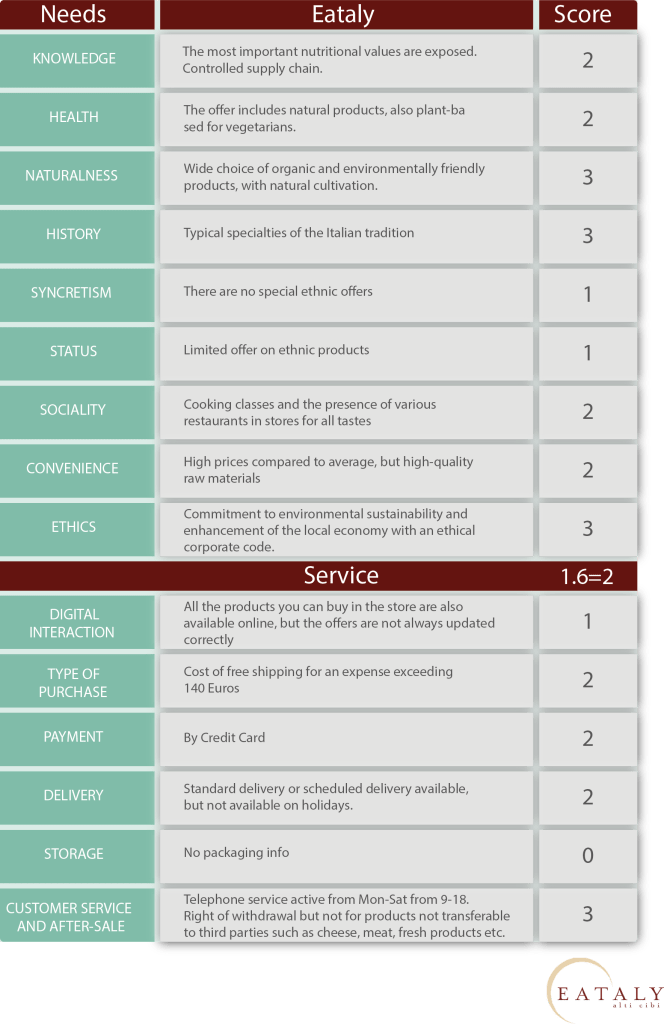
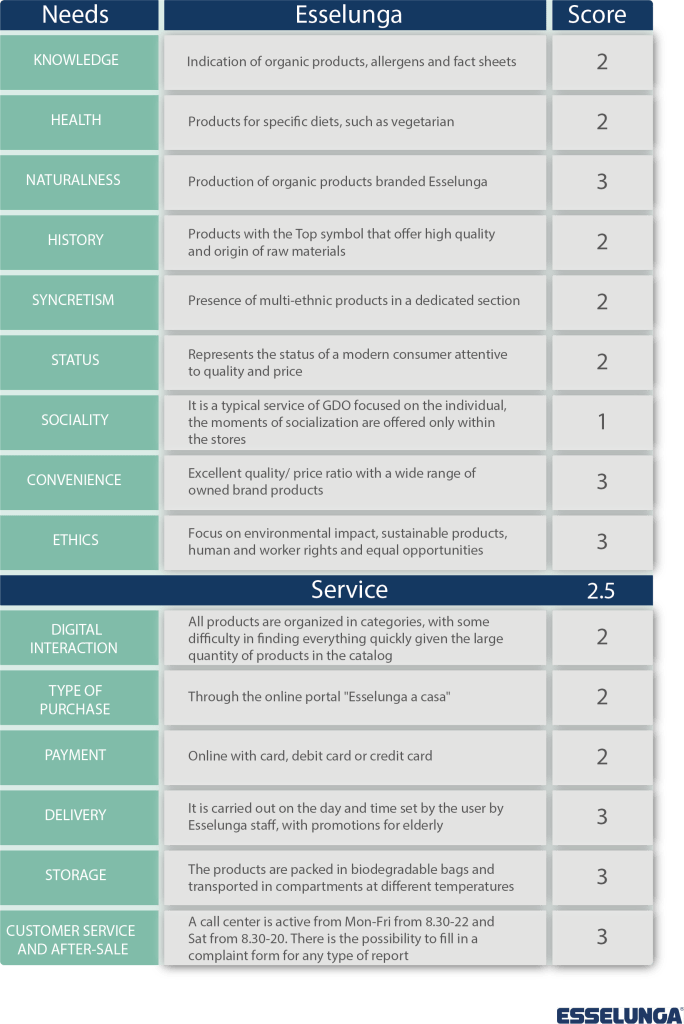
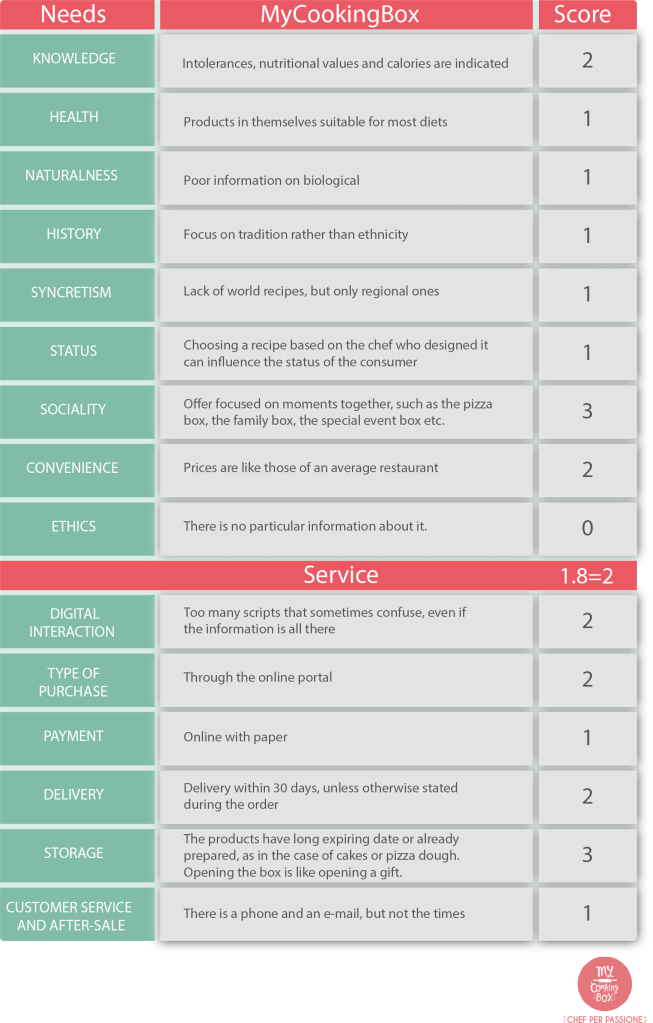
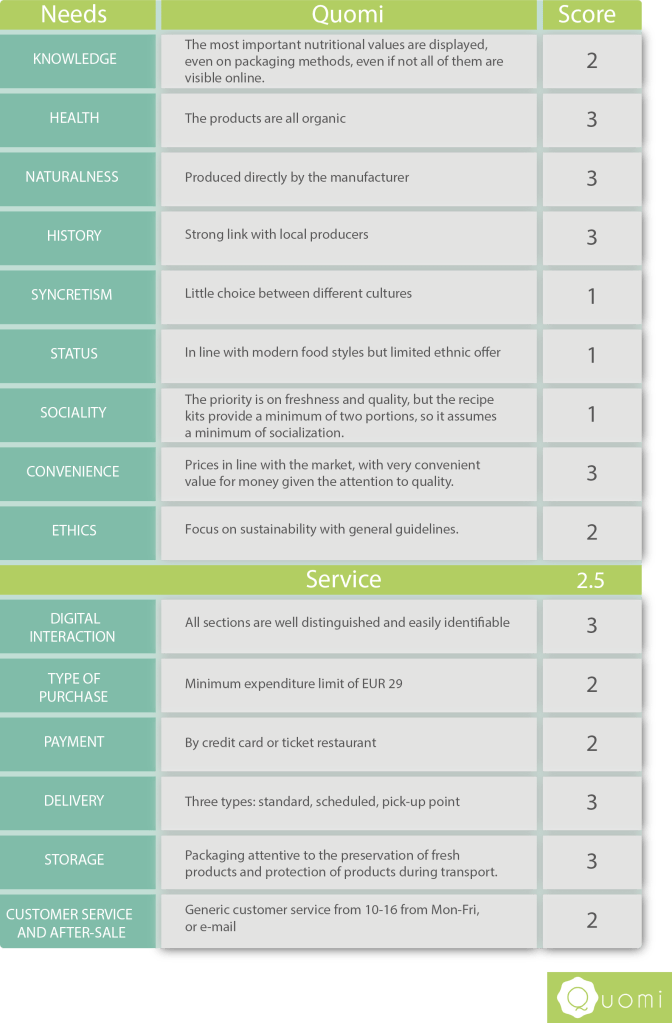
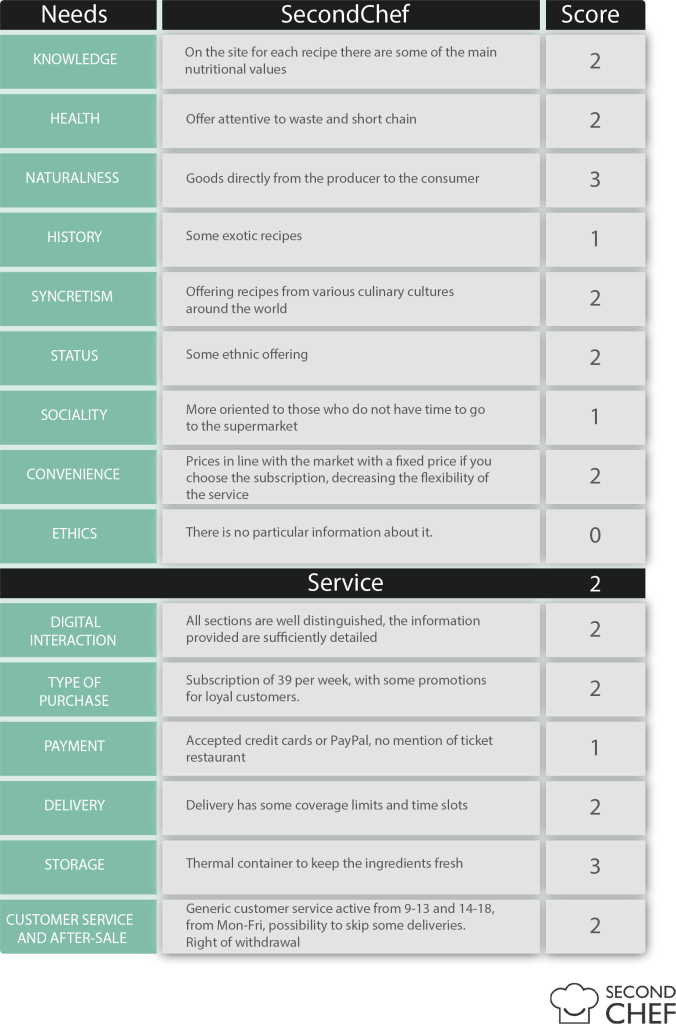

The result of the comparison shows that companies operating in the food sector have a homogeneous performance on the market. It should be noted that the grocery sector has been able to adapt better to changes in the market by proposing an offer that is in step with the times. In fact, the competitive advantage belongs to those companies that satisfy the need of high quality and sustainable products with all the information about origin, production and packaging available and clear. In addition, with the rise of food delivery there is an increasing interest in typical and ethnic cuisine: an opportunity to try something new.
SOCIAL TRENDS
Many researches show a steady increase in older people interested in learning to use technology. Corporal describes this trend of digital literacy that involves more and more over 65 using technological tools in everyday life. According to Istat data, today 25.6% of elderly people use the Internet, compared to 4.4% in 2003. The elderly, however, do not only use programs that need to be connected to the internet, but also programs that work offline such as writing or reading programs. This trend is destined to grow more and more because of the digital divide theory, that is, people who have accepted the use of technology from those who on the contrary oppose resistance. In fact, the elderly in the coming years will be people who are already familiar with technology. Therefore, it is important that the new services are suitable for those who are familiar with the technology and, at the same time, are designed to involve even those who do not yet use the technology much. Otherwise, we are planning services that will have a short life: in a few years the problem of the digital divide will no longer arise. It will, however, be necessary to adapt digital solutions to the needs of older people, who have difficulties, for example, in reading texts that are too small. Donzelli says that “more and more frequently the construction of websites is entrusted to young designers who do not consider the possibility of access of users who have visual problems, motor or even simply knowledge of the web,” undermining their access to certain services. Over time, the values on which the elderly base their lives have also changed, before much was believed in the family hierarchy and religious precepts. Today’s elders, according to a study by Risi, seek above all personal satisfaction, more leisure and sense of well-being.

RESULTS AND CONSIDERATIONS
There are several elements that have emerged to this point. Loneliness is one of the most common problems among the elderly; research in the initial chapters showed how nutrition affects the psychophysical well-being of the elderly. The need for socialization is added to good nutrition as a source of well-being. Since then, the importance of technology has also emerged, which is also spreading among the elderly. Another premise, which emerged at the beginning of the design process, is the importance of the generational meeting for active ageing. Therefore, benchmarking has been conducted between companies that offer digital services in the food market with the possibility of socialization, as in the case of Eataly that offers cooking courses. The market comparison has shown how important the role of technology is and the variety of the proposal. In secondary research, the role of technology as a key factor in the success of intergenerational initiatives was confirmed. In fact, more and more older people are willing to learn how to use technological tools, and the new generations are those who possess the knowledge: older people learn about technology through the new generations, and the new generations can assimilate the traditions and cultural heritage on which the survival of social communities is based.
PROJECT IDEA II
The second project proposal is a service that privileges the intergenerational meeting both within the family, in the relationship between the grandfather and the grandson, both in activities extra-family members, in which the elderly and children from different families get the benefits of intergenerational learning. Also, in this case the service is divided into pre-service, during-service, post-service.

In the pre-service phase, the elderly become aware of the service and are informed of how the service works, why the intergenerational meeting is important for their health and for the benefit of the society in which they live. It is proposed the possibility of participating in intergenerational activities through food, in which the elderly and the child meet to cook together a recipe and then eat together, under the sign of good nutrition and socialization. The elderly person can learn all this information from advertising material displayed at the supermarket or through the digital website.

In the middle phase, the service is characterized by the intergenerational activity that can take place both within the family and at an extra-family level. The elderly and children cook a meal with ingredients that are delivered the same day and live a fun experience as well as educational. At this stage, the elderly and the child can live the experience of learning from each other: the child knows the world of the elderly that represents the history of the community in which he lives; the elderly can feel adult again and have a fresher vision of the future.

In post-service, the elderly have gained confidence in the digital platform. In the same platform he is offered the possibility of using a home delivery service of the shopping. It will not be any delivery service, but a service that was built on the system of advice and trust developed in the pre-service and during-service phase. Post-service is defined as the long-term relationship between the elderly and the platform, and as the phase in which an economic transaction takes place that would allow an incoming cash flow and therefore make the provision of the entire service economically sustainable.
In the final phase of the service, the elderly person continues to be engaged through a system of notifications and feedback on the experience just lived that, on the one hand, puts him in contact with the online community of other elderly people who have used the same service, on the other hand, it encourages him to use the service again and to repeat the experience of the intergenerational meeting. The interaction between the elderly and the child does not end with the preparation of the recipe but continues through digital interaction.
Define
Define is the second phase of the design process. At this point the design idea formulated in the previous phase has been validated and now you can define a real design proposal. In this regard, various tools are used, such as co-design to collect the contribution of the various actors that could be touched by the service, a moment of comparing notes to give priority to the points to be developed, the customer journey map.
CO-DESIGN
The co-design session included a meeting of about two hours, in which the various stakeholders and potential users could participate with their opinion in the development of the service. The choice of participants would therefore fall on experts in the sector, the elderly and children. Unfortunately, the health emergency from Covid-19 made it impossible to involve the elderly and children, in the end it was possible to organize a meeting with personalities that contained in themselves the knowledge of the social fabric, the needs of the elderly, the needs of children and professional knowledge; therefore, a distance meeting was organized in which two family doctors were involved, both over 65.
THE POSTER
The meeting began with the presentation of the topic on which the service is based, that is to say the intergenerational learning, illustrating what is the current situation and what is the scenario that it would be achieved in the future. These information have been summarized in a poster, in which particular emphasis has been given to the statistical data concerning the city of Milan, that is the place where the service is designed and that you take as a model of Italian city on which it is possible to launch such a service. The poster is divided into two parts, on the left shows the demographic situation in Milan with a balanced percentage of elderly and young people; on the right, however, mention is made of the social and employment implications of encouraging the active participation of older people in the life of local communities.

THE OFFERING MAP
The offering map presents in a synthetic way what is the offer, that is a service that provides the opportunity to participate in intergenerational learning activities through cooking classes between the elderly and children. It involves the elderly who buy the service in exchange for opportunities for socialization; on the other side, schools provide space for school canteens and possible equipment in exchange for the organization of intergenerational activities. In the back-office part there is the support service and the management of the delivery service, both dedicated to schools and to the elderly; and the system of values on which the service is based, namely the use of local healthy food and social commitment.
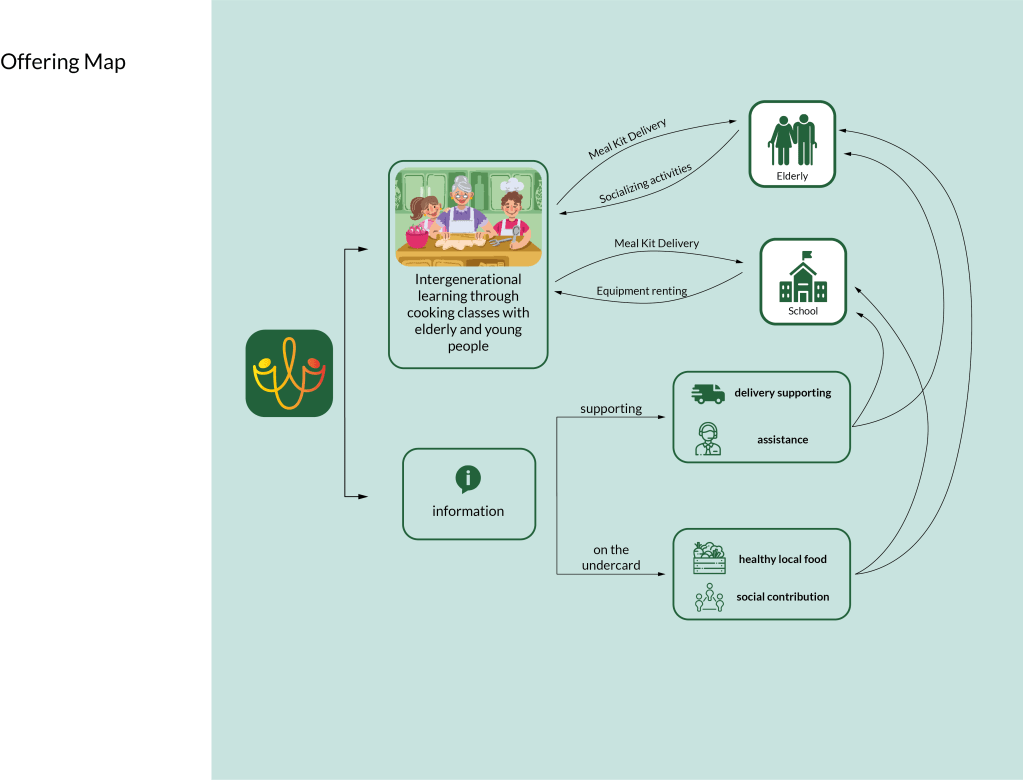
THE SYSTEM MAP
The system map represents the interaction between stakeholders. Such interactions are shown by arrows that can have a bidirectional or unidirectional sense between the parties involved; the different types of line represent on what is based the interaction between the stakeholders, the continuous line indicates an exchange of materials, the dotted lines may represent an exchange of money or data. Finally, the main stakeholders are differentiated from the secondary ones by the color with which they are highlighted.

During the co-design meeting, the stakeholders were repositioned on a map, to confirm or change their level of importance.
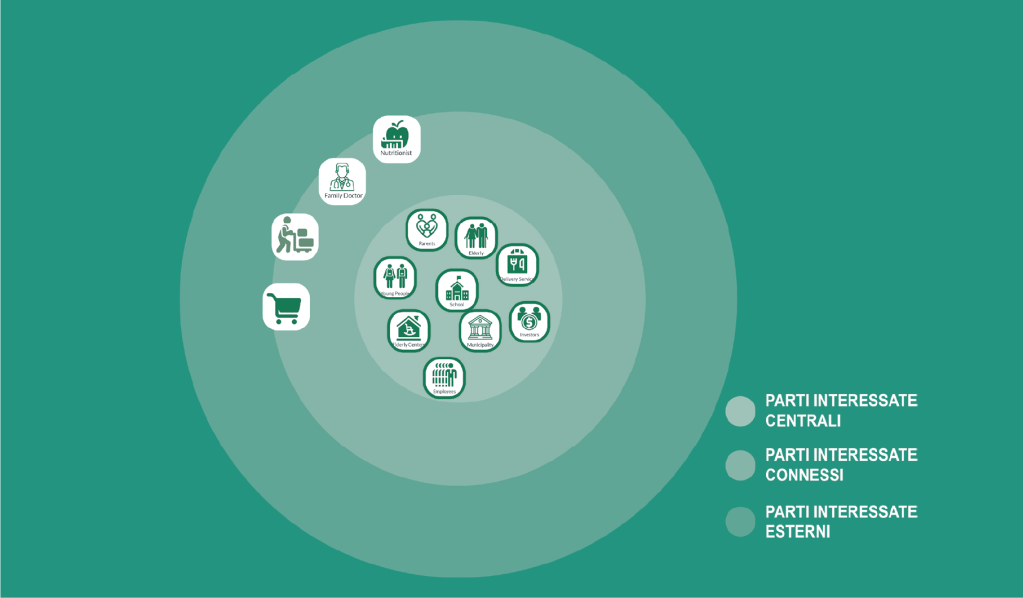
THE CUSTOMER EXPERIENCE
Then the project idea, that was going under the development process, would be showed. The idea was explained by a customer journey with all the most important phases of the service and the main touchpoints of the service. The design idea is based on the organization of family and extra-family meetings between the elderly and children to cook a recipe together. The route begins with the elderly who are invited to the school cafeteria of the nearest school to cook together with the young students who are going to have lunch. Once they arrive at the school cafeteria, a facilitator makes the elderly and children get to know each other and form teams of two to cook together. Formed the teams, the boxes with the necessary ingredients for the preparation of the recipe are presented. Each box would be delivered the same day through a food delivery service, which ensured the freshness and quality of the ingredients. Each team chooses their own recipe to cook, and now they are ready to start. Once the dish is ready, the elderly and children gather around a table to have lunch.
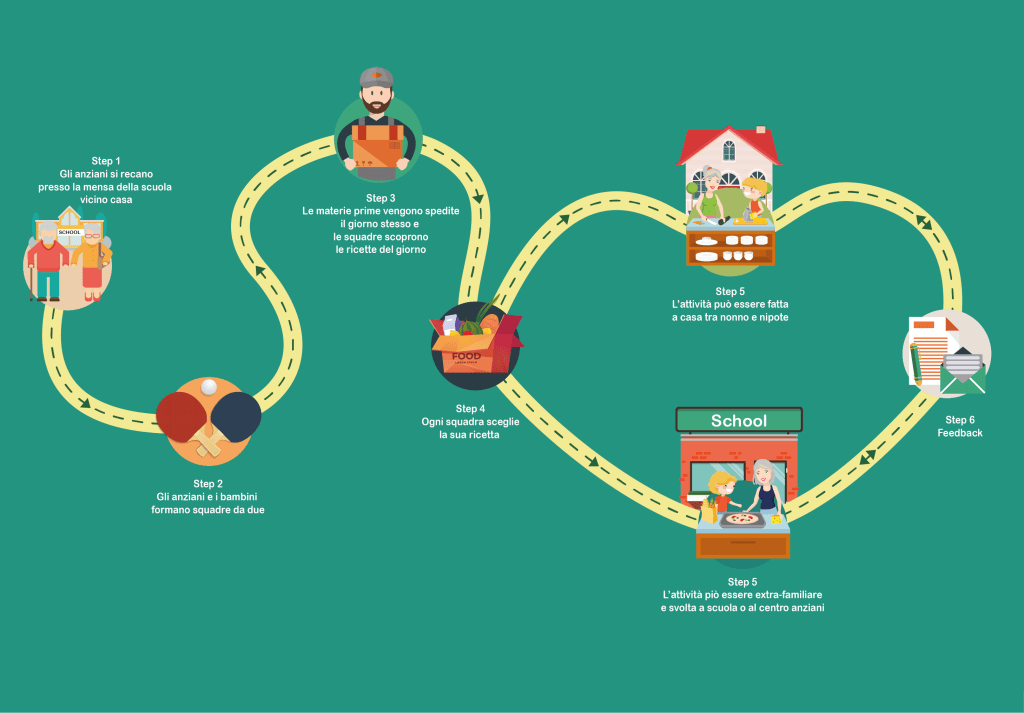
THE SERVICE ANALYSIS TOOL
In the final part of the meeting, we took as reference the path of the target user by focusing on the consumer and the service provider. In this way, the area of common elements of the service has been defined, namely: who – who plays the role of consumer or supplier, why – the motivations that drive the consumer and the supplier to act, how – through which channels, technology and conditions occurs the provision of the service, where – the places where the service is provided. In the left part of the tool were described the reflections about intuitions, problems, exclusions and other possible solutions. This co-design activity was carried out by establishing from the beginning the purpose of the service: to improve the health of the elderly and social cohesion; the result to which this service aspires: the elderly are more active and happier. In the discussion area were written directly on the graphic board the reflections of the participants in the session, while for the right side, the area of common elements, were used cards. The cards were divided by the eight categories that formed the area of the elements in common to the stakeholders of the service. The cards were already pre-filled and had to be placed in the various boxes corresponding to a particular phase of the service. For each category, there were blank cards that could be filled in at the time in case unforeseen elements were coming to mind. In addition, the last row of the area of elements called Other represents an additional category to be filled with any reflection or idea that you would like to include in the design process but that had not emerged during all the activity so far carried out. In the following sub-chapter, the results of this co-design activity will be shown, what elements have emerged, the new ideas that have come to mind and which points it has been considered appropriate to develop and which to leave out or put in the background.


COMPARING NOTES
On some post-its of different colors, were transcribed all the information derived from all the previous phases of the design process, including that of the co-design session. The aim of this activity was to organize the large amount of information collected so far, to give each of them a priority and to decide from which point to continue with the project and which elements to discard. Thus, post-its with similar information were combined into a single post-it, gradually being compared between the various post-its to determine which would be of greater importance and consequently would be put at the top of the list of priorities. In establishing the priority of the various elements, the purpose and the result – the elderly are more active and happier – and – to improve the health of the elderly and social cohesion – to which the service aspires, as stated above, was used as a parameter.
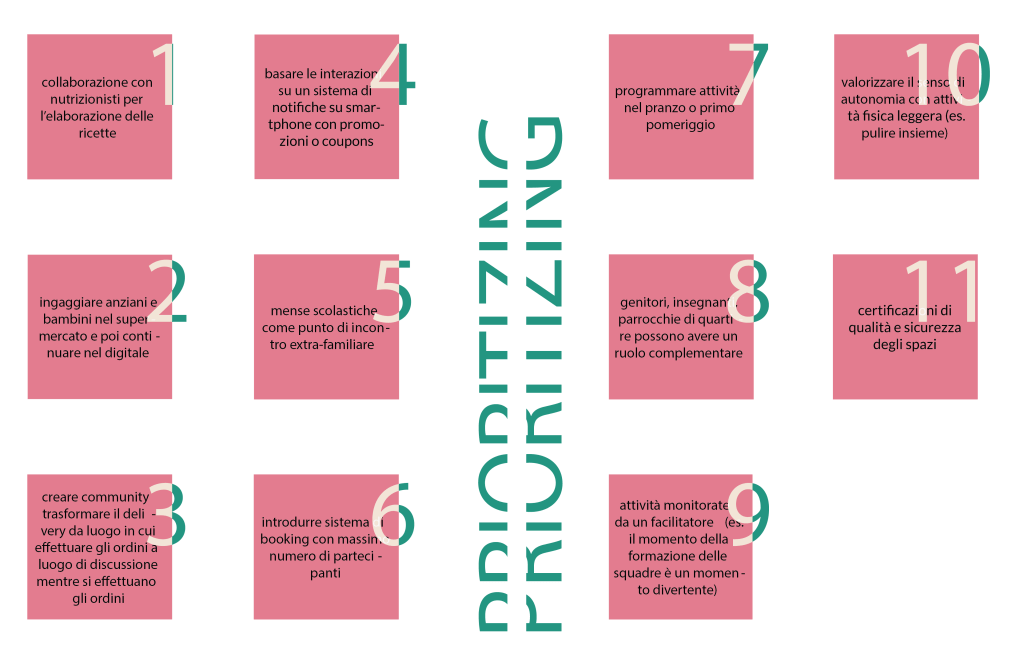
CUSTOMER JURNEY MAP
Now that all the elements have been defined, it is possible to represent the detailed path of the users, showing the different interaction and touchpoints. The two main users of the service were considered: the elderly and children, both in a family context and in an extra-family context. In the formulation of these paths, the elderly person is the part that actually purchase the service; while the child is the one who encourages the grandfather or the parents to acquire the service or the product.

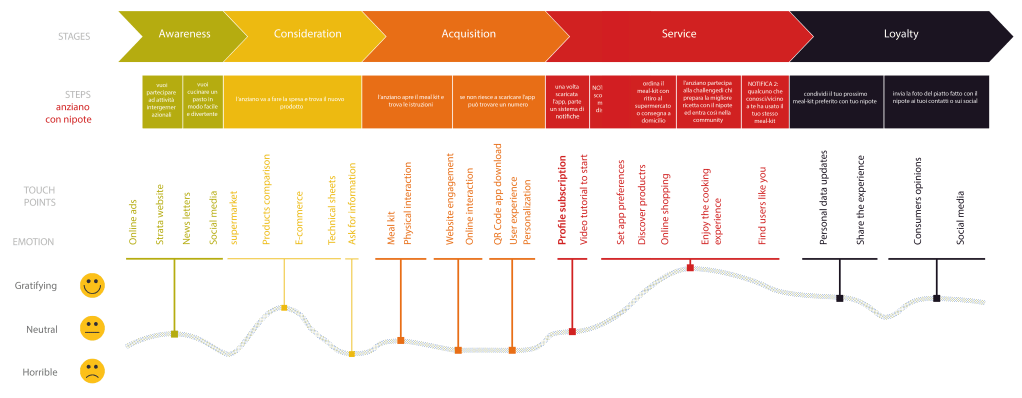
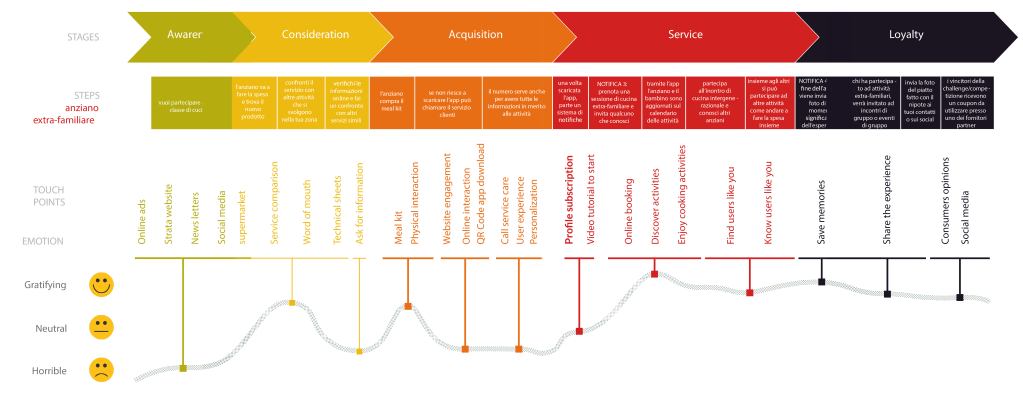
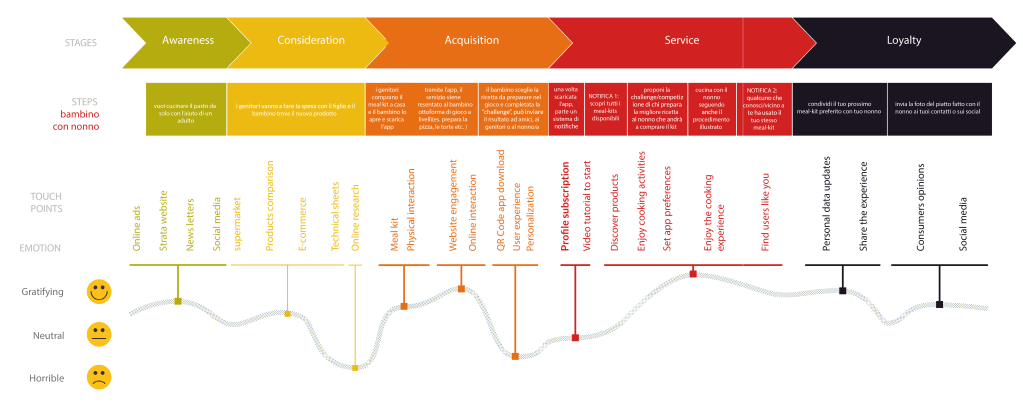
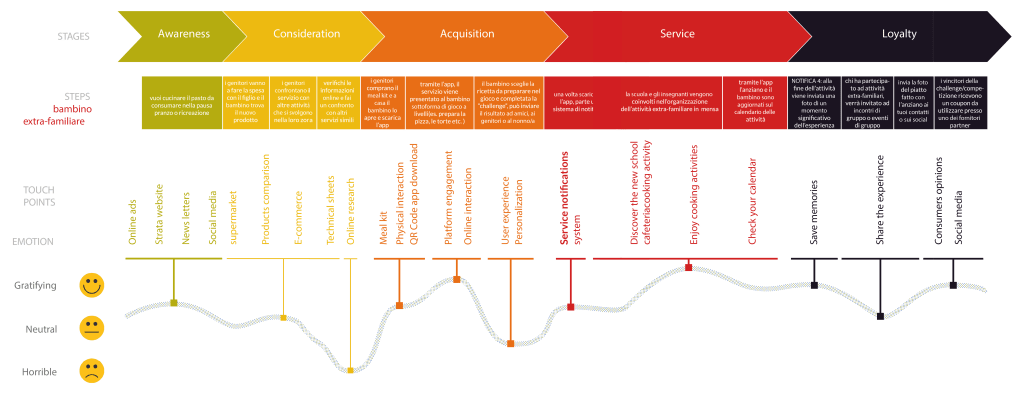
Develop
At the development stage, there is enough information to precisely define the problem and a precise solution to the problem. The phases of the service, the users of the service have been studied in detail and a prototype of the application has been produced through which the service will be provided.
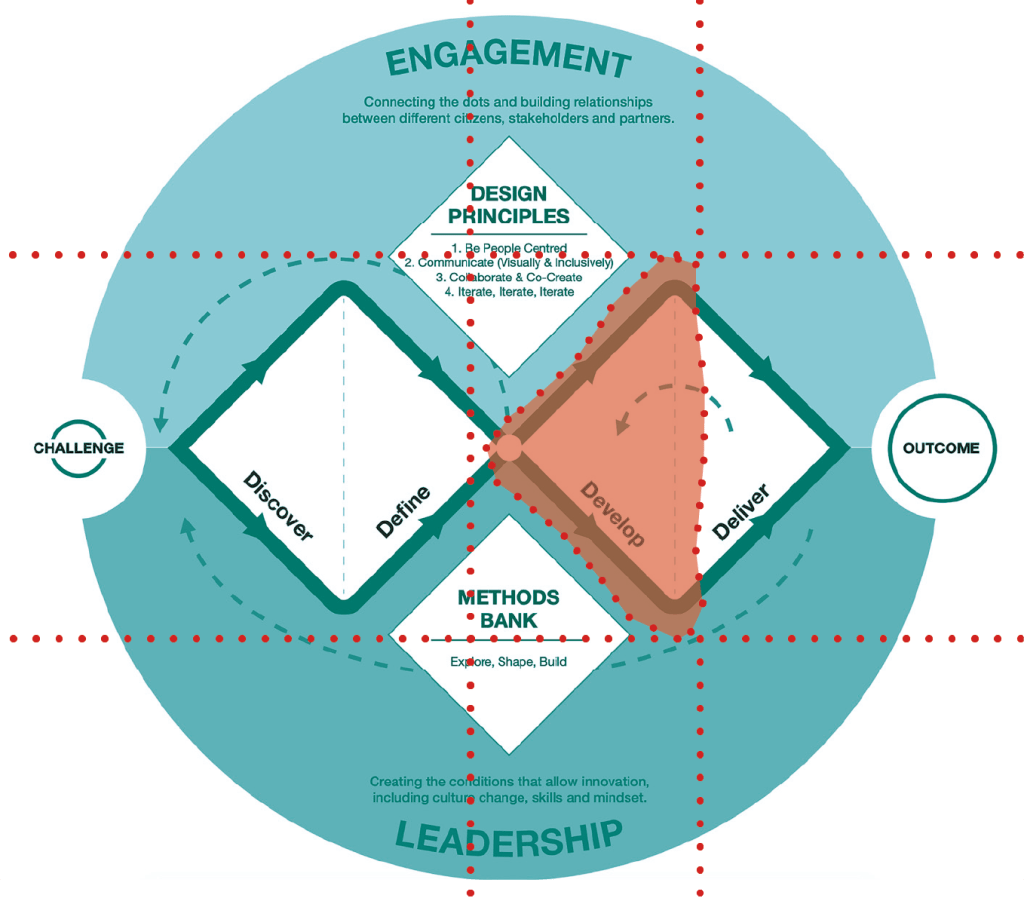
THE SERVICE IN SUMMARY
It is about the time to develop a service that offers intergenerational activities in which the elderly and children prepare a recipe together and thus live a formative experience between generations. This can be done in two ways: inside the family, between grandparents and grandchildren; or extra-family, between the elderly and children of different families, in school cafeteria. In the family path, the elderly purchase a kit-recipe that is delivered at home. The recipe kit consists of a box with all the ingredients and instructions to follow so that the elderly and his nephew can prepare the recipe. In the extra-family path, schools are involved in the organization of intergenerational activities in the school cafeteria. Instead of receiving the canteen service with a ready-made meal, children receive the ingredients of the meal that they will consume during the lunch break. In this case, elderly are invited to go to the school cafeteria during the lunch break to help the children prepare their lunch and then the elderly and children have lunch together. In both cases, an ad-hoc food delivery service sends the same day the boxes with the ingredients for the preparation of recipes, in case the activity takes place in the school canteen in an extra-family context; or on a day chosen by the user, in case the activity is between grandparents and grandchildren then at home.
PERSONAS
The personas are the ideal profiles of the possible users to whom the service will be destined. They are the representation of people who can really exist with their aspirations, their behaviors, their lifestyle, and their characteristic traits. This job serves to put yourself in the user’s shoes and understand what the various types of users might think of the service that you are offering them. Therefore, four profiles of four different users were developed to explore possible interactions with the service in all their major eventuality. As users, children have not been considered in depth because they are secondary users, who use the service only if an adult decides to use it; therefore, they can be considered passive users of the service, but not for this less important. In fact, the participation of children is essential for the completion of the intergenerational meeting. In any case, they represent a secondary market, that is, of users who are recipients of the service but are not directly involved in the purchase process. Therefore, every time the figure of the child is mentioned as consumer, in this thesis, will always be associated with the figure of the primary consumer that in this case is the elderly or in extreme cases the parent itself, who buy the service or the product. Children are also a market of influence which can influence the purchasing choices of primary users.
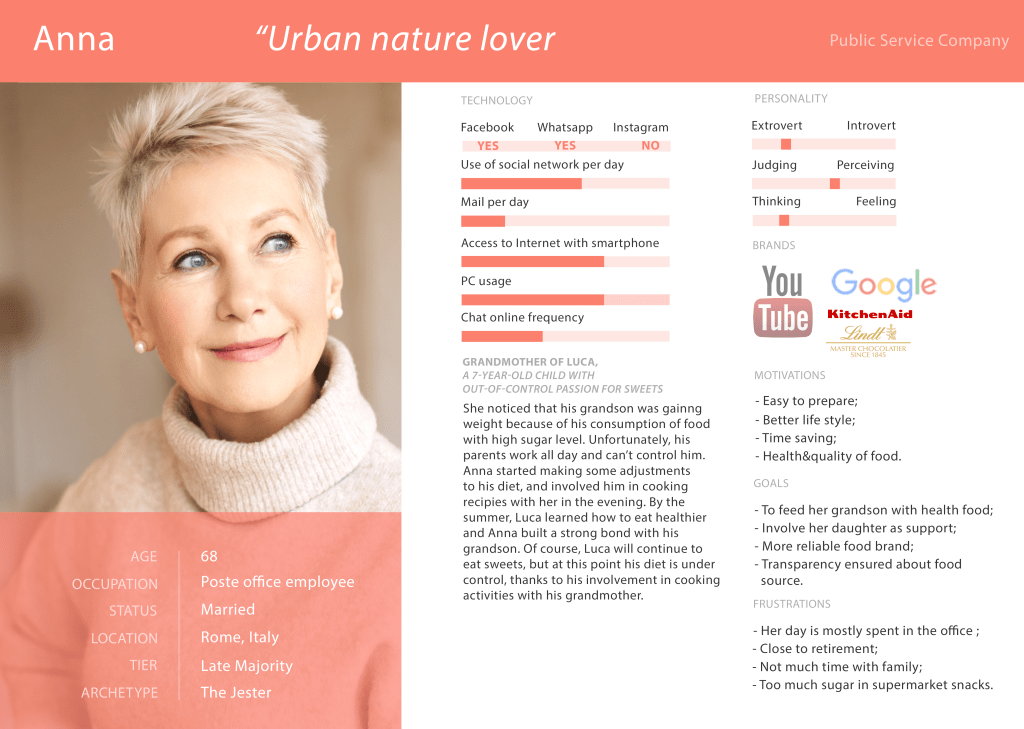

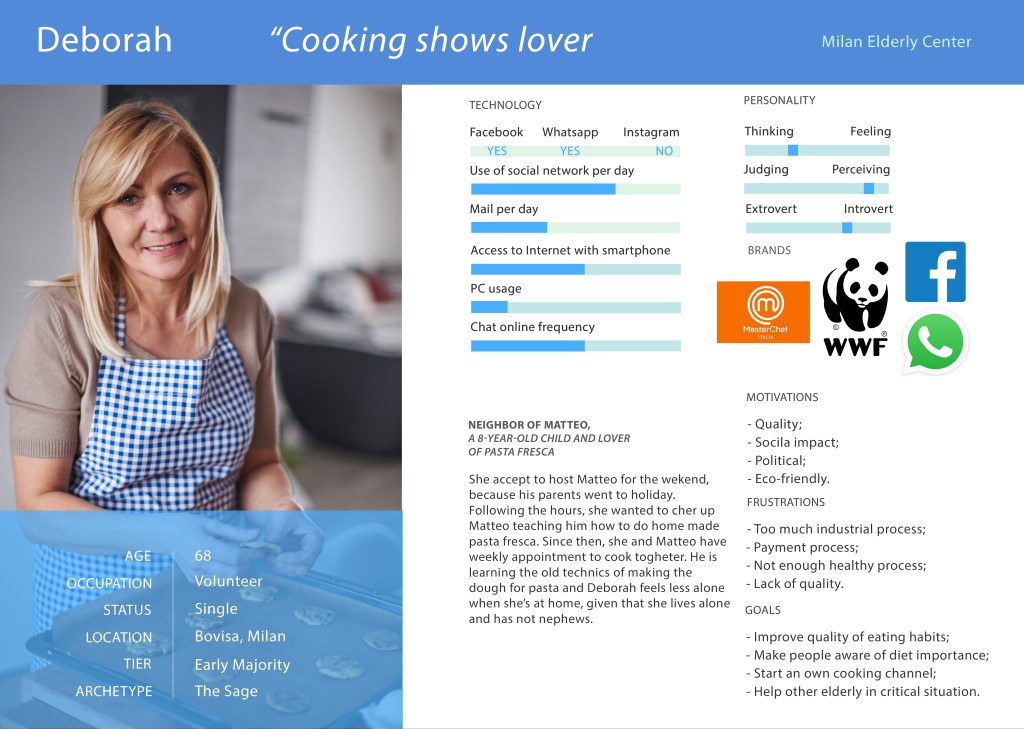
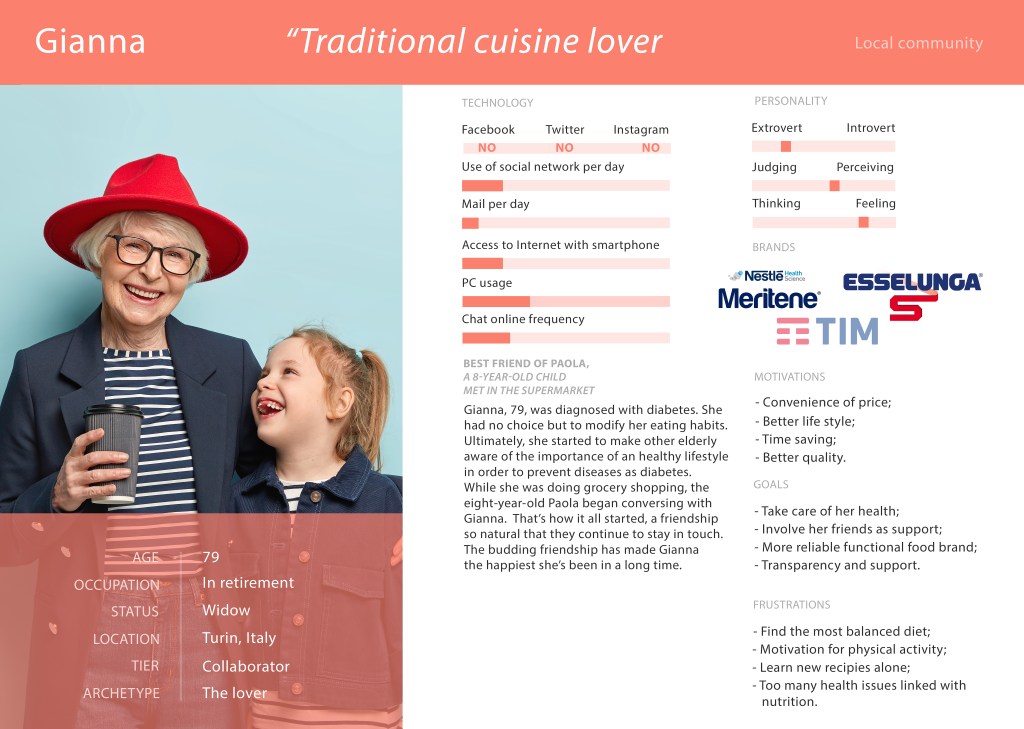
SCENARIOS
The defined persons are the users of the possible scenarios of use of the service. Scenarios are situations where users interact with the product or service for a certain period. In this way, it is possible to understand the context in which the user would find himself, to be able to perfect the series of interactions that the user must perform in order to use the service or the product. The activities, occupations, and social conditions of the user are analyzed in detail: identified through a map in which the polarities (no healthy issues, healthy issues, not alone, alone) describe a category in which the user falls. The scenarios and personas that are presented in this chapter are the result obtained following an interview with two possible end users from my neighborhood, both over sixty-five with grandchildren, to whom I proposed the scenarios and helped me to improve them for the next developments of the design process.
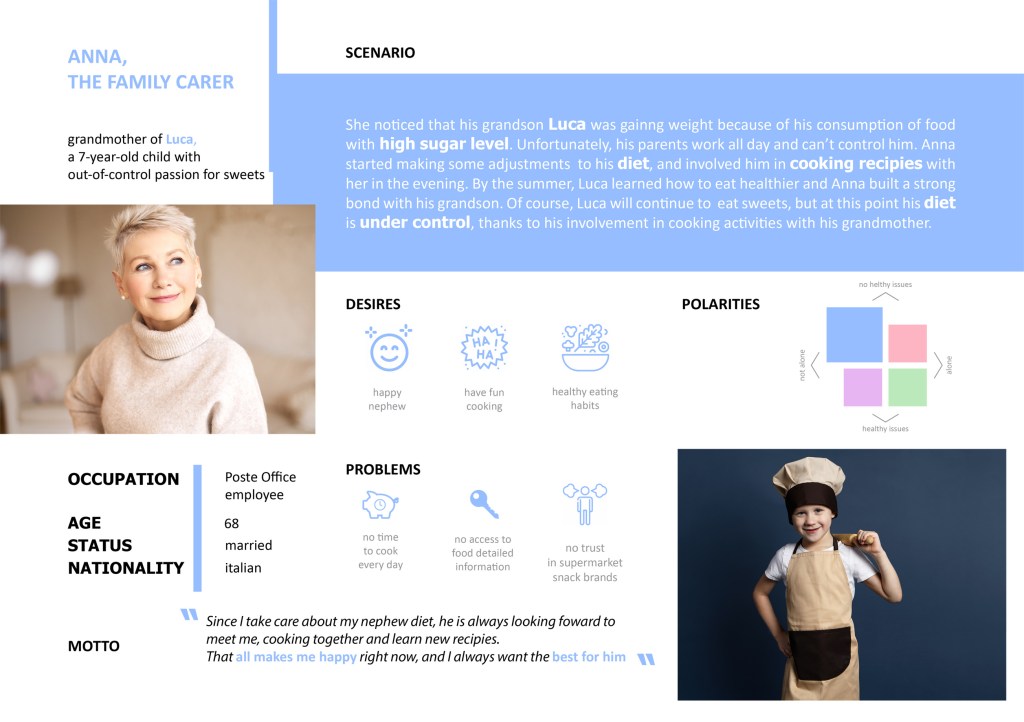

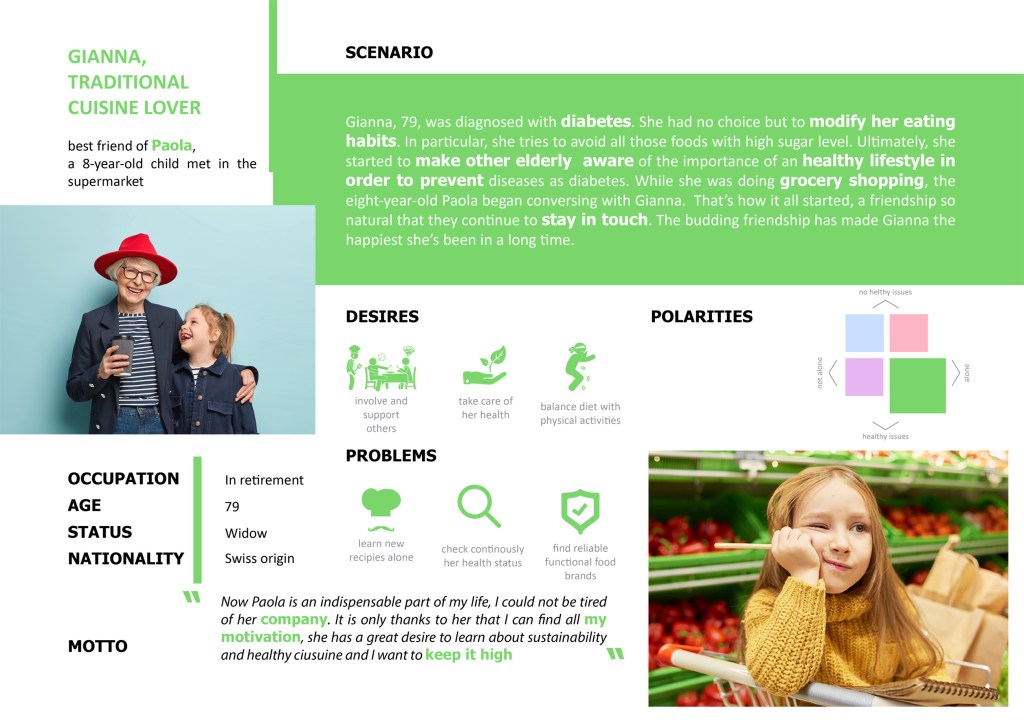
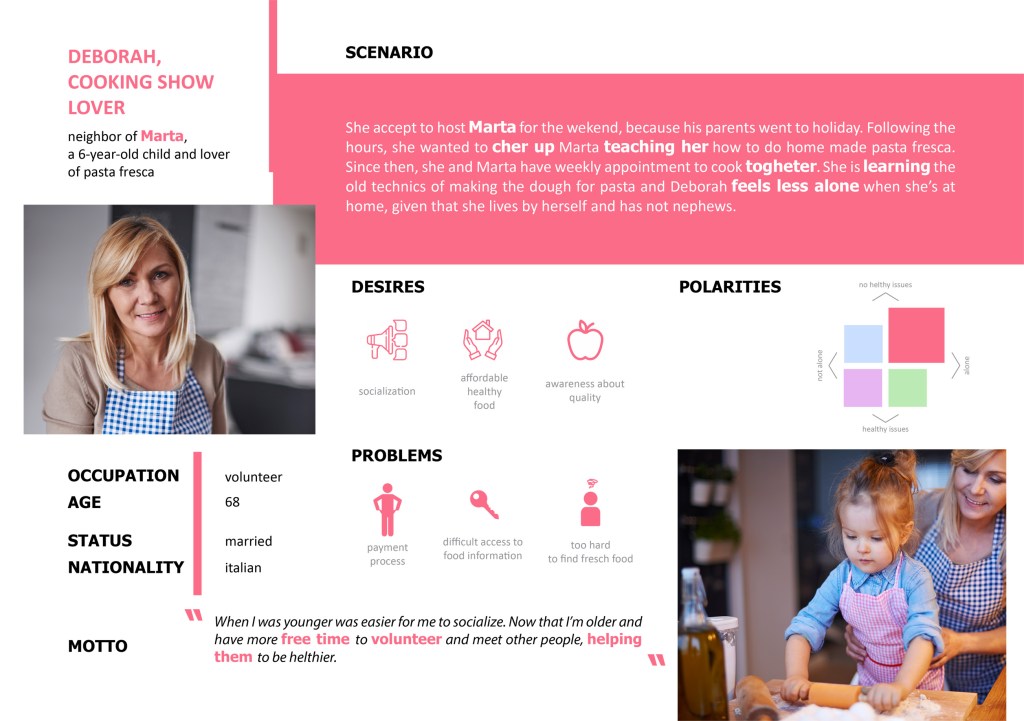
SERVICE BLUEPRINT
Starting from the customer’s journey it is possible to represent the entire service over time, with the totality of the interactions both those visible to the end user and those not visible; the former are defined front-office activities, the latter are defined back-office. This is a tool that allows you to understand the roles of all actors involved in the service, and also allows all actors involved in the service to understand what their role is. This is important to align what the end user expects from the service with the actions of the service provider. The map described by Service Blueprint is divided into the three phases of the service – pre, during and post – and represents the interactions between front-office and back-office, showing that the interdependencies between the elements are consistent. The service that is being planned is that the elderly and children interact either in family situations or in extra-family situations, in the school cafeteria. Therefore, two Service Blueprints have been developed that describe these two situations; plus, a third that describes the involvement of the school as an institution involved in the organization of the intergenerational meeting in the school cafeteria.


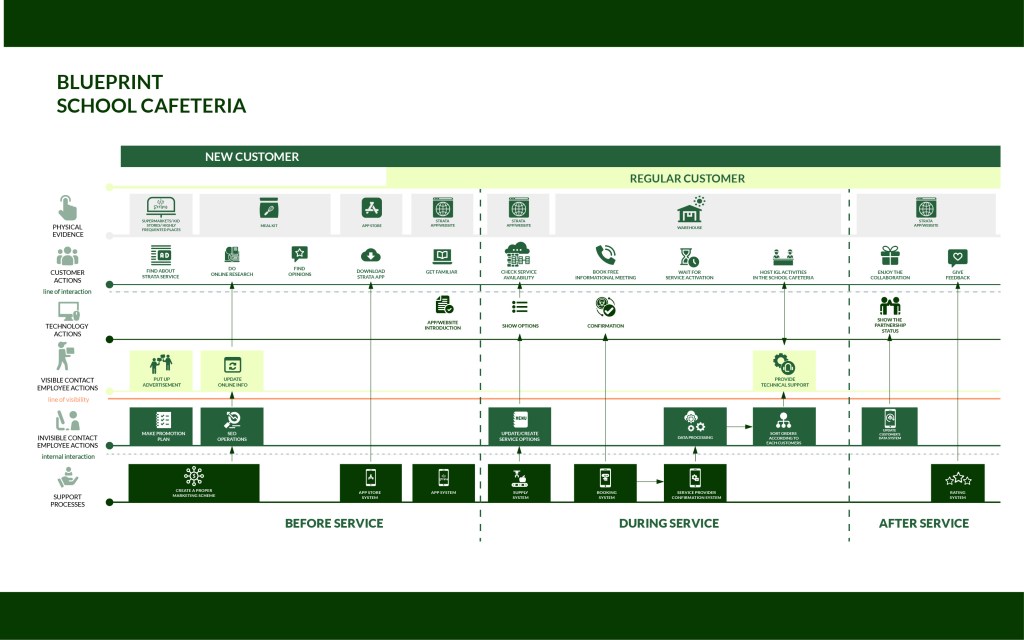
STRATA APP
The prototype consists of the mobile app, which is the core element of the service without which it would not be possible to provide the service itself. With the help of family members or because already quite adept with technology, the elderly download the application of Strata. Now we can also give it a name, to which will be dedicated a section in appendix. In the early stages of the design process, it emerged that the elderly are not accustomed to using the food delivery service for small purchases. Therefore, the first engagement takes place in the supermarket. Here the elderly can get to know the Strata service, can know the possibility of buying meal-kits to use with their grandchild or the opportunity to participate in cooking classes in the school cafeteria of the school near the house; later, the elderly buying the kit-recipe at the supermarket, inside the box find, in addition to the ingredients, a detailed and reassuring guide on how to download the application of Strata. In the app there are two routes, in one you can explore all the extra-family activities of the week. The proposed activities are updated weekly. The elderly person who has an interest in participating in an activity can book their participation through the app and save the activity on the calendar. The app contains all the information about the organization of the event, such as time and place, and the recipe that will be prepared in that intergenerational meeting. In addition, there is the opportunity to book a transport service that picks up the elderly at home and takes him to the school cafeteria where the meeting will be held. In the second path, the elderly can have fun exploring all the recipe kits available, in case he wants to involve his nephew in a creative activity in the kitchen. In this case, the user can select the recipe he prefers and purchase the kit-recipe that is sent home on a chosen day. The cooking experience with the nephew provides the opportunity to participate in a small competition with other grandparents who bought the kit-recipe in the same period. The competition consists in taking a picture of the dish prepared with the grandson and who gets more success on social media wins the competition. The award consists of a coupon to invest in the next recipe kit or in the purchase of products from any partner supplier with Strata. The application is an essential touchpoint for the operation of the service, because the engagement in time of the user is based on a notification system that periodically updates the user who has registered to the platform, who is participating in an event, who bought a recipe kit, or even notifications about the location of the recipe photo prepared with the grandson in the ranking of the week: so from the moment the app is downloaded the notification system allows Strata to build a lasting relationship with the user and encourage him to use the service several times. The app is configured as the place of exploration of the service, the recipes and events are exposed in a clear and appealing to stimulate the curiosity of the user even if he decides not to buy. The comfortable and easy to use interface is intended to involve the user even the simple exploration of the content within the app, then the relationship of trust that is created between the user and the platform of the service will lead to use the same service on a regular basis. The application’s app flow is shown below and in the final chapter there will be an analysis of Strata’s Business Model Canvas.
STRATA RECIPE-KIT
The Recipe-Kit is a box containing all the ingredients needed to prepare the recipe. The ingredients are already all weighed and each ingredient is supplied, so that the user is completely free from the commitment to have to weigh or recover any ingredient: the moment of the weight of the ingredients is considered a pain point. Fresh products are stored in thermal envelopes which keep them fresh. The second element of the box is a leaflet. It consists of three parts. The first is dedicated to explaining the service and detailed instructions on how to download the Strata application; the second part is dedicated to the recipe explained step by step, the nutritional information of the ingredients, allergens, the origin and methods of storing ingredients of ingredients; the third part is dedicated to the provision of promotional material and any gadgets for the child such as stickers or other. The box material is rigid cardboard with the minimum of printed part to reduce the use of ink. The box itself is coated with thermal and insulating material, so as to reduce the usage of packaging material for each individual ingredient: in this way you save material for packaging. The Recipe-Kit is personalized in according to the kind of activity: grandparents-grandsons or extra-family activity.

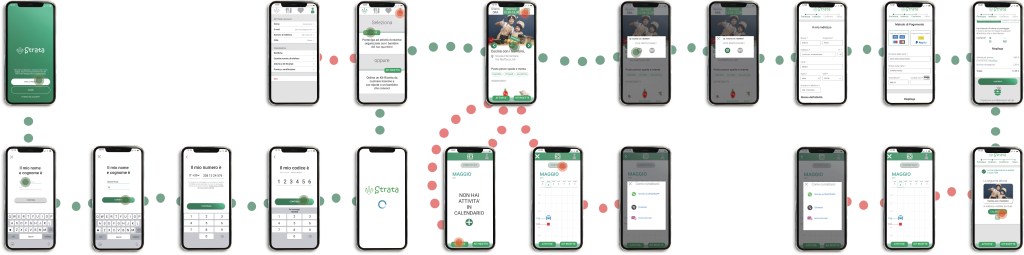

Deliver
Deliver is the fourth and final phase of the design process followed, the double diamond methodology. At this point, the project is finalized and is proposed to a limited audience group in order to collect feedbacks on the final product before really launching it across the market. The tools used here were useful for a final testing of the mobile application and an evaluation on the success of the service as it was designed: final testing and evaluation.
FINAL TESTING
Friends or relatives were involved to test the mobile application. In this way the weaknesses of the user interface, the room for improvement and the opinion on the service’s offerings in general were identified. The evaluation of these points is essential to ensure that the product or service have success on the real market and to bring out problems that could have escaped the designer’s attention during prototyping. The following evaluations and considerations will be set out in the next section: the evaluation.
EVALUATION
After that the users sample has tested the application and has experienced how the service works. The goal here is simply to assess the level of satisfaction: would the market appreciate Strata? Below is the proposed questionnaire:
Navigation
- Describe what you thought when you opened the application.
- Describe your reaction to the UI.
- Describe the path followed within the app.
- Describe your emotions and reactions during navigation.
- Please describe your opinion on the service offered.
Experience
- Do you think this service offers positive experiences?
- Did you feel involved in using this service if the future?
- Do you think that intergenerational learning improve the lifestyle of older people?
- Do you think that intergenerational activities are useful to the new generations?
- Would you like such a service?
- Would you normally participate in intergenerational activities with recipe-kits?
The first part of the questionnaire showed that the mobile application is confirmed as an important element for the provision of the service because, from navigation within the application, the sample of users has understood the overall service, how it works and what it offers. A further point of research for future implementations is about log-in modes; in fact, although the phone number is the safest way to verify the identity of users, older people were not entirely confident in this way. The value of the service is well perceived: the test also involved a young adult and his opinion about the service expresses the orientation of the rest of the sample of users.
“What a nice thing I didn’t have grandparents, it would be nice to learn something this way”
The second part of the service shows an apparent contradiction: everyone says that the service would be useful for both the elderly and the younger, but they also say that they are not sure whether to use it regularly or to be completely convinced that they want to use the service at this time. This suggests that in the future implementations and launch of the service, the role of marketing and strategy activities will be key to the success of a new service like Strata.


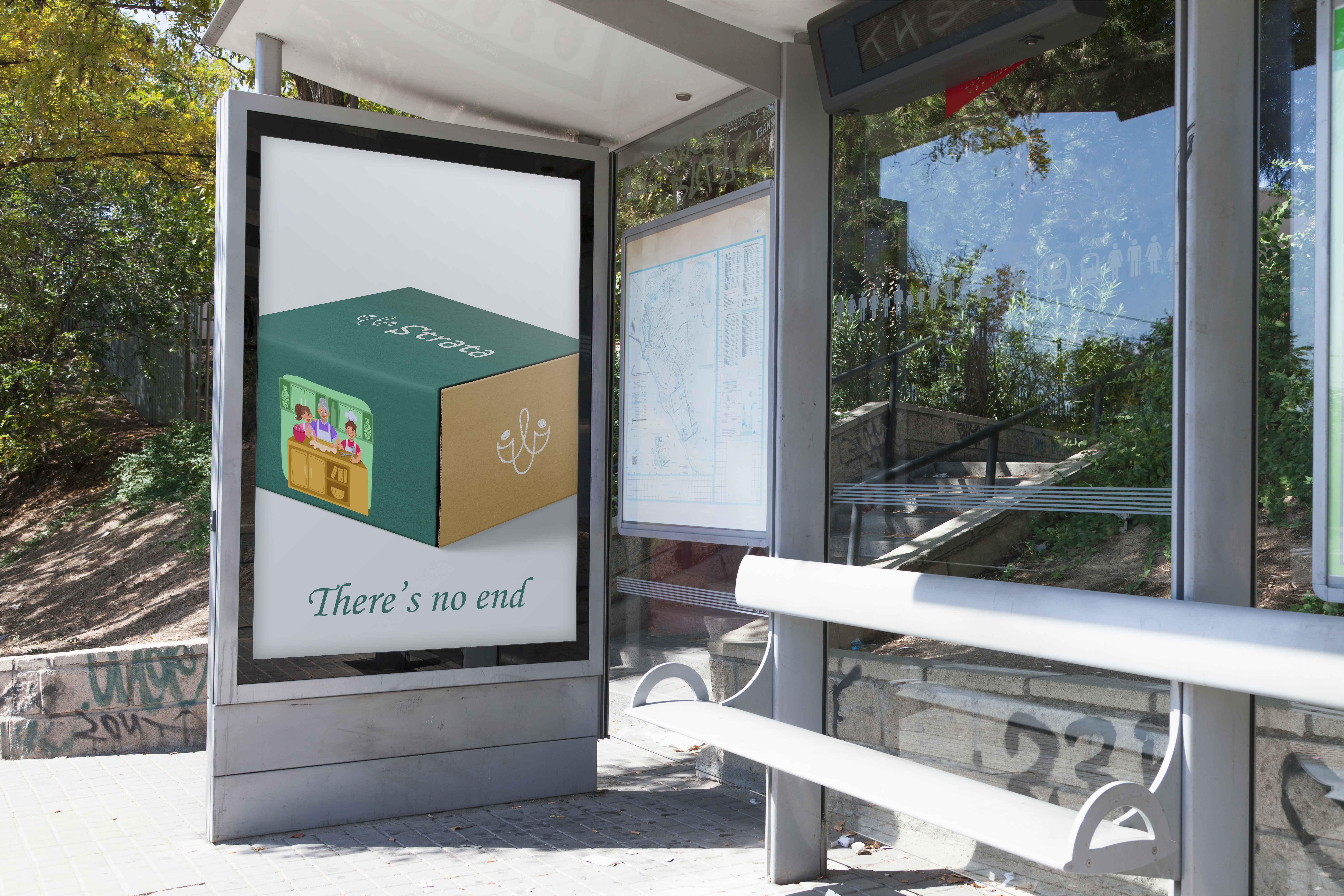
The Business Model of Strata
Strata offers a service to those who want to rediscover their well-being through food and socialization. Strata sends a recipe-kit to the home of those who would like to prepare a recipe with grandchildren and nurture the intergenerational learning. The service also caters to the business side, organizing intergenerational activities in school cafeterias so that the elderly and children learn to know each other by cooking together with the recipe-kits of Strata. In the latter case, Strata acts as an intermediary between the school as a public institution and the families. The service works entirely through the digital platform that manages recipe-kits orders and affiliations for the organization of extra-family events in school cafeterias. Strata’s target is the elderly and schools. Private users, such as the elderly, can use the service without any particular prerequisite; schools can join only if they have a cafeteria. In case the school does not have a cafeteria space for students with a kitchen, Strata provides an equipment service with the rental of tools and kitchen supplies to the school. The equipment renting service is possible thanks to the partnership that Strata tightens with this type of suppliers: Strata also in this case acts as an intermediary and it receives a fee for each renting transaction. Strata’s service does not stop at densely populated cities, but it is scalable to any level, even in small countries where there is a school or a road network suitable for home delivery. Users interact through the mobile app, but the first engagement contact is assumed to take place in a physical place like the supermarket, where you can buy the first Recipe-kit and know the service: this activity is supported by a widespread marketing and advertising activity. The activities proposed by Strata are different from location to location, so the service reaches its users thanks to local detection. In this way, users can participate in extra-familiar intergenerational activities in local schools and they can then leave their feedback that other users view on the portal according to location; instead the recipe-kit at home offerings are homogeneous throughout the whole market with light adaptations to local uses and customs on the choice of ingredients of recipes. Users who have purchased the recipe-kit can participate with the child in a contest in which they post the photo of their dish on the portal, the photo that arrives at the top of the ranking wins prizes, both for the elderly and for the child to whom the recipe’s photo belongs. The system of feedbacks and challenges is an incentive for target users to use the service and, therefore, contribute to the success of the service itself. In the part of the service infrastructure, Strata needs to continuously improve and advertise the platform that is the main contact with its target market. In addition, it is necessary to take continuous actions of affiliation of school cafeterias for two reasons; the first is that it would significantly expand the customer base participation, secondly, it would enable an important source of profit to be generated by the mediation activity for the rental of kitchen equipment to schools.

Appendix
I. Logo genesis
The logo of Strata rapresents the intergenerational learning.

Strata is the feminine noun of the Latin stratus, in its past participle form of sternere, in which the “distendere” has the meaning of laying a paved. The road system has been the fundamental infrastructure of the power of ancient Rome, able to connect every man of the empire, stretching without ending; a network of connections built wit
 Nicola Coco
What’s your take? Drop a comment!